Deadly Bombing Strikes Alawite Mosque in Homs, Killing Eight and Deepening Syria's Sectarian Woes
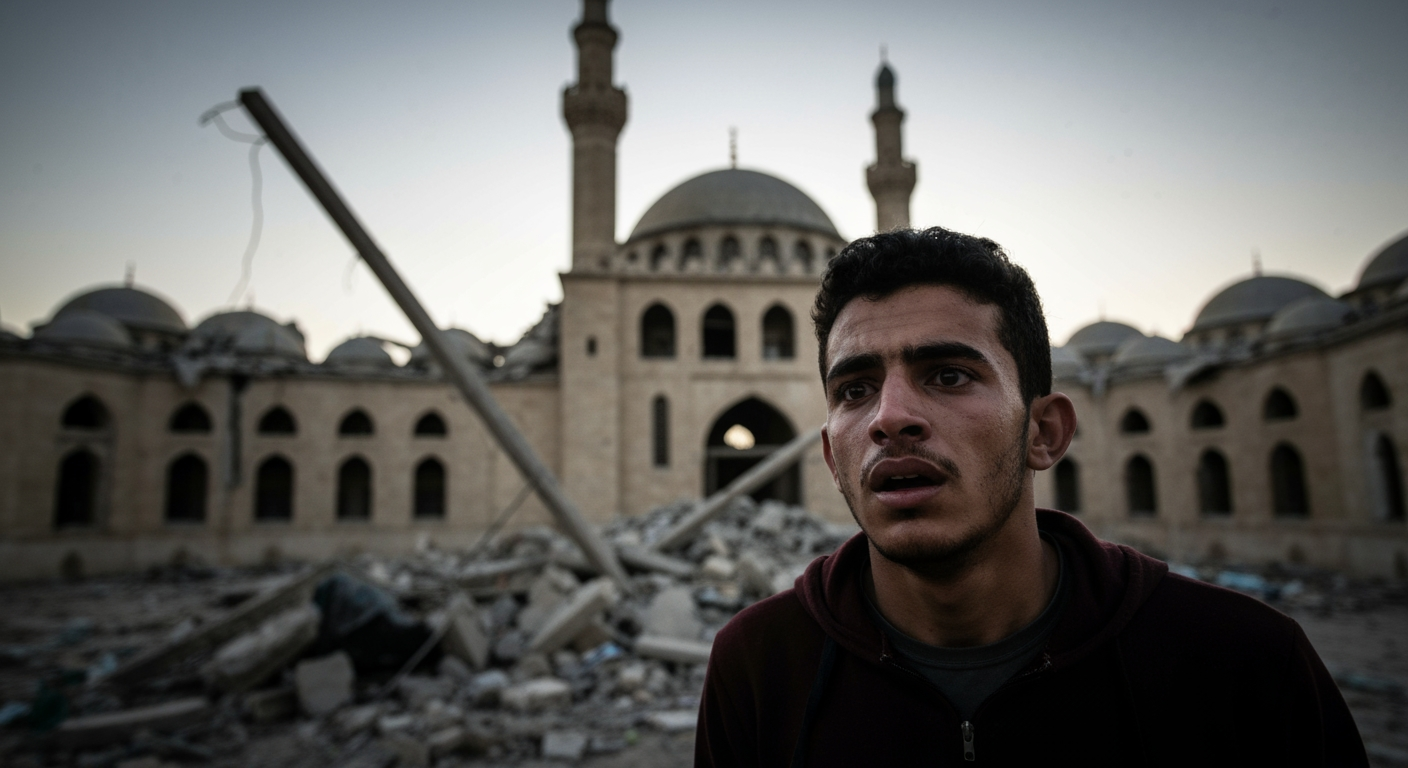
Homs, Syria – A powerful explosion ripped through the Imam Ali ibn Abi Talib Mosque in the city of Homs during Friday prayers, killing at least eight people and wounding 18 others, in an attack that underscores the fragile sectarian landscape of post-Assad Syria. The bombing, which targeted a mosque in a predominantly Alawite neighborhood, marks a significant escalation in religiously motivated violence, igniting fears of renewed instability across the war-torn nation.
The blast occurred shortly after noon prayers at the Imam Ali ibn Abi Talib Mosque in the Wadi al-Dhahab district, an area primarily inhabited by Syria's Alawite minority. Preliminary investigations by Syrian security forces suggest that improvised explosive devices were planted inside the mosque, detonating at a time when the sanctuary was crowded with worshippers. Images from the scene, released by Syria's state-run Arab News Agency, depicted a horrific tableau of destruction: blood-stained carpets, shattered windows, gaping holes in the walls, and extensive fire damage. Witnesses described a "huge" explosion that reverberated through the neighborhood, causing panic and chaos as responders rushed to aid the injured. The wounded, some critically, were transported to local hospitals, with authorities indicating the death toll could still rise.
The attack on the Alawite mosque is a stark reminder of the deep-seated sectarian divisions that continue to plague Syria, particularly in the year since President Bashar al-Assad's departure. Assad, himself an Alawite, fled to Russia last year following a rebel offensive that upended his long-standing rule. His fall has ushered in a period of profound transition but also heightened sectarian tensions, with members of the Alawite sect reportedly facing crackdowns and increased vulnerability. The Supreme Alawite Islamic Council in Syria and the Diaspora swiftly condemned Friday's bombing, characterizing it as "a continuation of the organized extremist terrorism specifically targeting the Alawite community," while also noting that such attacks increasingly imperil other Syrian groups. This incident follows earlier waves of sectarian clashes that have destabilized various parts of the country, despite a general de-escalation in large-scale fighting.
Responsibility for the deadly bombing was claimed by a little-known group identifying itself as Saraya Ansar al-Sunna, which posted a statement on its Telegram channel. This same group had previously asserted responsibility for a suicide attack in June that targeted a Greek Orthodox church on the outskirts of Damascus, where a gunman opened fire before detonating an explosive vest, killing 25 worshippers. However, in the aftermath of the church attack, the Syrian government had attributed the violence to a cell of the Islamic State group (ISIS), stating that ISIS had also planned to target a Shiite Muslim shrine. The conflicting claims underscore the complex and fractured extremist landscape operating within Syria, where various militant factions, including remnants of ISIS, continue to seek to destabilize the nascent government through attacks on minority communities.
Syrian authorities have launched an intensive investigation into the Homs mosque bombing, with security forces swiftly cordoning off the area to gather evidence and search for perpetrators. Local officials and the Ministry of Foreign Affairs issued strong condemnations of the attack, denouncing it as a "desperate attempt to undermine security and stability and sow chaos among the Syrian people." They reaffirmed Syria's unwavering commitment to combating terrorism in all its forms and manifestations. The international community also weighed in, with neighboring countries including Saudi Arabia, Jordan, and Lebanon expressing their condolences and condemnation. Lebanese President Joseph Aoun reportedly reaffirmed "Lebanon's support for Syria in its fight against terrorism," highlighting regional concerns over the resurgence of extremist activity.
The Homs mosque attack serves as a grave reminder that while large-scale conflict may have subsided in parts of Syria, the nation remains deeply vulnerable to sectarian violence and extremist threats. The targeting of a religious site in an Alawite-majority area signals a dangerous escalation that could further fracture an already traumatized society. As authorities race to identify and apprehend those responsible, the incident highlights the immense challenges facing Syria in its long and arduous path toward lasting peace and stability, particularly in navigating the intricate web of sectarian, ethnic, and political fault lines that continue to divide its populace.
Related Articles


Ratko Mladić, "Butcher of Bosnia" and Convicted War Criminal, Dies at 84
THE HAGUE, Netherlands – Ratko Mladić, the former Bosnian Serb military commander known as the "Butcher of Bosnia" and convicted of genocide, war crimes, and crimes against humanity, has died at the age of 84. Serbian...

Long-Awaited 9/11 Mastermind Trial Set for 2028, Decades After Attacks
GUANTANAMO BAY, Cuba – Nearly a quarter-century after the devastating terror attacks of September 11, 2001, a military judge has finally set a trial date for Khalid Sheikh Mohammed, the alleged mastermind behind the...