Nigerian Military Kills 80 Militants After Deadly Suicide Attacks Rock Maiduguri
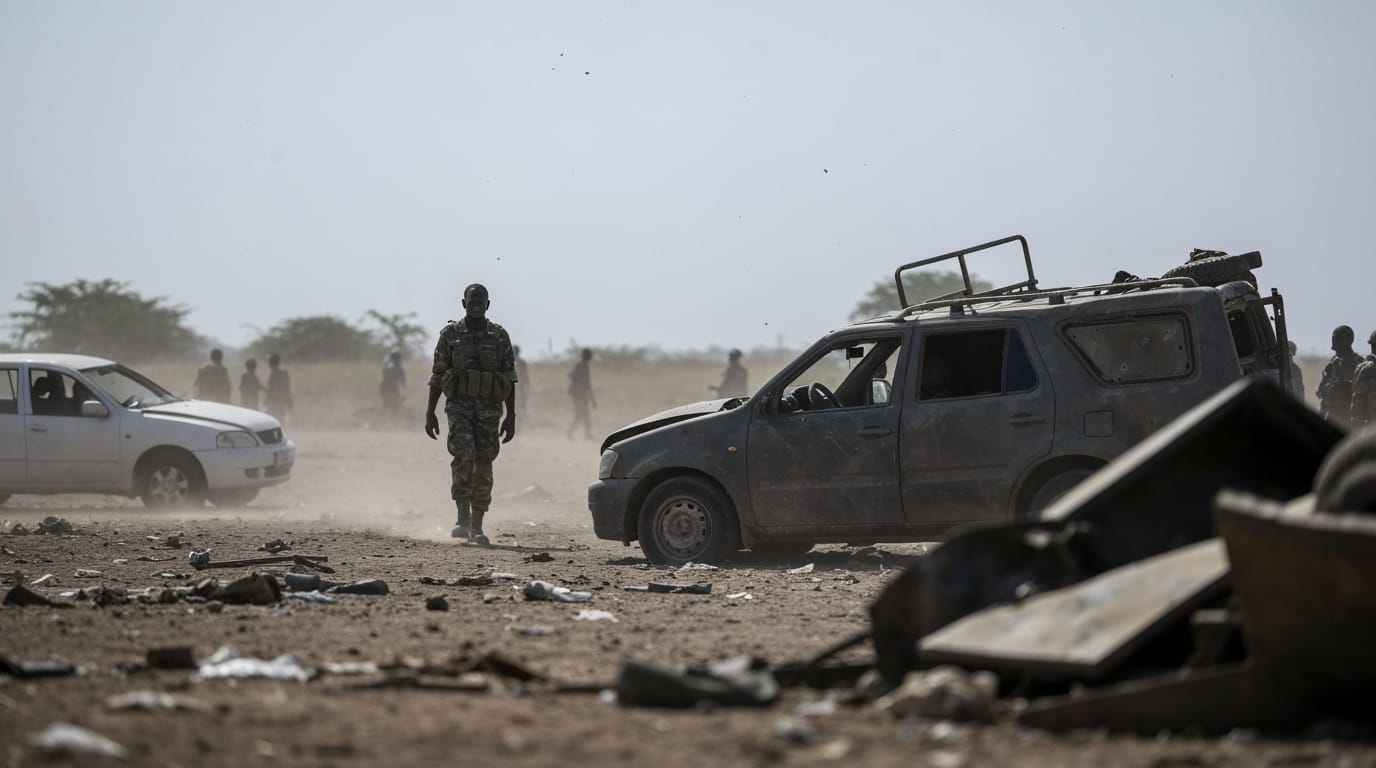
MAIDUGURI, Nigeria — In a significant escalation of the protracted conflict in northeastern Nigeria, the nation's military reported killing at least 80 militants following a pre-dawn assault on a military base in Borno State. This decisive response came just two days after a series of coordinated suicide bombings devastated Maiduguri, the state capital, claiming at least 23 civilian lives and injuring more than 100 others. The twin events underscore the relentless and evolving threat posed by jihadist groups in the region, primarily Boko Haram and the Islamic State West Africa Province (ISWAP), and highlight the Nigerian army's intensified counter-insurgency efforts.
Maiduguri Reeling from Coordinated Suicide Blasts
Monday, March 17, 2026, saw Maiduguri, a city that had experienced relative calm in recent years, plunged into chaos by multiple explosions. Suspected suicide bombers targeted crowded areas, including the city's main market, the entrance of the University of Maiduguri Teaching Hospital, and a post office area, shortly after people had broken their Ramadan fasts. Police spokesman Nahum Kenneth Daso confirmed that preliminary investigations pointed to suicide bombers as the perpetrators, noting that 23 individuals tragically lost their lives and 108 sustained injuries of varying degrees. Eyewitness accounts painted a grim picture of panic and devastation, with dozens seeking treatment at city hospitals and bodies covered by sheets on sidewalks. One anti-jihadist militia member suggested the death toll could be as high as 31.
The attacks in Maiduguri, often considered the epicenter of Nigeria's 17-year struggle with extremist groups, represent a significant breach of security in a city that has been heavily fortified. President Bola Tinubu condemned the acts as "barbaric" and "desperate and frantic attempts by criminals and terrorist elements trying to instil and spread fear," ordering security chiefs to relocate to Maiduguri to manage the situation. The military had reportedly warned of an increased threat of suicide bombings during the final days of Ramadan, suggesting the attacks were anticipated but ultimately not fully prevented.
Military Strikes Back in Mallam Fatori, Killing 80 Militants
Barely two days after the Maiduguri bombings, the Nigerian military launched a robust counter-offensive, repelling an attack on its base in Mallam Fatori, a town in Borno State near the border with Niger. On Wednesday, March 18, 2026, suspected Islamic militants, identified as members of either Boko Haram or ISWAP, advanced on the 68 Battalion's defensive position around 12:50 a.m., utilizing multiple armed drones in their assault.
Nigerian Army spokesperson Sani Uba stated that troops, aided by air support, had "anticipated the assault" and met the attackers with "overwhelming resistance." The coordinated "offensive-defensive" operation resulted in the neutralization of at least 80 militants, including three "high-profile" commanders. While an earlier military statement put the figure at over 60, the updated number signifies a considerable blow to the extremist groups. Four Nigerian soldiers sustained injuries during the engagement and were evacuated for treatment. Troops also recovered a substantial cache of weapons, including assault rifles, RPG launchers, machine guns, ammunition, improvised explosive devices, and armed drone components, from the retreating insurgents. Air assets from neighboring Niger were also reported to have complemented the Nigerian air force's precision strikes against the fleeing militants.
The Enduring Shadow of Insurgency in Northeastern Nigeria
These recent attacks and the military's response are symptomatic of a deeply entrenched and brutal insurgency that has plagued northeastern Nigeria for nearly two decades. The conflict, initiated by Boko Haram in 2009 with the aim of establishing an Islamic caliphate, has claimed over 40,000 lives and displaced approximately two million people. Over the years, the insurgency has fragmented, with ISWAP emerging as a dominant faction, sometimes rivaling, and at other times reportedly cooperating with, the original Boko Haram group.
The strategy of these groups has evolved from widespread bombings to armed assaults and hostage-taking, often targeting military installations and civilian populations. The Nigerian government's counter-insurgency efforts, including military campaigns and the deployment of troops in "super camps," have pushed some militant activities to rural areas, but the groups retain significant operational capabilities and a willingness to strike urban centers. Attacks on Maiduguri, the historic birthplace of Boko Haram, carry immense symbolic weight, challenging state authority and projecting an image of continued strength to local populations and international observers alike. The use of armed drones by militants in the Mallam Fatori attack signifies a worrying advancement in their tactical capabilities.
Humanitarian Crisis and Challenges Ahead
The ongoing violence continues to exact a heavy toll on the civilian population and regional stability. Displacement, food insecurity, and disruptions to essential services remain pressing concerns in Borno and neighboring states. Despite military successes, the persistent attacks underscore significant intelligence gaps and vulnerabilities in urban security networks. The recent surge in violence, particularly around Maiduguri, has been attributed by Borno State Governor Babagana Zulum to intense military operations in the Sambisa forest, a known jihadist stronghold, suggesting a retaliatory or diversionary tactic by the militants.
The Nigerian military, despite battling various security crises across the north, remains resolute in its commitment to offensive operations against terrorist elements. The Chief of Army Staff recently urged troops to maintain aggressive pressure on terrorist groups, emphasizing improved intelligence gathering and sustained operational momentum. However, the challenges are formidable. The fluidity of the groups, their adaptive strategies, and the severe humanitarian consequences mean that a comprehensive approach addressing not only military aspects but also socioeconomic factors, inclusive governance, and inter-ethnic dialogue is crucial for long-term peace and security in the troubled region.
The dual incidents of deadly suicide bombings in Maiduguri and the subsequent military elimination of 80 militants in Mallam Fatori serve as a stark reminder of the volatile security landscape in northeastern Nigeria. While the military's swift and impactful response demonstrates its operational capacity, the ability of extremist groups to launch significant attacks against both civilian and military targets highlights the enduring complexity of the insurgency. The path to lasting peace in this long-suffering region remains fraught with challenges, demanding sustained vigilance, strategic adaptation, and a holistic approach to security and development.


