Deadly Cargo Plane Crash Near La Paz Kills 15, Scatters Banknotes Across El Alto Avenue
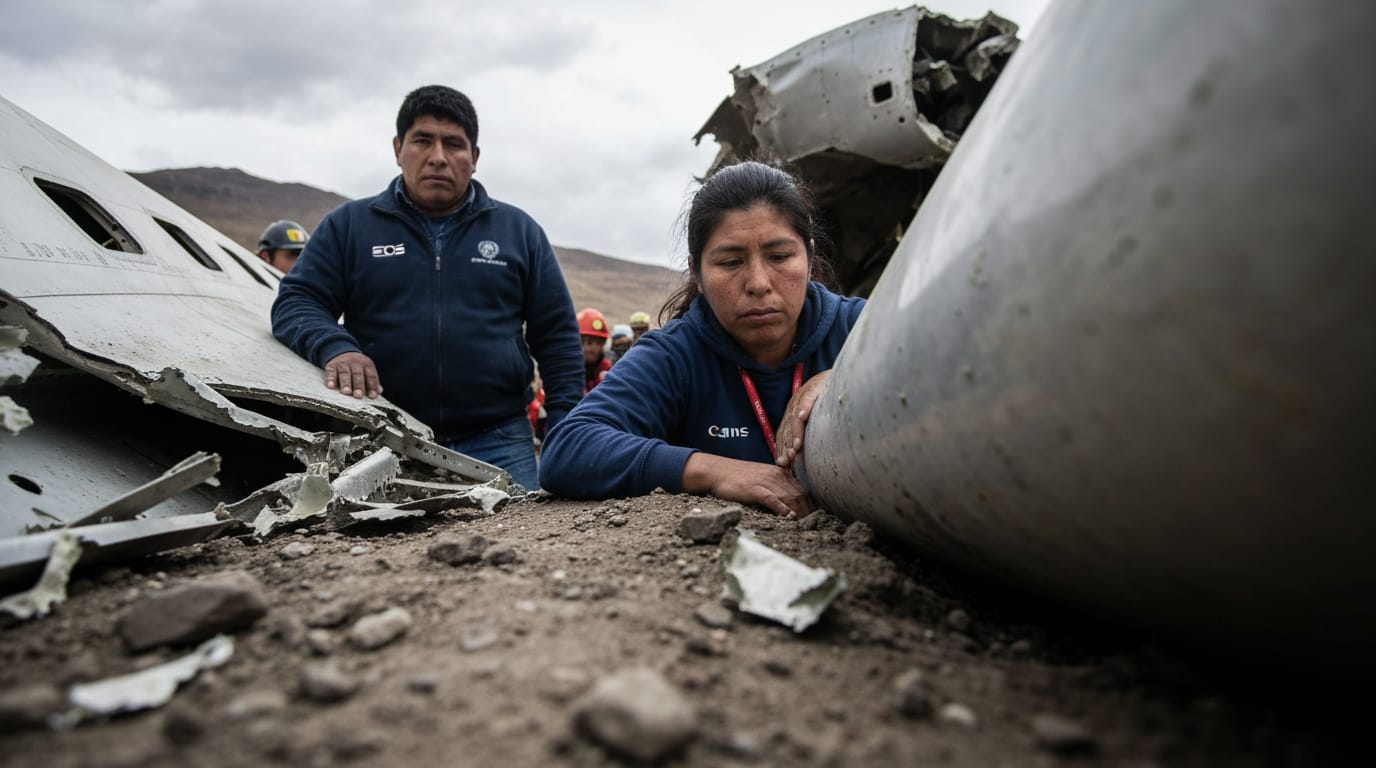
EL ALTO, BOLIVIA – A Bolivian Air Force Hercules C-130 cargo plane, laden with newly printed banknotes, crashed Friday evening near La Paz, claiming the lives of at least 15 people and injuring several others. The military aircraft veered off the runway at El Alto International Airport, striking numerous vehicles on a busy avenue before coming to rest in an adjacent field. The catastrophic incident, which unfolded amid poor weather conditions, prompted a chaotic scene as vast quantities of uncirculated currency were strewn across the crash site, leading to intervention by police to disperse individuals attempting to collect the bills.
The tragedy has initiated a full-scale investigation into the cause of the crash, while emergency services continue their work amidst the widespread devastation. The event has temporarily shut down operations at El Alto International Airport, a crucial transportation hub serving the administrative capital of Bolivia.
Catastrophic Descent and Immediate Aftermath
The incident occurred late Friday as the Bolivian Air Force Hercules aircraft, a robust C-130 transport plane, was involved in a runway-related event at El Alto International Airport. While initial reports varied slightly on whether the plane was taking off or landing, authorities confirmed it veered sharply from the runway. Its uncontrolled trajectory sent it hurtling onto a heavily trafficked public avenue in El Alto, a city directly adjacent to La Paz.
The impact was devastating, with the plane striking and destroying approximately a dozen vehicles, including cars and trucks, and causing significant damage to others. The wreckage from the aircraft and the mangled vehicles littered the roadway, creating a scene of widespread destruction. Firefighters rapidly deployed to the site to extinguish the flames that engulfed the aircraft, battling the inferno amidst the debris.
The precise breakdown of fatalities—whether primarily from the aircraft's crew or individuals on the ground in the affected vehicles—remains under clarification from officials. However, Fire Chief Pavel Tovar confirmed at least 15 people had perished in the disaster, with reports also indicating numerous injuries. Defence Minister Marcelo Salinas acknowledged the crash and the death toll, emphasizing that an exhaustive investigation would determine the definitive count and the circumstances leading to the tragedy.
A Shower of Currency and Public Response
Adding an extraordinary dimension to the catastrophe, the military cargo plane was transporting a substantial consignment of newly printed Bolivian banknotes. These bills, intended for distribution across various parts of the country, were scattered across the crash site upon impact. Eyewitness accounts and social media footage captured scenes of disarray as scores of people rushed to the wreckage, some reportedly attempting to collect the scattered currency.
Law enforcement agencies, including riot police, were compelled to intervene, utilizing water hoses and tear gas to disperse the crowd and secure the crash perimeter. The Central Bank of Bolivia later clarified that the banknotes involved in the incident were not yet in legal tender status. Central Bank President David Espinoza stated that the bills, which had arrived from abroad via Santa Cruz and were destined for La Paz, lacked serial numbers and had not officially entered circulation. This meant they held no monetary value to those attempting to gather them from the ground.
The unique aspect of the cargo underscored the operational nature of the flight, highlighting a critical logistical task for the nation's financial infrastructure that ended in tragedy. The images of currency amidst the wreckage created a stark and unusual visual signature for the disaster, drawing global attention to the human and material losses incurred.
Investigation Underway Amidst El Alto's High Altitude
The Bolivian Air Navigation and Airports authority (NAABOL), in conjunction with the Ministry of Defense and other aviation safety bodies, has commenced a comprehensive investigation into the factors contributing to the crash. While initial details point to a runway deviation, the exact sequence of events and underlying causes remain undetermined. Poor weather conditions were reported in the area at the time of the incident, which could be a contributing factor, though officials have yet to confirm any specific cause.
El Alto International Airport (SLET), situated at an elevation of approximately 4,061 meters (13,325 feet) above sea level, is one of the highest-altitude international airports in the world. Operations at such extreme altitudes present unique challenges for aviation, including reduced air density affecting aircraft performance. The temporary suspension of all flights to and from the terminal underscores the severity of the accident and the need for a thorough assessment of the runway and surrounding infrastructure.
General Sergio Lora of the Bolivian Air Force confirmed that the C-130 had departed from Santa Cruz, an eastern city, where it had picked up its specialized cargo. As of late Friday, two of the plane's six crew members remained unaccounted for, adding to the grim toll of the incident.
A Community Mourns and Seeks Answers
The impact of the crash has reverberated throughout El Alto and La Paz, with communities reeling from the sudden loss of life and the dramatic disruption. Emergency response teams, including military personnel, police, and medical staff, have worked tirelessly to manage the site, attend to the injured, and begin the solemn task of recovering the deceased. The investigation aims to provide clarity and accountability for an event that has deeply affected the region.
As the recovery efforts continue and the formal inquiry progresses, the focus remains on understanding how a routine transport mission could culminate in such a devastating loss of life and widespread destruction. The community, grappling with the immediate aftermath, awaits conclusive findings that might explain the tragic events of Friday evening near the Bolivian capital.


