Deadly Clashes Erupt in Aleppo, Undermining Fragile Stability and Integration Efforts
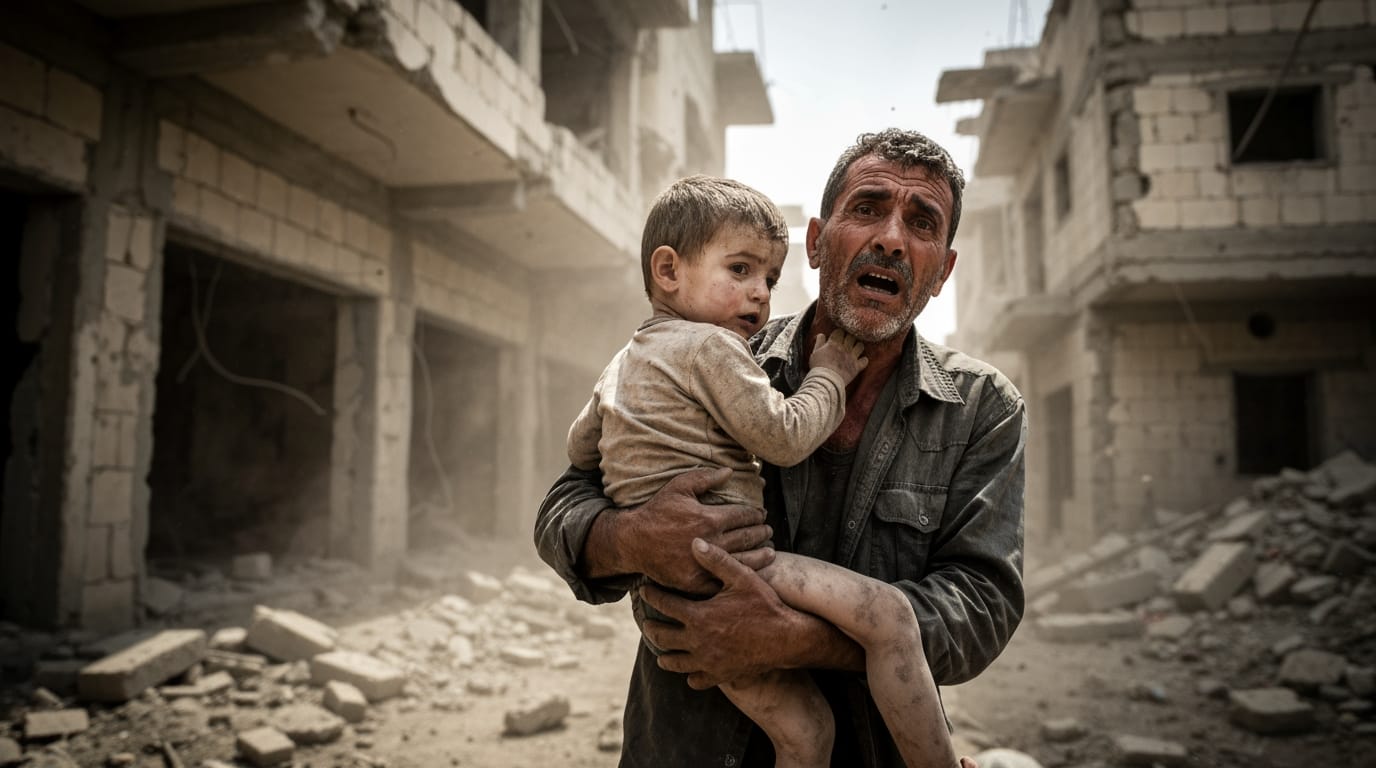
Aleppo, Syria – Fresh clashes between Syrian government forces and the Kurdish-led Syrian Democratic Forces (SDF) have engulfed parts of Aleppo, resulting in at least two fatalities and numerous injuries, further destabilizing a region already grappling with protracted conflict. The renewed violence, centered around the predominantly Kurdish neighborhoods of Sheikh Maqsoud and Ashrafiyah, coincides with critical diplomatic efforts aimed at integrating the SDF into the Syrian state, highlighting deep-seated mistrust and persistent territorial disputes.
The confrontations on Monday saw heavy and medium machine gun fire, as well as shelling, disrupting civilian life, forcing displacement, and prompting both sides to trade accusations of initiating the hostilities. The escalation underscores the volatile security landscape in northern Syria and casts a shadow over a landmark agreement signed earlier this year.
A Day of Violence and Mutual Accusations
Monday's clashes rapidly intensified in and around the Sheikh Maqsoud and Ashrafiyah districts, areas in northern Aleppo that have remained under SDF control despite the broader presence of Syrian government forces in the city. Reports from various sources indicated that at least two individuals lost their lives, with some specifically identifying the deceased as civilians. In addition to the fatalities, multiple injuries were reported, including two members of the Syrian Civil Defence, three civilians, and two fighters from the SDF's internal security forces, known as Asayish. The fighting also led to the closure of a significant road connecting Aleppo to the Turkish city of Gaziantep, further impeding regional movement and commerce.
The immediate trigger for the violence remains disputed, with each side presenting a starkly different account. The Syrian Ministry of Defense and Interior Ministry accused SDF units stationed in Sheikh Maqsoud and Ashrafiyah of launching a "sudden attack" on Syrian internal security forces and army positions. Syrian state media outlets reported that the SDF employed heavy machine guns, RPGs, and mortars, targeting residential areas and even a clearly marked Civil Defence rescue vehicle, an act described as a "serious crime and a blatant violation of humanitarian law." The Interior Ministry further alleged that SDF units had "committed an act of treachery" by suddenly withdrawing from joint checkpoints and subsequently opening fire.
Conversely, the SDF's media center and Asayish security forces asserted that government-affiliated factions initiated the attacks at various checkpoints, including the Sheikh An roundabout. The SDF described the incident as part of an "uncontrolled escalation" threatening civilian lives and holding the Damascus government fully responsible for the attacks. They also highlighted an alleged prior crackdown by government forces, which reportedly injured protesters and resulted in the closure of all seven entrances to the Kurdish-majority neighborhoods. These conflicting narratives underscore the deep mistrust that persists between the two entities.
Civilian Impact and Humanitarian Concerns
The resurgence of hostilities exacted a heavy toll on the civilian population in Aleppo. Beyond the immediate casualties, dozens of families were forced to flee their homes in targeted neighborhoods, seeking refuge in safer areas such as al-Khalidiya and Nile Street. The indiscriminate nature of the clashes, involving heavy weaponry in densely populated urban environments, raised significant concerns for civilian safety.
Humanitarian workers were directly impacted, with Civil Defence personnel sustaining injuries while attempting to carry out their duties. One incident involved a rescue vehicle, clearly marked with Civil Defence insignia and carrying uniformed staff, coming under fire near the Sheikh An roundabout. This targeting of non-combatants and emergency responders sparked condemnation and highlighted the severe risks faced by those providing essential services amidst the conflict. The ongoing violence further strains humanitarian efforts in a country already facing immense challenges.
Stalled Integration and Broader Geopolitical Context
The latest eruption of fighting occurred as a high-level Turkish delegation, including Foreign Minister Hakan Fidan and Defence Minister Yasar Guler, visited Damascus for talks with Syrian President Ahmed Al-Sharaa and other senior officials. A primary focus of these discussions was the implementation of a March 10, 2025, agreement that aimed to integrate the SDF's military and civilian structures into the Syrian state's armed forces.
However, progress on this integration pact has been notably slow. Syrian Foreign Minister Asaad Al-Shibani, speaking alongside his Turkish counterpart, accused the SDF of "systematic stalling" and lacking a "serious will" to implement the agreement. Turkey, which views the Kurdish-led SDF as a "terrorist organization" due to its links with the Kurdistan Workers' Party (PKK), has been a strong advocate for the SDF's integration and has previously conducted military campaigns against Kurdish forces in northern Syria. Turkish Foreign Minister Fidan stressed the importance of Syria's stability for Turkey's own security, urging the SDF to "cease to be an obstacle to Syria achieving stability, unity and prosperity."
The SDF, on the other hand, has expressed concerns regarding the terms and implementation of the agreement, particularly on whether its fighters would join as intact units or be dispersed. The lack of tangible progress and conflicting interpretations of the pact have created what both sides acknowledge as a "growing crisis of confidence," contributing to the volatile security situation.
A Pattern of Sporadic Violence
Monday's events are not an isolated incident but rather the latest in a series of sporadic clashes between Syrian government forces and the SDF in and around Aleppo and other border areas. In October, a civilian and three Syrian security forces members were killed in similar altercations in the same region, with 26 others injured. Another incident in August resulted in the death of a Syrian soldier near the Tishrin Dam, east of Aleppo.
These recurring confrontations highlight the precarious nature of the ceasefire agreements and the persistent tensions stemming from unresolved issues of territorial control and political authority. Despite a comprehensive ceasefire agreement reached on October 7, 2025, following previous clashes, violations have been frequent. The presence of both Syrian army units and SDF elements in close proximity, particularly around strategic junctions like the Shihan roundabout, frequently transforms these areas into flashpoints.
Conclusion: An Uncertain Future for Aleppo
The deadly clashes in Aleppo serve as a stark reminder of the enduring instability in Syria and the complex, multi-layered nature of its conflict. With fatalities and injuries compounding the humanitarian toll, the incident further erodes the already fragile trust between the Syrian government and the SDF. The violence directly undermines diplomatic efforts to integrate the Kurdish-led forces into the Syrian state, a process seen by many as crucial for the country's long-term stability.
As both sides continue to blame each other, the immediate future for Aleppo's residents remains uncertain. The international community, already concerned by the protracted Syrian crisis, watches as this latest escalation threatens to unravel fragile peace efforts and prolong the suffering of a population yearning for lasting security and stability. The divergent interests and lingering grievances between the various factions underscore the monumental challenge that lies ahead in forging a unified and peaceful Syria.


