Deadly Drone Strike Hits Ukrainian Passenger Train, Zelenskyy Condemns 'Terrorism'
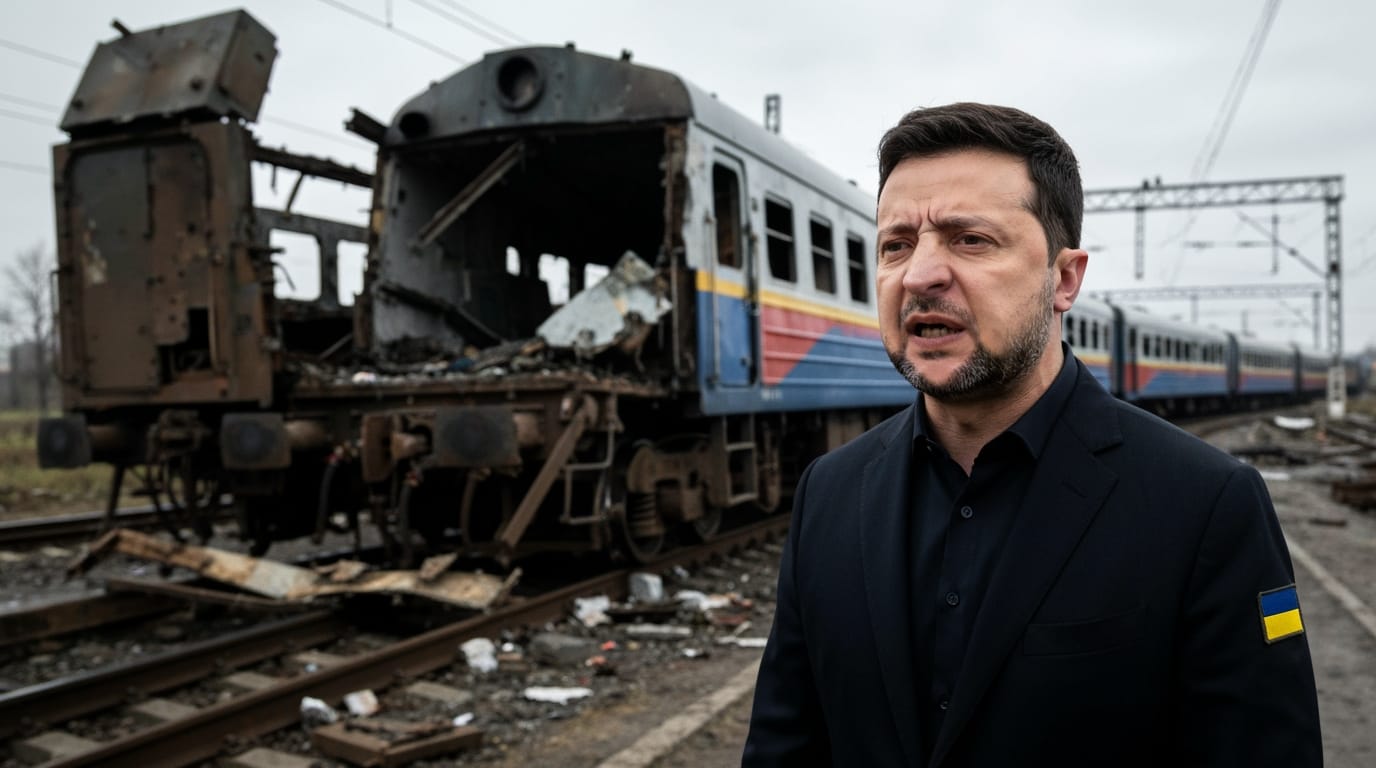
A Russian drone strike targeted a civilian passenger train in Ukraine's northeastern Kharkiv region on January 27, 2026, resulting in the deaths of five individuals and injuring two others. Ukrainian President Volodymyr Zelenskyy swiftly condemned the attack, characterizing it as an act of "terrorism" and emphasizing that such actions against non-military targets have no justification. The incident marks another grim chapter in Russia's ongoing conflict with Ukraine, highlighting the persistent threat to civilian infrastructure and lives across the country.
The Attack: A Civilian Target Ignites Tragedy
The assault unfolded in the Barvinkove community of the Kharkiv region, where three Shahed-type drones, believed to be Iranian-designed "Geran-2" UAVs, struck a passenger train operating on the Barvinkove-Lviv-Chop route. One drone directly impacted a passenger carriage, which was carrying 18 individuals, while two others exploded in close proximity to the moving train. The strike ignited a fire in the electric locomotive and a passenger car, prompting immediate emergency responses. Initial reports indicated varying casualty figures, but the Kharkiv regional Prosecutor's Office later confirmed five fatalities, with investigators recovering fragments of five bodies that will require DNA identification. Two passengers sustained injuries and were hospitalized. The train, carrying approximately 291 passengers at the time of the attack, was promptly evacuated, with reserve buses dispatched to assist those on board and individuals awaiting return journeys at various stations.
Zelenskyy's Vehement Condemnation and Call for Accountability
President Zelenskyy responded to the attack with strong condemnation, asserting that the drone strike on a civilian train should be universally classified as terrorism. He articulated that there is no conceivable military objective in the deliberate targeting and killing of civilians on a train. Through social media, the Ukrainian leader underscored that Russia must be held accountable for its actions and for maintaining the capability to perpetrate such assaults. Zelenskyy's statement also stressed the collective responsibility of the global community to exert pressure on Russia and ensure the protection of human life. Deputy Prime Minister Oleksii Kuleba echoed these sentiments, unequivocally labeling the drone attack as a "direct act of Russian terror" devoid of military purpose. The head of Ukraine's national railway operator, Ukrzaliznytsia, Oleksandr Pertsovskyi, commended the efforts of rescue teams and passengers who aided in the evacuation, while affirming the national railway's commitment to continuing services despite the heightened risks.
A Broader Pattern: Russia's Campaign Against Civilian Railways
This latest attack on a passenger train is not an isolated incident but rather fits into a disturbing pattern of Russia's systematic targeting of Ukraine's railway network since the onset of the full-scale invasion in February 2022. Ukrainian officials have frequently highlighted Russia's deliberate strikes on railway infrastructure, including substations, locomotive depots, and passenger terminals, with the clear intent to disrupt the country's logistical capabilities. Previous significant attacks include the April 2022 missile strike on the Kramatorsk railway station, which killed 63 civilians, including children, and injured 150. Another incident in August 2022 saw an attack on the Chaplyne rail hub in the Dnipropetrovsk region, leading to 25 deaths, though Russia claimed it targeted a military train.
Military analysts suggest that Russia's increased reliance on Shahed drones for these strikes points to an effort to cripple Ukraine's ability to transport goods, including essential military aid, and to instill fear among the civilian population. Reports indicate a significant surge in such attacks on railway infrastructure, with Ukraine recording hundreds of incidents since the beginning of 2025. This persistent targeting undermines critical supply lines in a country heavily reliant on its rail system for both freight and passenger movement, especially given the closure of civilian airports since the invasion.
Human Impact and Geopolitical Implications
The human cost of such attacks extends beyond the immediate casualties, creating widespread fear and uncertainty among the civilian population who depend on the railway for transportation. The continued assaults on civilian infrastructure also carry significant geopolitical implications. President Zelenskyy noted that each Russian strike of this nature undermines ongoing diplomatic efforts and hinders the work of international partners striving to end the conflict. This act of violence occurred amidst a broader wave of Russian overnight strikes across Ukraine, which also included a heavy drone bombardment in Odesa that killed at least three people and injured 23, and caused significant power disruptions in Kharkiv. These simultaneous attacks underscore a concerted strategy to inflict damage on critical infrastructure and demoralize the Ukrainian populace.
Conclusion: A Test of Resolve
The drone attack on the passenger train in Kharkiv serves as a stark reminder of the brutal realities faced by Ukrainian civilians caught in the ongoing conflict. President Zelenskyy's unequivocal condemnation of the incident as "terrorism" highlights Ukraine's stance against what it perceives as deliberate targeting of its people and infrastructure. As Ukraine continues to implement enhanced security measures for its rail network and strives to maintain vital services, the international community faces ongoing calls to intensify pressure on Russia for such actions. The incident underscores the urgent need for a cessation of hostilities and a lasting resolution to a conflict that continues to exact a heavy toll on human lives and stability in the region.


