Deadly Protests Erupt in Karachi as Anti-U.S. Fury Grips Pakistan Following Khamenei's Death
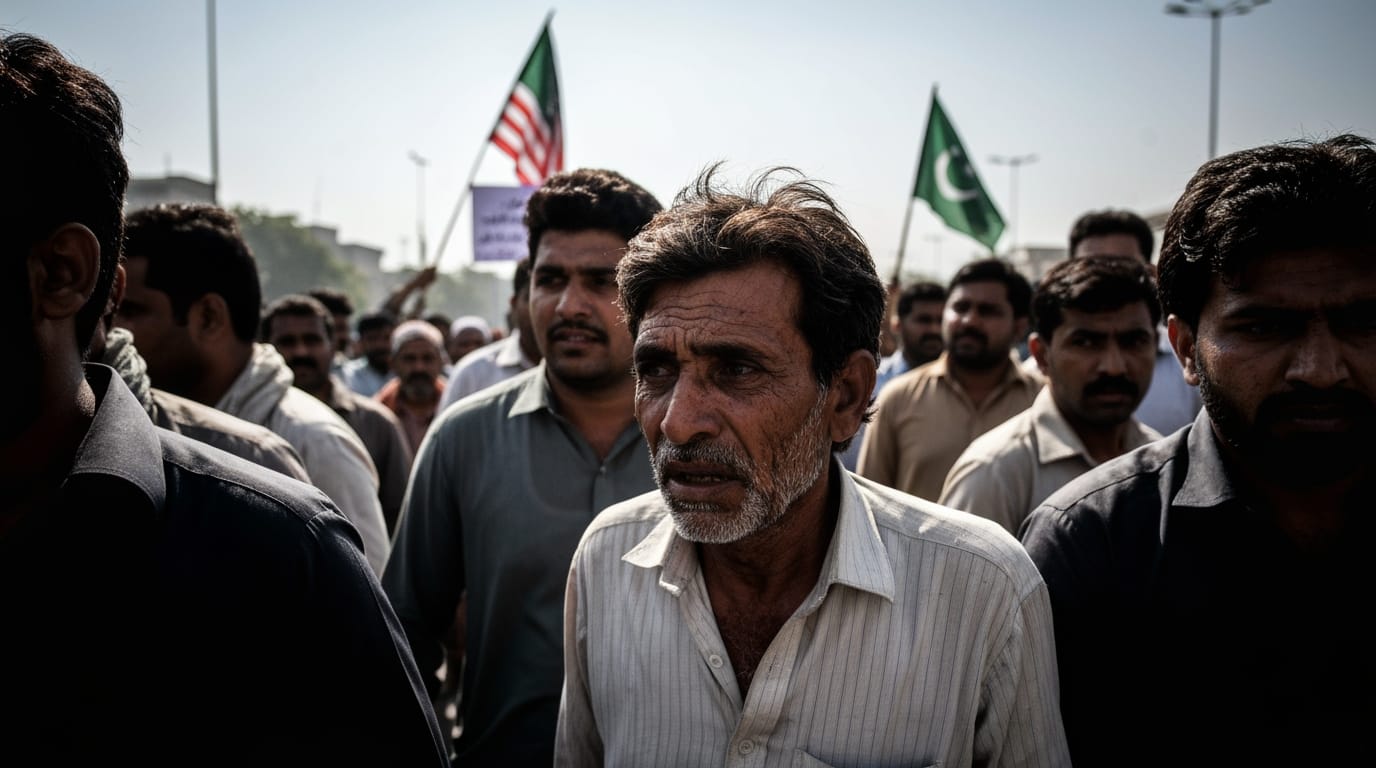
KARACHI, Pakistan – A wave of intense anger swept through Pakistan on Sunday, culminating in violent clashes outside the United States Consulate in Karachi where at least nine people were killed and dozens injured as protestors, enraged by the assassination of Iran’s Supreme Leader Ayatollah Ali Khamenei, attempted to storm the diplomatic compound. The deadly confrontation marked a significant escalation of regional tensions following joint U.S.-Israeli strikes that reportedly claimed the life of the influential Iranian leader.
The sprawling port city of Karachi became the focal point of the fury, with hundreds of demonstrators, largely affiliated with various Shiite organizations, marching towards the heavily fortified U.S. Consulate. What began as a fervent protest quickly descended into chaos as demonstrators breached initial security cordons, confronted law enforcement, and attempted to gain entry to the consular premises. The deadly incident underscores the volatile geopolitical landscape and the profound impact of Middle Eastern conflicts on the broader Islamic world.
The Storming of the Consulate
The day's events unfolded rapidly in Karachi, the capital of Sindh province and Pakistan's largest city. Hundreds of protesters, galvanized by news of Ayatollah Khamenei's death in coordinated U.S.-Israeli airstrikes, converged on Mai Kolachi Road, where the U.S. Consulate is located. Eyewitnesses and initial reports indicate that the demonstration, organized by Shiite groups, quickly turned violent.
Protesters, armed with sticks and stones, began to attack security barricades, pushing past police and paramilitary forces tasked with guarding the diplomatic facility. Videos circulating on social media captured scenes of demonstrators attempting to scale the main gate and gaining access to the driveway, with some smashing windows of the consulate building. A nearby police post was reportedly torched, and parts of the consulate's entrance area were set ablaze amidst the pandemonium.
In response to the escalating threat, security forces deployed tear gas and water cannons to disperse the agitated crowd. Local media reports suggested that U.S. Marine security personnel stationed inside the consulate also opened fire as protesters attempted to advance into restricted areas of the diplomatic compound, though Pakistani authorities and U.S. officials have not independently confirmed these specific casualty figures from inside the consulate. The clashes were intense, leading to a significant loss of life. Dr. Summaiya Syed Tariq, a police surgeon at Karachi's main government hospital, confirmed that initially six bodies were brought to the facility, with the death toll later rising to nine after three critically wounded individuals succumbed to their injuries. Hospital officials noted that the majority of the deceased had gunshot wounds, and approximately two dozen individuals were injured, with some in critical condition.
Roots of a Regional Fury
The catalyst for Sunday's widespread protests was the confirmed death of Ayatollah Ali Khamenei, Iran’s Supreme Leader, following joint U.S.-Israeli military operations against Iran on Saturday. This unprecedented development sent shockwaves across the Middle East and significantly heightened tensions between Western powers and various Islamic nations. Khamenei, who served as Iran's Supreme Leader since 1989, was a deeply revered figure among many Shiite Muslims globally and a staunch opponent of the United States and Israel. His demise in what is being described as a targeted attack ignited a fierce outcry, particularly in countries with significant Shiite populations, like Pakistan.
Pakistan has historically witnessed strong reactions to events impacting the broader Muslim world and particularly those involving Iran, given its substantial Shiite minority. The perceived aggression by the U.S. and Israel against a prominent Islamic leader fueled anti-Western sentiment, leading to calls for demonstrations from various religious and political organizations. These groups quickly mobilized, urging their followers to protest against what they condemned as an act of state-sponsored terrorism. The incident quickly transcended internal Pakistani politics, becoming a flashpoint for regional solidarity and anti-imperialist sentiment.
Government Response and Broader Implications
In the wake of the violence, Pakistani authorities moved to restore order and address the burgeoning crisis. Sindh's provincial government expressed profound grief over the loss of lives and announced the formation of a high-level joint investigation team (JIT) to thoroughly examine the circumstances surrounding the incident. Interior Minister Mohsin Naqvi issued a public appeal for calm, acknowledging the widespread grief over Ayatollah Khamenei's death but urging citizens to refrain from violence and respect the rule of law. The minister emphasized that while the public has a constitutional right to protest, any acts of vandalism or taking the law into one's own hands would be deemed inappropriate and met with legal action.
The U.S. Embassy in Pakistan, while monitoring the ongoing demonstrations in Karachi and Lahore, and anticipating protests in Islamabad and Peshawar, advised U.S. citizens to exercise extreme caution, monitor local news, avoid large crowds, and ensure their travel registrations were up to date. Security remained heightened across Karachi's diplomatic enclave, with additional law enforcement personnel deployed to prevent further unrest.
Beyond Karachi, protests erupted in other parts of Pakistan. In Lahore, hundreds gathered outside the U.S. Consulate, though authorities managed to prevent the situation from escalating into violence. More disturbingly, in the northern city of Skardu, located in the Shiite-majority Gilgit-Baltistan region, protesters reportedly set fire to a United Nations office building. These widespread demonstrations highlight the depth of public anger and the potential for broader destabilization across the region.
A Fractured Landscape
The violent events in Karachi underscore the fragility of peace and the immediate global reverberations of heightened tensions in the Middle East. The assassination of Ayatollah Ali Khamenei by U.S.-Israeli forces has ignited a potent mix of religious fervor and anti-Western sentiment across Pakistan, a key ally in the global fight against terrorism. The incident in Karachi is not merely an isolated act of violence but a symptom of deep-seated grievances and geopolitical anxieties that have now spilled onto the streets with deadly consequences.
As investigations proceed and political leaders grapple with the fallout, the international community watches closely. The tragic loss of life and the targeting of a diplomatic mission signal a dangerous new phase in regional conflicts, with the potential to further destabilize an already volatile part of the world. The calls for calm by Pakistani authorities are a testament to the gravity of the situation, as the nation navigates its own internal security challenges amidst a rapidly changing and increasingly confrontational international landscape. The immediate future holds uncertainty, but the events of Sunday in Karachi undeniably mark a somber turning point.


