U.S. Forces Suffer Casualties Amid Escalating Conflict with Iran
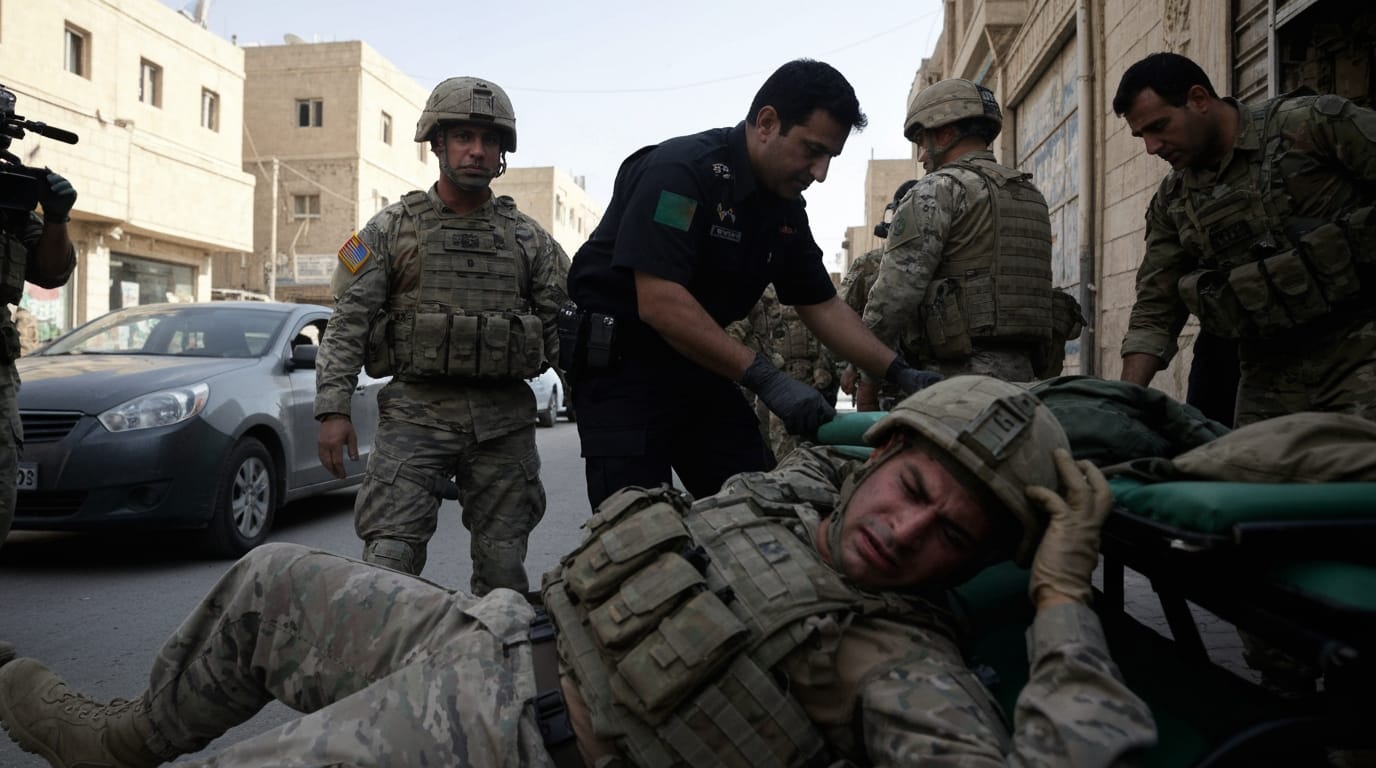
WASHINGTON D.C. – Three American service members have been killed and five seriously wounded in ongoing military operations against Iran, U.S. Central Command (CENTCOM) announced Sunday, marking the first confirmed combat deaths for the United States in the newly intensified hostilities. The casualties come as U.S. and Israeli forces engage in a large-scale offensive against Iran, codenamed "Operation Epic Fury," pushing an already volatile Middle East to the precipice of a broader regional war.
The confirmed deaths and injuries, along with several other personnel sustaining minor shrapnel injuries and concussions, underscore the gravity of the military engagement that commenced on Saturday. CENTCOM detailed that Operation Epic Fury began early Saturday with a wave of one-way attack drones and missiles targeting locations inside Iran. The operation has also involved U.S. Navy ships firing Tomahawk cruise missiles and High Mobility Artillery Rocket Systems (HIMARS) launching Army Tactical Missile System (ATACMS) rockets. Amidst these operations, CENTCOM confirmed the sinking of an Iranian frigate and countered Iranian assertions that the USS Abraham Lincoln aircraft carrier had been struck by ballistic missiles. These developments signal a direct and unprecedented military confrontation between the United States and Iran, a significant escalation from previous proxy conflicts.
The Genesis of "Epic Fury" and Its Immediate Impact
Operation Epic Fury, launched by the U.S. and Israel, represents a dramatic shift in the long-standing tensions with Iran. Reports indicate that the combined strikes have targeted Iranian military infrastructure, missile systems, and command centers, with the stated aim of degrading Tehran's strategic capabilities and countering regional threats. A significant, though unconfirmed by independent sources, development in the initial phase of the offensive was the reported death of Iran's Supreme Leader Ayatollah Ali Hosseini Khamenei in airstrikes, an event announced by President Donald Trump. This would represent a monumental blow to the Iranian leadership structure, with profound implications for the nation's future trajectory. Iran, in turn, has retaliated by firing ballistic missiles and drones at U.S. bases and allied targets across the Middle East, including in Bahrain, Kuwait, Qatar, and the United Arab Emirates, further illustrating the rapid and dangerous expansion of the conflict. The immediate aftermath has seen Iraqi militias, backed by Iran, announce intentions to escalate attacks on American bases, while Houthi forces in Yemen have pledged to resume missile and drone attacks on Western shipping and Israel.
A History of Escalation: From Proxy Wars to Direct Confrontation
The current direct conflict is the culmination of years of mounting tensions and a series of increasingly aggressive actions in the region. Since October 2023, coinciding with the outbreak of the Israel-Hamas war, U.S. military bases and personnel in Iraq, Syria, and Jordan have faced over 170 attacks from Iran-backed militant groups. These attacks, primarily involving rockets and drones, have resulted in injuries to dozens of U.S. service members.
A pivotal moment occurred on January 28, 2024, when a one-way attack drone struck Tower 22, a logistics support base in northeast Jordan near the Syrian border. This attack tragically killed three U.S. Army soldiers – Sgt. William Jerome Rivers, Spc. Kennedy Ladon Sanders, and Spc. Breonna Alexsondria Moffett – and wounded more than 40 others, with eight requiring medical evacuation. U.S. officials attributed the assault to the Islamic Resistance in Iraq, an umbrella group of Iran-backed militias, including Kataib Hezbollah. While Iran denied direct orchestration of the attack, the U.S. held Tehran responsible for supplying the weaponry to the groups involved. In response to the Tower 22 attack, the U.S. launched retaliatory airstrikes in early February 2024, targeting 85 sites linked to Iran-backed militias in Iraq and Syria. Despite these punitive measures, the cycle of violence continued, demonstrating the deep-seated nature of the regional rivalry.
Geopolitical Implications and the Road Ahead
The direct military engagement between the U.S., Israel, and Iran carries profound geopolitical implications, significantly heightening the risk of a broader regional conflagration. The U.S. administration, while responding decisively to attacks on its forces, has repeatedly stated its objective is not to seek a wider war in the Middle East. However, the current scale of Operation Epic Fury, coupled with Iran's immediate retaliatory actions, suggests that the conflict has already transcended previous boundaries of engagement.
The potential death of Iran's Supreme Leader adds an unpredictable dimension, potentially leading to internal power struggles within Iran and further destabilizing the region. The U.S. and its allies face the complex challenge of deterring further aggression and protecting their interests without igniting a full-scale war that could draw in multiple international actors. The conflict also raises critical questions about global energy security, international trade routes, and humanitarian crises, particularly if major waterways like the Strait of Hormuz are further disrupted. The coordinated efforts with Israel emphasize a united front against perceived Iranian threats, but also bind the two nations more deeply into the regional dynamics.
The landscape of U.S.-Iran relations has been characterized by decades of mistrust, sanctions, and proxy conflicts. The withdrawal of the U.S. from the Joint Comprehensive Plan of Action (JCPOA) nuclear deal under the previous administration, coupled with a "maximum pressure" campaign, further exacerbated tensions. Subsequent attempts to revive diplomatic talks have largely stalled, while Iran continued to advance its nuclear program. This historical backdrop underscores the deeply entrenched animosities that have now erupted into open conflict, testing the limits of de-escalation strategies.
The current situation represents a perilous moment for the Middle East and global stability. The U.S. has committed to responding to harm inflicted upon its personnel, emphasizing that such responses would occur at times and places of its choosing. While the U.S. has reiterated it does not seek an expanded war, the deployment of significant military assets and the nature of "Operation Epic Fury" suggest a new phase of engagement. The coming days will be critical in determining whether a pathway to de-escalation can be found or if the region will be engulfed in an even wider and more devastating conflict. The loss of American lives serves as a stark reminder of the human cost of these protracted and intensifying geopolitical struggles.


