Deadly Rampage in Northern Israel Claims Two Lives, Sparking Outcry and Retaliatory Measures
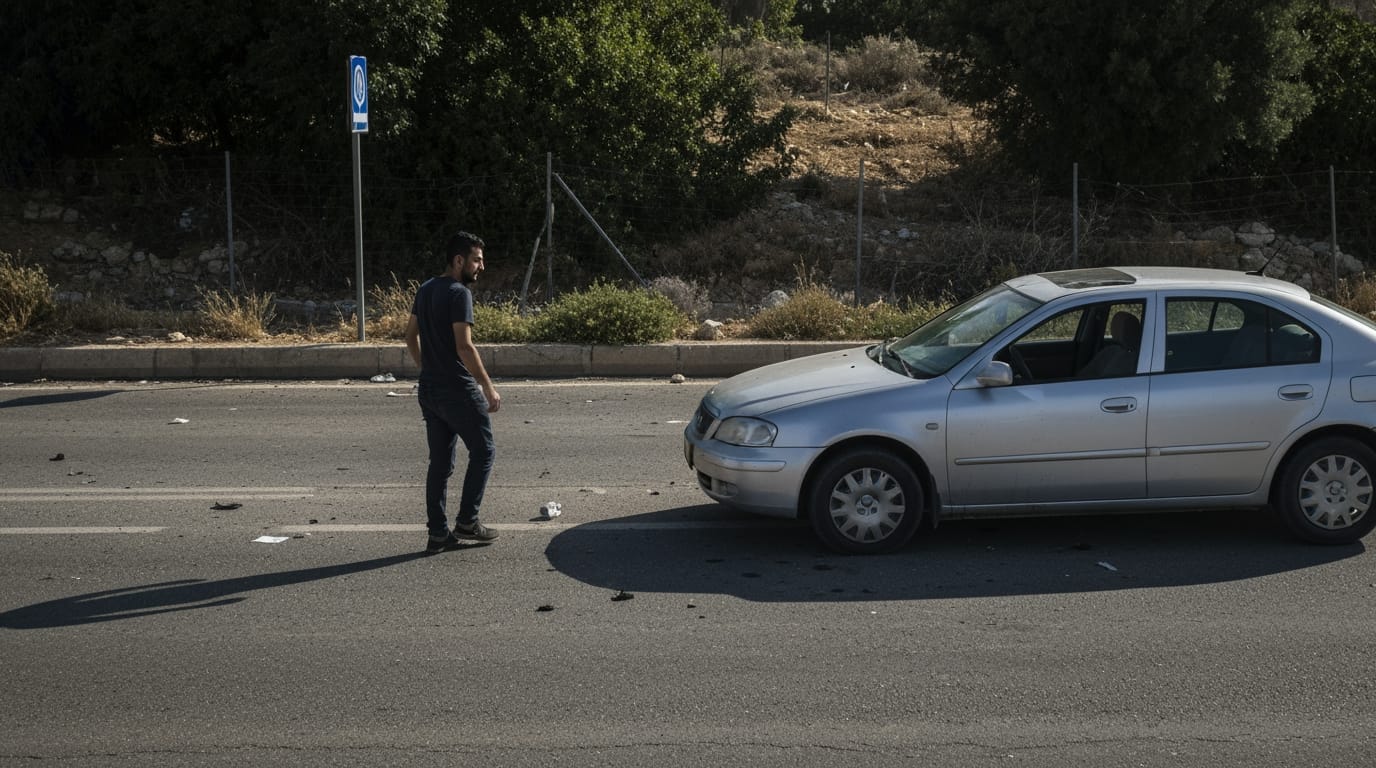
Northern Israel was plunged into grief and renewed security alerts Friday following a "rolling terror attack" involving a car-ramming and stabbing that left two Israeli civilians dead and two others wounded. The assailant, identified as a Palestinian man from the West Bank, initiated a series of violent acts that began in Beit Shean and continued along a highway before he was apprehended near Afula. The incident has drawn swift condemnation from Israeli leadership, who have vowed immediate and forceful responses, intensifying already heightened tensions in the region.
A Day of Terror Across Northern Roads
The assault commenced in the northern city of Beit Shean, where a Palestinian man, later identified as Ahmad Abu al-Rub, 37, allegedly used a vehicle to ram into pedestrians. The initial ramming tragically killed Shimshon Mordechai, 68, and injured a 16-year-old teenage boy who sustained minor wounds. Following the initial attack, the perpetrator reportedly sped onto nearby Highway 71. There, the violence escalated as he fatally stabbed Aviv Maor, an 18-year-old woman, near a bus stop. Another individual was reported injured near the entrance to the city of Afula as the attacker continued his rampage. Emergency services pronounced both Mr. Mordechai and Ms. Maor dead at the scenes of their attacks.
Israeli police quickly labeled the series of events a "rolling terror attack," highlighting its sequential and geographically dispersed nature. The attacker, reportedly driving his employer's vehicle, was eventually engaged and shot by either a civilian bystander or a security officer near Afula. He was then taken to a hospital for treatment of moderate injuries. Authorities later detained the attacker's employer as part of the ongoing investigation.
The Suspect and Infiltration Concerns
Ahmad Abu al-Rub, the identified assailant, is a 37-year-old Palestinian from Qabatiya, a town located in the northern West Bank. Preliminary investigations suggest that Abu al-Rub had been working illegally in Israel and had reportedly "infiltrated Israeli territory several days ago." This detail has raised significant security concerns regarding border control and the presence of undocumented individuals within Israel. The use of an employer's vehicle in the attack further adds a layer to the investigation, probing potential negligence or complicity. The Israeli military has indicated that it is preparing to demolish the attacker's residence in Qabatiya, a measure often employed as a deterrent against future attacks, though widely criticized by human rights organizations as collective punishment.
Robust Condemnation and Retaliatory Orders
The attack drew immediate and forceful condemnation from across the Israeli political spectrum. Prime Minister Benjamin Netanyahu identified the victims as Shimshon Mordechai and Aviv Maor, expressing profound shock at the violence. President Isaac Herzog echoed these sentiments, denouncing the "horrific killing spree" and reaffirming Israel's commitment to "reinforcing and strengthening this challenging border and, of course, to bolstering the security response in the area for the full safety of the residents."
Defense Minister Israel Katz swiftly ordered military action in Qabatiya, the assailant's hometown, instructing the Israel Defense Forces (IDF) "to act forcefully and immediately to locate and thwart every terrorist and terrorists' infrastructure" in the city. Katz emphasized that "Anyone who aids terrorism or provides sponsorship and backing for terrorism will pay the full price." In response, the IDF began amassing troops near Qabatiya and initiated a "precise operational search" in the area, a move consistent with Israel's policy of responding to attacks originating from specific West Bank communities. National Security Minister Itamar Ben Gvir, a prominent voice on the far-right, capitalized on the incident to renew his call for a "death penalty for terrorists" law, a proposal currently advancing through the Israeli government at his insistence.
A Cycle of Violence in a Tense Region
This latest attack unfolds against a backdrop of significantly escalated violence across Israel and the occupied West Bank, largely fueled by the ongoing conflict in Gaza that erupted following the October 7, 2023, Hamas assault. The Gaza war has claimed tens of thousands of Palestinian lives and has corresponded with a surge in both Palestinian militant attacks within Israel and Israeli settler violence against Palestinians in the West Bank.
The incident also follows closely on the heels of other recent violent events. Just a day prior, an Israeli reservist soldier reportedly rammed his vehicle into a Palestinian man in the West Bank, an incident the Israeli military stated was under review. In September, a shooting attack at a Jerusalem bus stop claimed the lives of six people and wounded twelve others. These events underscore a volatile environment where acts of violence, whether by individuals or organized groups, can quickly ignite further retaliatory actions and deepen the cycle of conflict. Between October 2023 and October 2025, over 1,000 Palestinians have been killed in the West Bank, primarily in security operations but also due to settler violence, while 57 Israelis have died in Palestinian attacks during the same period.
The tragic deaths of Shimshon Mordechai and Aviv Maor serve as a stark reminder of the persistent and deadly security challenges facing Israel. As authorities investigate the full scope of the attack and implement punitive measures, the incident is poised to further strain the already fragile fabric of Israeli-Palestinian relations, adding another layer of complexity to a region perpetually grappling with conflict and calls for heightened security. The events of Friday underscore the human cost of this enduring struggle and the immediate reverberations of violence within the daily lives of citizens.


