Deadly Russian Missile Strike Decimates Kharkiv Apartment Block, Claims Civilian Lives
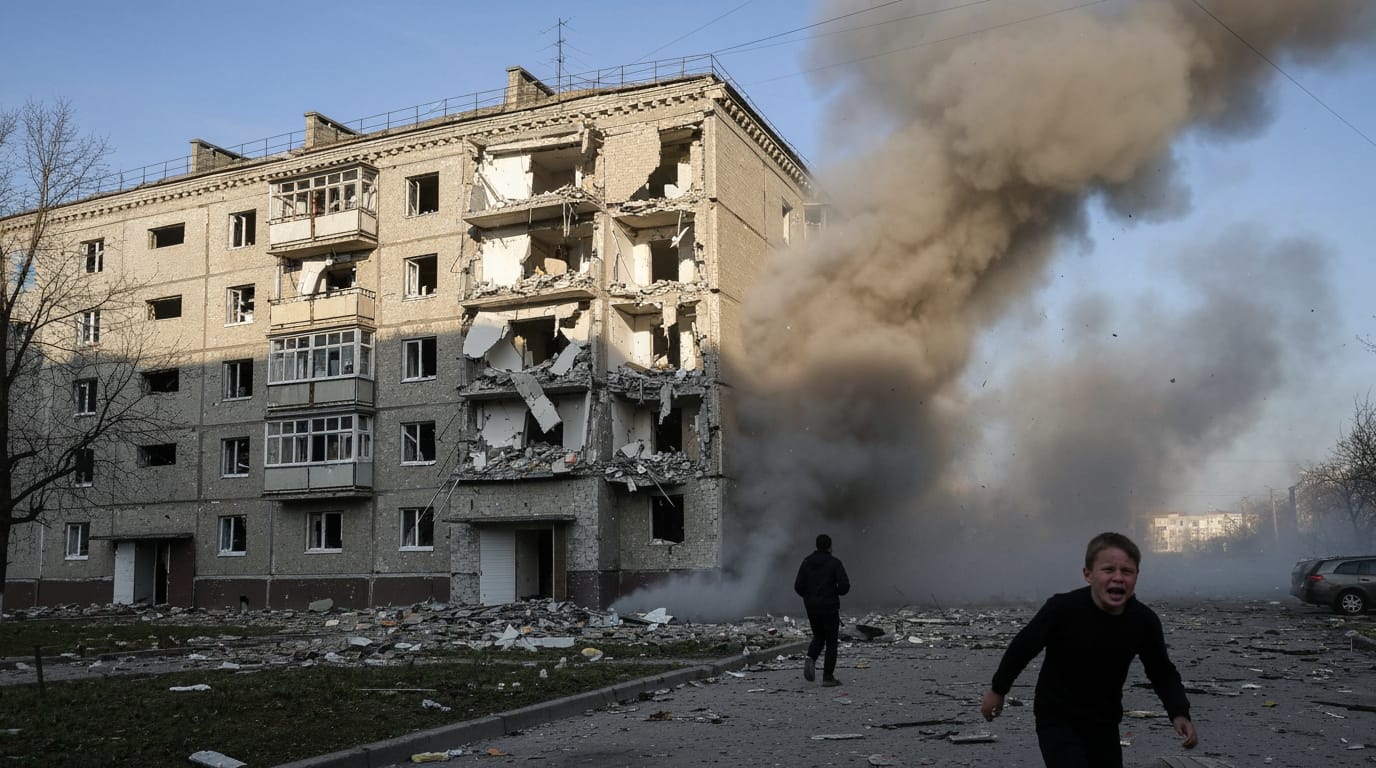
Kharkiv, Ukraine – A devastating Russian missile strike ripped through a residential apartment complex in Kharkiv during the early hours of March 7, 2026, claiming the lives of at least eight civilians, including two children, and injuring numerous others. The pre-dawn assault on the Kyivskyi district plunged the city into chaos, reducing a significant portion of a five-story building to rubble and igniting a large fire, highlighting the relentless and brutal toll of the ongoing conflict on Ukraine's civilian population. Rescue workers continue to sift through the mangled remains of the structure, as hope dwindles for as many as 11 individuals still believed to be trapped beneath the debris.
Dawn Reveals Destruction and Despair
The attack occurred around 1:35 a.m., when a Russian ballistic missile struck the multi-story residential building, destroying an entire entrance section from the first to the fifth floor. The force of the explosion and subsequent fire, which engulfed an area of 300 square meters, left a scene of widespread devastation. Emergency services, including firefighters and paramedics, immediately rushed to the site, working tirelessly to extinguish the blaze and extract survivors from the wreckage. The operation proved challenging, with a wall between two entrances of the partially destroyed building collapsing during firefighting efforts, further complicating rescue attempts.
Initial reports confirmed seven fatalities, a figure that later rose to eight as more bodies were recovered from the debris. Among the deceased were a primary school teacher and her second-grade son, found in their home, and an eighth-grade student who perished alongside her mother. The youngest victims underscore the indiscriminate nature of the attack, which also left at least 10 individuals wounded, including a 6-year-old boy, an 11-year-old boy, and a 17-year-old girl. The Kharkiv Oblast Military Administration, led by Oleh Syniehubov, reported that up to 11 people might still be trapped under the rubble as search and rescue operations press on.
Beyond the immediate impact on the targeted building, the strike also caused damage to two floors of a neighboring structure and affected 19 other apartment buildings within the Kyivskyi district, illustrating the broad destructive radius of the missile. The psychological toll on the residents, many awakened by the blast, is immeasurable, as they grapple with loss, injury, and the destruction of their homes.
The Weapon and a Pattern of Aggression
Ukrainian authorities identified the weapon used in the attack as a ballistic missile. Some reports suggest it was a new Russian cruise missile known as "Izdeliye-30," an air-launched weapon with a reported range of 1,500 kilometers and an 800-kilogram warhead, typically launched from strategic bombers like the Tu-95 and Tu-160. Kharkiv Mayor Ihor Terekhov stated that Russia deliberately targeted a residential building, noting the significant power of the missile's charge given the scale of destruction.
This strike on a civilian target in Kharkiv is not an isolated incident but rather fits a disturbing pattern of aggression against Ukraine's second-largest city. Kharkiv has endured persistent bombardment since the full-scale invasion began, with residential areas and critical infrastructure frequently coming under fire. Just prior to this incident, Russian forces launched a combined missile and drone attack in late January 2026, damaging civilian and energy infrastructure and injuring two people. That attack, part of a series of strikes, impacted schools, caused major disruptions to electricity supply, and led to the temporary suspension of metro services. Earlier in January, a large-scale drone attack involving approximately 25 drones also damaged residential buildings. These repeated assaults underscore Russia's strategic objective of disrupting civilian life and infrastructure in Ukrainian cities.
National Outcry and International Calls for Action
Ukrainian President Volodymyr Zelenskyy swiftly condemned the missile strike on Kharkiv, characterizing it as a "savage" act against civilian life. He emphasized that the attack was part of a larger, coordinated overnight assault across Ukraine, involving 29 missiles and 480 drones targeting energy facilities in Kyiv and other central regions, as well as causing damage in at least seven other locations nationwide. Zelenskyy called for an urgent international response, reiterating that Russia has not abandoned its attempts to destroy Ukraine's residential and critical infrastructure and stressing the continued need for international support to enhance Ukraine's protective capabilities.
In response to Ukraine's allegations, the Russian Defense Ministry maintained that its overnight strikes targeted Ukrainian military factories, energy facilities, and air bases. However, the documented destruction of residential buildings and the civilian casualties in Kharkiv contradict these claims, drawing renewed scrutiny to Russia's targeting practices in the conflict.
The attack comes amid ongoing concerns about Russia's grinding war in Ukraine, which has seen devastating impacts on both military and civilian populations. Experts note that Russian strikes, employing ballistic missiles, cruise missiles, and drones, have severely impacted Ukraine's energy system, leading to widespread blackouts. The resilience of Ukrainian communities, particularly in frontline cities like Kharkiv, is continuously tested by these persistent attacks.
An Enduring Challenge
The missile strike on the Kharkiv apartment block serves as a stark reminder of the daily realities faced by millions in Ukraine. The images of shattered homes and grieving families resonate globally, highlighting the profound human cost of military aggression. As rescue operations conclude and the laborious process of recovery begins, the international community continues to observe the unfolding tragedy, with renewed calls for accountability for actions that deliberately target or indiscriminately harm civilian populations. The enduring challenge remains providing adequate protection and humanitarian aid to those affected, even as the war shows no immediate signs of abatement.


