Deadly Train Collision Near Jakarta Claims 14 Lives, Dozens Injured
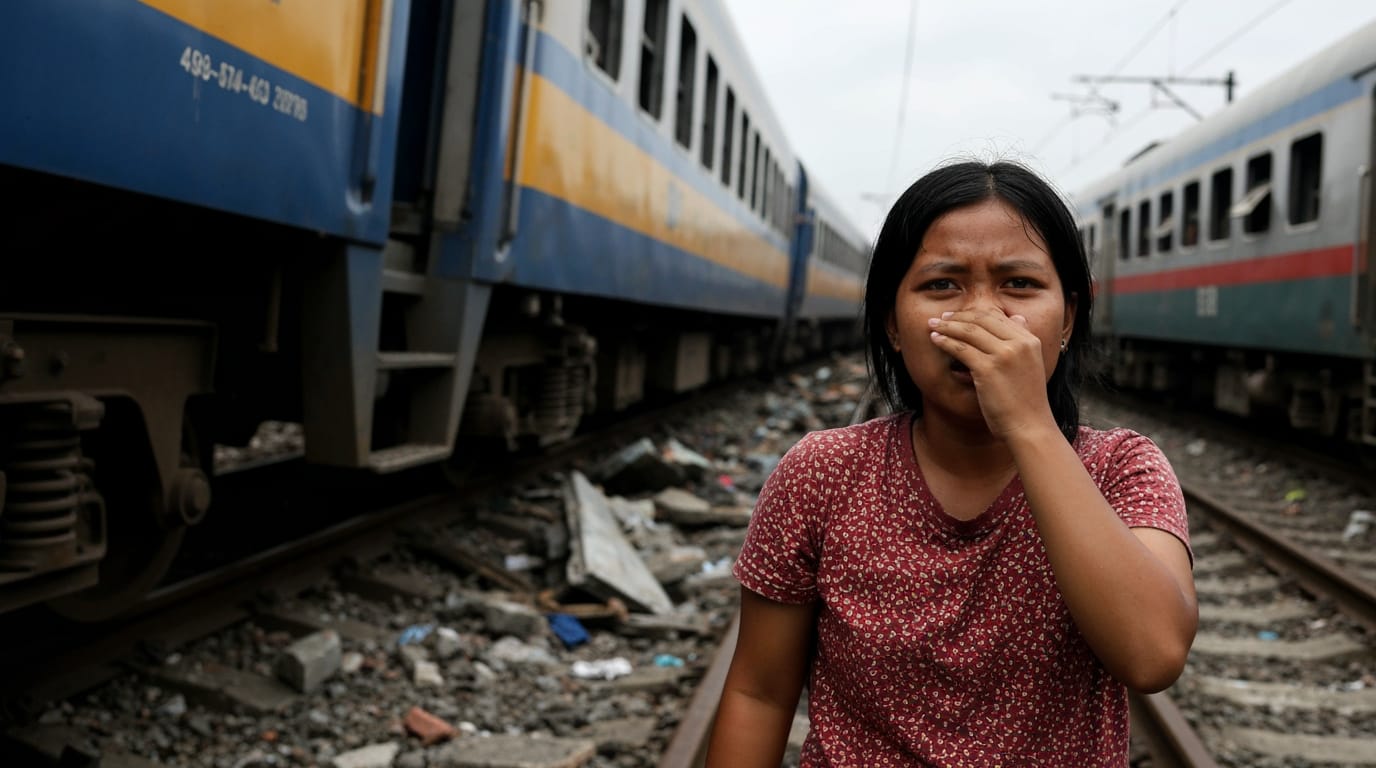
Bekasi, Indonesia – A catastrophic train collision near Indonesia's capital, Jakarta, has left at least 14 people dead and 84 others injured, as emergency services continue arduous rescue operations through mangled wreckage. The tragic incident occurred late Monday evening at East Bekasi Station in West Java, involving a commuter train and a long-distance intercity service, underscoring persistent concerns about rail safety in the densely populated nation.
The collision took place when the long-distance Argo Bromo Anggrek train struck the rear of a stationary CommuterLine train, which had halted on Track 1, heading east toward Cikarang. Preliminary findings suggest the CommuterLine train had stopped following an earlier incident where it was hit by a taxi at a level crossing near Bulak Kapal. The force of the impact caused significant damage to several carriages, trapping numerous passengers and initiating a large-scale emergency response.
The Devastating Impact and Immediate Aftermath
Monday night's collision plunged East Bekasi Station into chaos, transforming a routine evening commute into a scene of destruction and despair. The intercity Argo Bromo Anggrek train, traveling on the same track, slammed into the last carriage of the stopped CommuterLine train, which was reportedly designated for women passengers. Survivors recounted terrifying moments of fear and disorientation as the impact sent shockwaves through the carriages. One survivor described fearing suffocation amidst a "human pile-up" within the crumpled metal.
The immediate aftermath saw local residents and emergency responders rushing to the scene, confronted by the grim task of extracting victims from the twisted remains of the trains. The Jakarta search and rescue agency reported "significant damage to several train carriages," making extrication a delicate and challenging process. Images from the scene depicted overturned and heavily damaged cars, with rescuers utilizing specialized equipment, including angle grinders, to cut through metal and reach those trapped inside. Ambulances lined up at the station, ferrying the injured to nearby hospitals as medical triage points were quickly established.
Rescue Efforts Amidst Rising Casualties
Throughout the night and into Tuesday morning, rescue teams intensified their efforts, working tirelessly under floodlights to locate and free passengers pinned within the wreckage. The state-owned railway operator, PT Kereta Api Indonesia (KAI), confirmed the initial fatalities, with the death toll steadily rising as more victims were recovered. As of Tuesday, April 28, 2026, authorities reported 14 confirmed fatalities and 84 injuries, a somber increase from earlier figures. All reported fatalities and the majority of injuries occurred among the CommuterLine passengers, while the approximately 240 passengers aboard the Argo Bromo Anggrek train were safely evacuated.
The injured were transported to several medical facilities across Bekasi, including Primaya Hospital Bekasi, Bekasi City General Hospital, Bella Hospital, and Mitra Keluarga Hospital. Many of those injured were women returning home from work, highlighting the human toll of the tragedy on everyday commuters. Emergency responders established a command post at Bekasi Timur Station to coordinate victim assistance, provide information to anxious families, and oversee the recovery of train operations. The complex nature of the rescue required specialized personnel to perform "measured extrication" of survivors still pinned by train materials.
Unraveling the Causes: An Ongoing Investigation
While the immediate cause of the collision appears to be the long-distance train striking the stationary commuter service, the sequence of events leading to the commuter train's halt is now a central focus of the ongoing investigation. Preliminary reports suggest the CommuterLine train was forced to stop after an earlier incident involving a taxi colliding with the train at a level crossing. This initial disruption on the tracks then set the stage for the subsequent, more severe rear-end collision.
The National Transportation Safety Committee (KNKT) has initiated a thorough investigation to determine the exact chronology of events and contributing factors. Authorities will meticulously examine railway signals, operational protocols, communication systems, and the condition of both trains and the track infrastructure. While the KAI President Director Bobby Rasyidin acknowledged the preliminary findings, he emphasized that the final investigation by the KNKT would provide a definitive account. Such inquiries typically scrutinize factors like human error, including potential misinterpretation of signals or inadequate response, as well as possible infrastructure deficiencies or maintenance issues that might have played a role in the accident.
A History of Concerns: Indonesia's Rail Safety Record
This latest tragedy painfully highlights the long-standing challenges in rail safety within Indonesia. Transport accidents, particularly involving trains, are not uncommon across the vast archipelago, where infrastructure, including railways, buses, and even aircraft, can be prone to age and inadequate maintenance. The nation has a history marked by several devastating rail incidents, each serving as a stark reminder of the urgent need for continuous improvements in safety standards.
One of the most tragic events in Indonesian rail history was the 1987 Bintaro tragedy, a head-on collision that killed more than 150 people and exposed severe deficiencies in signaling systems and operational coordination. More recently, a train crash in January 2024 in West Java claimed the lives of four crew members and injured dozens, while a 2015 incident in Jakarta saw 16 fatalities when a commuter train collided with a minibus at a level crossing. These incidents, among others, have consistently pointed to a combination of factors, including human error, inadequate staff training, fatigue, poorly maintained tracks, and outdated signaling systems, as contributors to hazardous conditions on the rail network. Experts have long advocated for a multi-pronged strategy to address these systemic issues.
The Path Forward: Enhancing Rail Safety
In response to past accidents and ongoing concerns, there have been efforts to modernize Indonesia's railway infrastructure and enhance safety protocols. These initiatives include upgrading signaling systems to digital platforms, which aim to provide real-time information to train operators and facilitate better coordination and control. Such modern systems are designed to automatically detect potential hazards, providing operators with more time to react and prevent collisions.
The implementation of a Railway Safety Management System (SMKP) by the Indonesian Railway Corporation (KAI), as mandated by government regulations, signifies a commitment to improving safety standards. However, experts stress that despite these measures, strict adherence to established procedures and a collective effort from all stakeholders are imperative to mitigate risks. The emphasis is shifting from a reactive approach to a preventive paradigm in disaster management within high-risk railway segments, aiming to foster a culture of commitment towards achieving zero accidents. This requires continuous investment in infrastructure, rigorous maintenance schedules, comprehensive training for railway personnel, and the adoption of cutting-edge technology to ensure the safety and operational excellence of Indonesia's extensive rail network.
The East Bekasi collision serves as a poignant reminder of the critical importance of these ongoing efforts. As rescue operations conclude and investigations proceed, the focus will undoubtedly turn to how such tragedies can be prevented, ensuring safer journeys for the millions who rely on Indonesia's railways daily. The human cost of this accident underscores the urgent need for robust safety measures and a sustained commitment to modernizing and securing the nation's vital transportation infrastructure.


