Vienna Trial Underway in Foiled Terror Plot Targeting Taylor Swift Concert
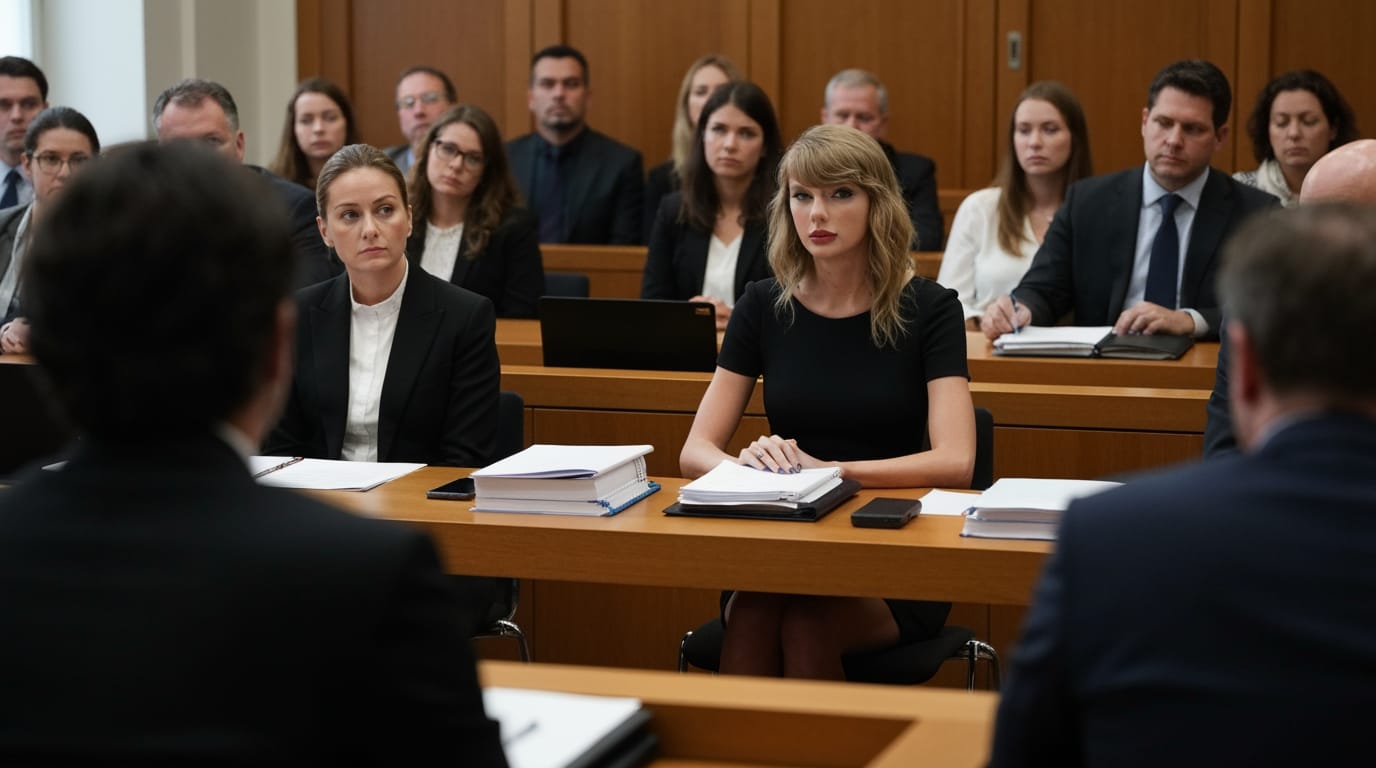
WIENER NEUSTADT, Austria – A high-stakes trial has commenced in Austria against an individual accused of plotting a devastating terrorist attack on a Taylor Swift concert nearly two years ago, a scheme that prompted the eleventh-hour cancellation of the superstar's sold-out performances in Vienna. The proceedings, which began on April 28, 2026, in Wiener Neustadt, aim to unravel the intricate details of the alleged conspiracy, linked to the Islamic State (IS) group, that sought to inflict mass casualties among concertgoers. The case underscores the persistent global threat of extremist violence against large public gatherings and the critical role of international intelligence cooperation in thwarting such designs.
The defendant, identified under Austrian privacy rules only as Beran A., a 21-year-old Austrian citizen, stands accused of terrorist offenses and membership in a terrorist organization. Prosecutors allege that Beran A. pledged allegiance to the Islamic State and intended to target thousands of fans attending Swift's Eras Tour concerts, scheduled for August 8-10, 2024, at Vienna's Ernst-Happel-Stadion. His attorney has indicated that her client plans to plead guilty to most of the charges, though specific details of the plea have not been publicly disclosed.
The Unveiling of a Deadly Plot
The audacious plot came to light in August 2024, just ahead of Swift's first-ever concerts in Austria, which had sold out rapidly, anticipating over 200,000 attendees across three nights. U.S. intelligence played a pivotal role in uncovering the threat, reportedly intercepting an "oath of allegiance" to the Islamic State uploaded by Beran A. on the messaging app Telegram in early July 2024. This crucial information was then relayed to Europol and Austrian authorities, triggering a swift and decisive response.
On August 7, 2024, Austrian federal police launched a major operation in Ternitz, Lower Austria, leading to the arrest of Beran A. Authorities subsequently found bomb-making materials, including triacetone triperoxide (TATP), knives, and machetes during searches of his residence. Investigations revealed Beran A.'s alleged intent to target an estimated 30,000 onlookers gathered outside the stadium each night, with a stated desire to "kill as many people as possible" using knives or homemade explosives. A second suspect, a 17-year-old, was arrested on the same day, followed by an 18-year-old Iraqi citizen on August 8.
Concerts Canceled, Fans Disheartened
The gravity of the threat forced event organizer Barracuda Music to cancel all three Vienna concerts indefinitely. The decision, made in consultation with law enforcement and Swift's management, was deemed necessary for public safety. Taylor Swift herself later expressed her devastation and a "new sense of fear" and "tremendous amount of guilt" over the cancellations, acknowledging the profound disappointment of her fans, known as "Swifties," many of whom had traveled globally for the shows.
Despite the initial heartbreak, Swifties in Vienna rallied, transforming the city into an impromptu hub for trading friendship bracelets and holding singalongs, a testament to the community forged by the artist's music. The cancellation served as a stark reminder of the vulnerability of large public events to extremist attacks, drawing parallels to the 2017 bombing at an Ariana Grande concert in Manchester, England, which claimed 22 lives.
Broader Network and Previous Plots
The current trial also sheds light on a wider network of alleged extremist activities. Beran A. is on trial alongside Arda K., whose full name, like others involved, has not been publicly released due to Austrian privacy laws. Prosecutors allege that Beran A. and Arda K., along with a third individual identified as Hasan E., had previously planned simultaneous attacks in Saudi Arabia, Turkey, and the United Arab Emirates during Ramadan in 2024, purportedly in the name of the Islamic State. While Beran A. and Arda K. reportedly did not carry out their parts of this multi-country plot, Hasan E. allegedly stabbed a security guard at the Grand Mosque in Mecca, Saudi Arabia, in March 2024 and remains in pre-trial detention there. After these plans did not materialize, Beran A. allegedly shifted his focus to the Taylor Swift concert in Vienna.
Furthermore, in 2025, a Syrian juvenile identified as Mohammad A. was convicted in a German court for his role in supporting the Vienna plot. Mohammad A. received a suspended 18-month prison sentence for translating bomb-building instructions and facilitating contact between Beran A. and an IS member online. Another acquaintance of Beran A., Luca K., was also convicted in an Austrian court in July 2025 on unrelated terrorism charges, though he was arrested shortly before the Swift concerts and had shared Islamic State propaganda. These interconnected cases highlight the online radicalization of youth and the transnational nature of contemporary terrorist threats.
Implications for Public Safety
The trial of Beran A. and Arda K., with proceedings scheduled to continue into May, carries significant implications for understanding and combating homegrown extremism. Beran A. faces a potential sentence of up to 20 years in prison if convicted. The meticulous planning and the target selection — a global pop culture event — underscore a trend of IS-inspired individuals aiming for high-impact attacks to maximize casualties and media attention. The rapid online radicalization of teenagers and young adults, often through social media platforms, remains a critical concern for law enforcement and counterterrorism agencies worldwide.
The successful disruption of the Vienna plot serves as a powerful example of effective intelligence sharing and coordinated law enforcement action across international borders. It also emphasizes the ongoing need for vigilance and enhanced security measures at large public gatherings, as authorities continue to adapt to evolving terrorist tactics and the persistent threat of extremist ideologies. The world watches as the Austrian justice system seeks accountability for a plot that aimed to turn a celebration of music into a scene of tragedy.


