Deadly Train Collision Rocks Southern Spain, Claiming at Least 21 Lives
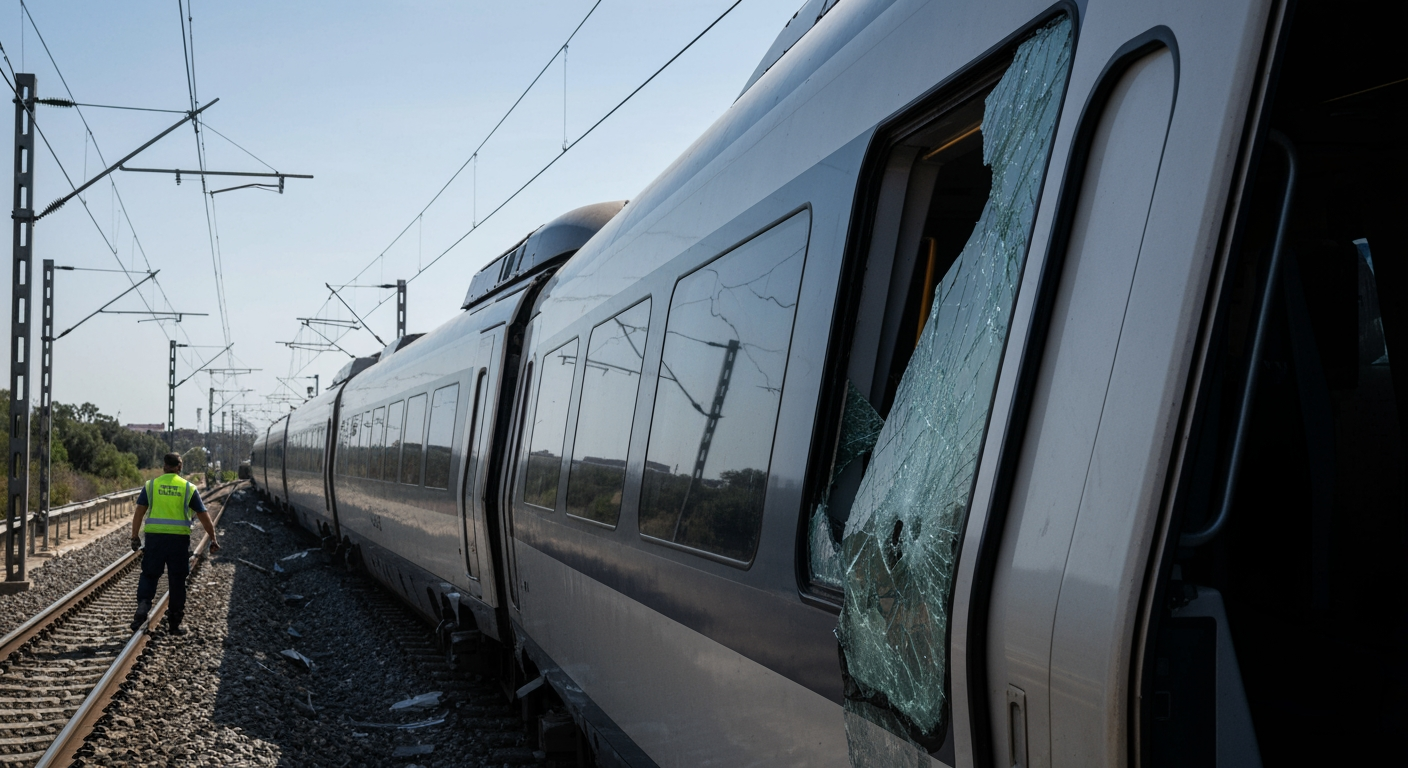
ADAMUZ, Cordoba Province, Spain – A catastrophic train collision in southern Spain on Sunday night has left at least 21 people dead and scores injured, plunging the nation into mourning. The accident occurred near Adamuz in the province of Cordoba when a high-speed train derailed and tragically struck an oncoming service on an adjacent track, triggering a massive emergency response and halting rail travel across a major corridor.
The devastating incident unfolded around 6:40 PM local time (17:40 GMT), approximately 10 minutes after an Iryo train, traveling from Málaga to Madrid, departed its station. According to Spain's rail infrastructure operator Adif, the Málaga-bound service left its tracks, crossing into the path of a train operating the Madrid-Huelva route. The impact, described by witnesses as feeling like an "earthquake," caused extensive damage, with carriages overturning and trapping passengers inside the twisted wreckage.
A Scene of Chaos and Heroism
Initial reports from the Spanish Interior Ministry confirmed 21 fatalities, a number that authorities warned could fluctuate as rescue operations continued into the night. Beyond the tragic loss of life, approximately 100 individuals sustained injuries, with at least 25 reported to be in serious condition, according to state-owned broadcaster RTVE and other sources. The Iryo train alone was carrying 317 passengers, and estimates suggest around 400 people were aboard the two trains combined at the time of the collision.
Eyewitness accounts painted a harrowing picture of the aftermath. Passengers, some using emergency hammers to smash windows, described a scene of "horror movie" proportions as they struggled to escape from mangled carriages. "In our carriage we're well but we don't know about the other carriages. There's smoke and they're calling for a doctor,” one survivor posted on social media. The complexity of the wreckage, with metal twisted around trapped individuals, posed significant challenges for rescue teams.
Immediate Response and Investigation
Emergency services, including Andalusian emergency teams, the Civil Guard, fire services, and medical crews, were immediately deployed to the remote crash site. The Spanish Military Emergency Unit was also mobilized to assist in the arduous rescue efforts, working alongside local residents who came forward to help transfer those with minor injuries to a nearby sports center for initial treatment. Hospitals in Madrid quickly offered their support to the Andalucía region, standing ready to receive casualties if needed.
As the full scope of the tragedy became clear, Spanish Transport Minister Oscar Puente described the collision as a "terrible impact," noting that the last two wagons of the Málaga-Madrid train derailed and struck the first two wagons of the oncoming service, sending them off their tracks. Spanish Prime Minister Pedro Sánchez expressed his deep concern, stating that he and his government were "closely monitoring" the situation. Spain's Royal Family also extended their condolences to the families of the victims.
Disruptions and Lingering Questions
The Spanish rail body Adif announced the immediate suspension of all high-speed rail services between Madrid and Andalucía, a crucial artery for travel in the country. Services are expected to remain suspended until at least Tuesday as recovery and preliminary investigation work continues at the crash site. Adif has established assistance centers at major stations in Madrid, Málaga, and Huelva to provide information and support for the relatives of affected passengers, with a dedicated phone line also in operation.
The cause of the derailment and subsequent collision remains unknown and will be the subject of an intensive investigation. While no official statements have yet attributed blame, the focus will be on understanding the circumstances that led to one train leaving its designated track and colliding with another on a high-speed line. The incident marks a grim start to the year for Spain's railway network, which prides itself on its modern infrastructure and safety record. The nation now faces the difficult task of understanding how such a catastrophic event could have occurred and what measures might prevent future tragedies.
Related Articles

Ratko Mladić, "Butcher of Bosnia" and Convicted War Criminal, Dies at 84
THE HAGUE, Netherlands – Ratko Mladić, the former Bosnian Serb military commander known as the "Butcher of Bosnia" and convicted of genocide, war crimes, and crimes against humanity, has died at the age of 84. Serbian...

Long-Awaited 9/11 Mastermind Trial Set for 2028, Decades After Attacks
GUANTANAMO BAY, Cuba – Nearly a quarter-century after the devastating terror attacks of September 11, 2001, a military judge has finally set a trial date for Khalid Sheikh Mohammed, the alleged mastermind behind the...