Deadly US Strike in Caribbean Escalates Controversial Anti-Drug Campaign, Raising Legal and Ethical Concerns
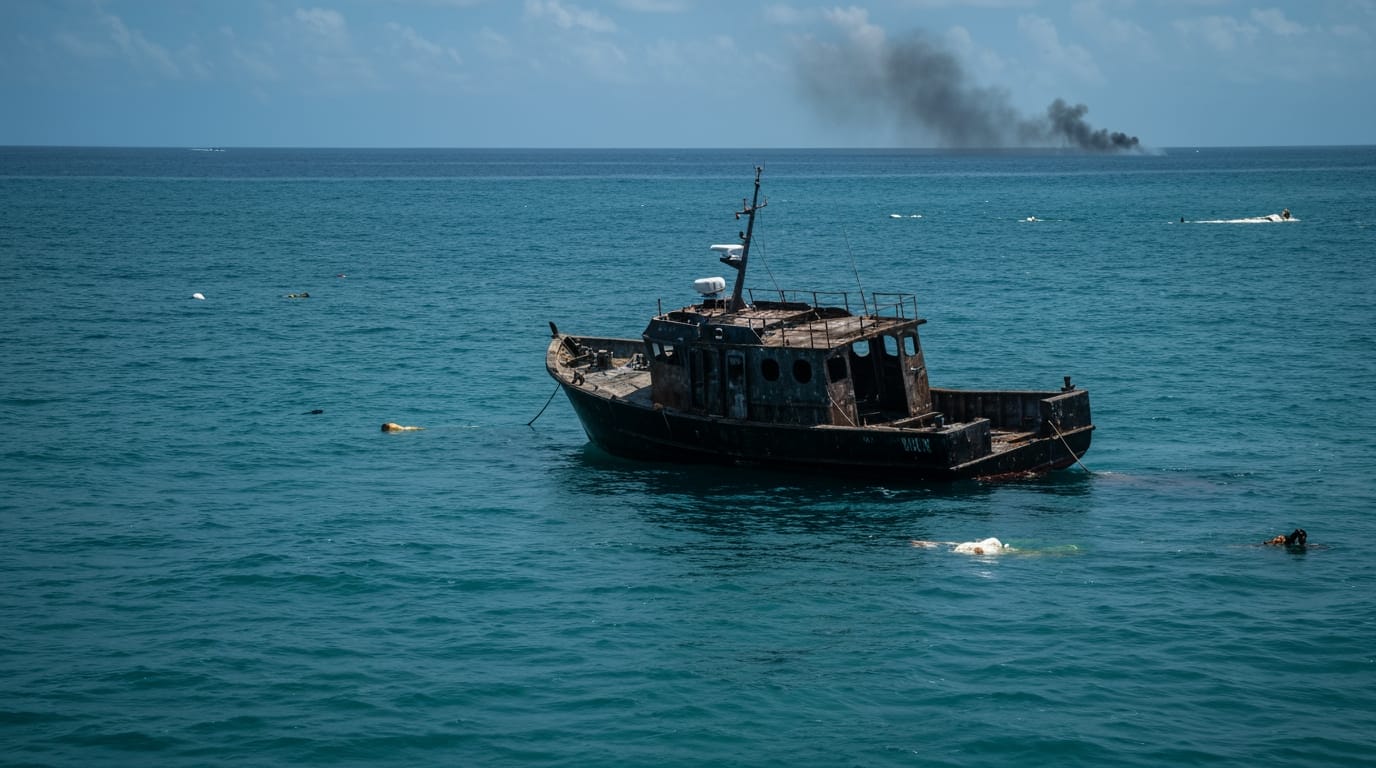
A recent United States military strike on a suspected drug-trafficking vessel in the Caribbean Sea resulted in the deaths of three individuals, marking the latest incident in an escalating and increasingly controversial campaign against alleged "narco-terrorists" in the region. The February 13 operation, carried out by U.S. Southern Command (SOUTHCOM) and Joint Task Force Southern Spear, is part of a broader offensive that has drawn sharp criticism from international human rights organizations and some U.S. lawmakers who question the legality and ethics of using lethal force against individuals suspected of drug offenses. With a rising death toll from such strikes, the approach has ignited a global debate over international law, military engagement in law enforcement, and the future of counter-narcotics efforts.
The Latest Incident: A Kinetic Strike in International Waters
The U.S. military confirmed on February 13, 2026, that it conducted a "lethal kinetic strike" on a vessel in the Caribbean Sea, alleging it was operated by "Designated Terrorist Organizations" and engaged in narco-trafficking operations. Three individuals aboard the vessel were killed, whom SOUTHCOM identified as "narcoterrorists." No U.S. military personnel were harmed during the action, which was carried out under the direction of General Francis L. Donovan, SOUTHCOM commander. A video linked to a SOUTHCOM social media post depicted a boat moving through water before erupting in flames following the strike. This incident is reportedly the fourth publicly known attack of its kind by U.S. forces in 2026.
The strike is consistent with the Trump administration's asserted stance that the U.S. is engaged in an "armed conflict" with drug cartels, framing the large-scale drug trade as an "armed attack" on the United States due to the tens of thousands of American deaths caused by narcotics annually. This interpretation allows the administration to categorize those killed in these operations as "unlawful combatants," thereby claiming the ability to engage in lethal strikes without judicial review, based on a classified Justice Department finding. Defense Secretary Pete Hegseth has publicly stated that these "highly effective" kinetic strikes have led some "top cartel drug-traffickers" to cease operations "INDEFINITELY," though he has not provided specific details or evidence to substantiate these claims.
Operation Southern Spear: An Escalating Campaign
The February 13 strike is not an isolated event but rather a continuation of an expanded anti-narcotics campaign, dubbed Operation Southern Spear, launched by the Trump administration in late 2025. This initiative involves repeated maritime interdictions and lethal strikes targeting alleged drug boats in both the Caribbean Sea and the Eastern Pacific Ocean. Since early September 2025, the overall death toll from these operations has climbed significantly, with figures ranging from 124 to 148 individuals killed in attacks on suspected drug boats. This includes incidents like one in September 2025 where 11 people were killed, and another on September 15, 2025, resulting in three deaths.
The administration has stated that these operations are aimed at curtailing narcotics trafficking and disrupting criminal networks. Some of the targeted vessels have been linked to groups like the Ejército de Liberación Nacional (ELN), a Colombian guerrilla organization designated as a terrorist entity by the U.S. since the 1990s. U.S. officials maintain that intelligence confirms these vessels are transiting known narco-trafficking routes and are actively involved in drug operations. However, critics argue that the administration has publicly presented little concrete evidence to support its claims regarding the affiliation of those killed or the presence of drugs on each interdicted vessel.
International Outcry and Legal Scrutiny
The aggressive nature of Operation Southern Spear has ignited widespread criticism and raised serious questions about its compliance with international law and human rights principles. The legality of these strikes has come under "intense scrutiny" from both U.S. lawmakers and international bodies.
Volker Türk, the UN High Commissioner for Human Rights, has been a prominent critic, asserting that the U.S. strikes in the Caribbean and Pacific "violate international human rights law" and constitute "extrajudicial killings." He emphasized that countering illicit drug trafficking is fundamentally a law enforcement matter, not military warfare, and that international human rights law sets "careful limits on lethal force." According to Türk, lethal force is permissible only as a last resort when individuals pose an "imminent threat to life." He noted that based on the "sparse information" provided by U.S. authorities, it does not appear that those on the targeted boats posed such a threat to justify the use of lethal armed force. Türk has called for prompt, independent, and transparent investigations into the reported attacks. UN experts have further condemned these actions, stating that international law "does not allow governments to simply murder alleged drug traffickers," and that criminal activities should be addressed through investigation and prosecution, not military engagement.
Within the U.S., some lawmakers have expressed concern, pushing for more evidence to justify the strikes and questioning the administration's "convoluted" legal rationale. Human rights organizations like Amnesty International have described these maritime killings as potential "extrajudicial actions lacking judicial oversight." The American Civil Liberties Union (ACLU) has also weighed in, stating that "under both U.S. and international law, it is flagrantly illegal to use the military to kill civilians suspected only of crimes." The ACLU further asserts that "civilians, including those suspected of smuggling drugs, are not lawful targets," and that simply stating the strikes are lawful does not make it true.
The controversy has also impacted international cooperation in counter-narcotics efforts. Several nations, including the United Kingdom, the Netherlands, Canada, and Colombia, have reportedly curtailed or suspended intelligence sharing with the U.S. due to concerns that their intelligence might be used to facilitate what they view as unlawful targeting or human rights violations. Colombia's President Gustavo Petro justified his country's decision by stating, "The fight against drugs must be subordinated to the human rights of the Caribbean people."
Redefining the 'War on Drugs'
The Trump administration's kinetic approach represents a significant shift in the "war on drugs," blurring the traditional lines between law enforcement and military engagement. Historically, U.S. counter-narcotics efforts have often involved Coast Guard interdictions, which focus on boarding vessels, seizing illegal drugs, and apprehending suspects for prosecution. However, the current strategy emphasizes lethal strikes as a first resort.
Critics, including the Washington Office on Latin America (WOLA), argue that this "hyper-militarized drug war" is not only unlawful but also largely ineffective in achieving its stated goal of stopping drug trafficking. They contend that drug trafficking organizations typically adapt to interdiction efforts by increasing production, diversifying routes, and adopting new technologies, rendering kinetic strikes a costly and ultimately futile tactic. Despite the increased lethality of U.S. operations, data presented by WOLA indicates only a marginal increase in average monthly drug seizures compared to periods before the kinetic strikes intensified.
The classification of drug cartels as "Designated Terrorist Organizations" and the assertion of "armed conflict" status are central to the administration's legal justification for these military actions. However, human rights experts and international law scholars argue that drug trafficking alone does not constitute "armed violence" at a level that would qualify as a non-international armed conflict under international law. They assert that even if drug cartels use violence, it is the level and nature of that violence that matters, not their drug activities per se. This debate underscores fundamental questions about the application of international humanitarian law versus international human rights law in combating transnational organized crime.
Conclusion: A Precarious Path Forward
The latest U.S. military strike in the Caribbean, resulting in three fatalities, highlights the deep division and complex challenges surrounding the current counter-narcotics strategy. While the administration maintains that these kinetic operations are a necessary and effective measure to combat drug trafficking and protect national security, the approach faces formidable opposition on legal, ethical, and practical grounds.
The ongoing debate centers on the appropriate use of military force, the sanctity of human rights, and the interpretation of international law in an evolving global landscape of transnational crime. As the death toll from Operation Southern Spear continues to rise, the international community watches closely, demanding greater accountability, transparency, and adherence to established legal frameworks. The long-term implications of these aggressive tactics for international cooperation, regional stability, and the very principles governing the use of force on the high seas remain a subject of profound concern and ongoing scrutiny.


