Transatlantic Trade on Thin Ice: EU Freezes US Deal Amid Tariff Turmoil
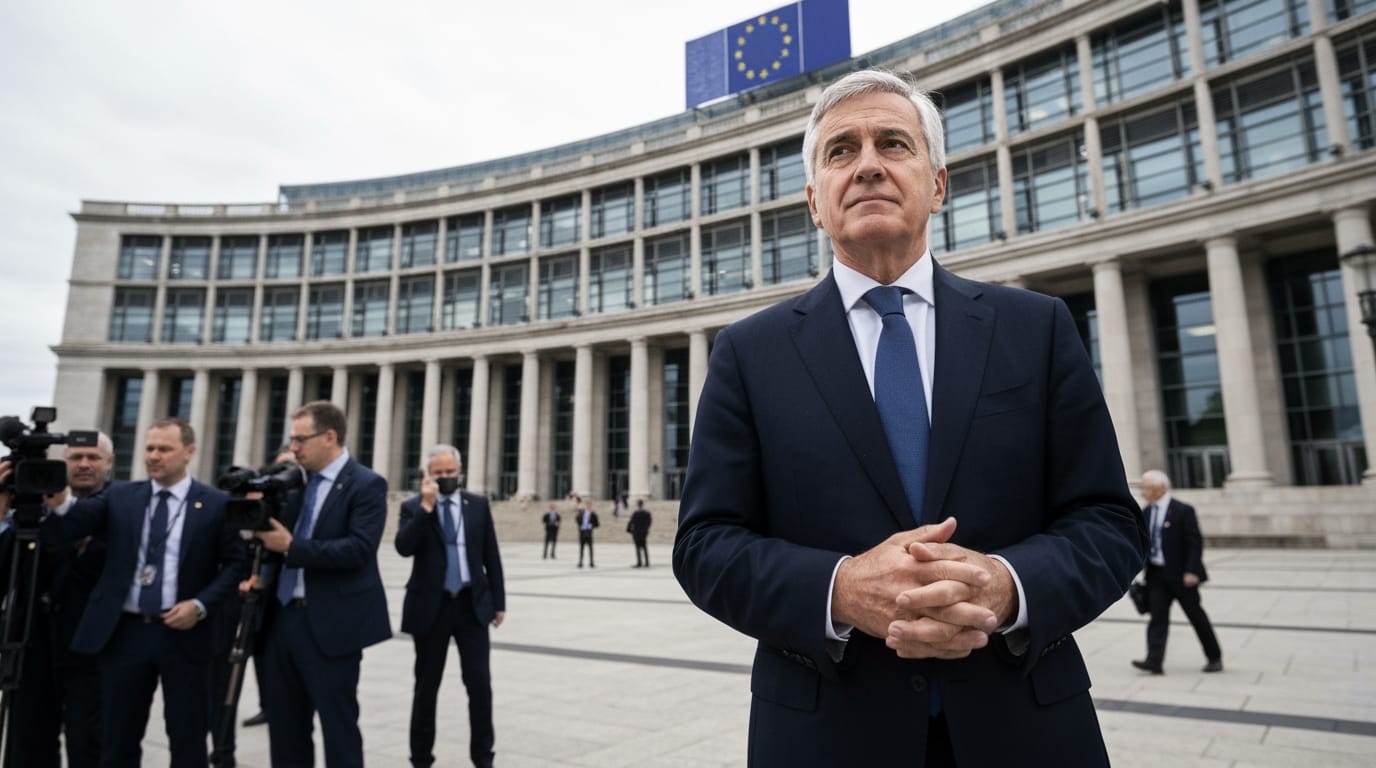
BRUSSELS — The delicate balance of transatlantic trade relations has been severely tested, culminating in the European Union's decision to freeze the ratification of its major trade agreement with the United States. This significant move follows a landmark U.S. Supreme Court ruling that invalidated President Donald Trump's sweeping "reciprocal tariffs," only for the administration to immediately announce a new, equally contentious global levy, plunging global commerce into fresh uncertainty. The European Parliament's swift action, taken on Monday, February 23, aims to seek urgent clarity from Washington regarding its shifting trade policy, placing a critical $750 billion energy-for-goods pact in jeopardy and signaling deepening friction between key economic allies.
Supreme Court Delivers Blow to Presidential Tariff Authority
The catalyst for the current trade upheaval arrived on Friday, February 20, 2026, when the U.S. Supreme Court delivered a decisive 6-3 ruling against President Trump's broad tariff regime. The high court determined that the president had overstepped his constitutional authority by imposing tariffs under the 1977 International Emergency Economic Powers Act (IEEPA). Chief Justice John Roberts, writing for the majority, clarified that while the IEEPA allows the president to regulate imports during national emergencies, it does not grant the power to impose tariffs, a prerogative specifically reserved for Congress under Article I of the U.S. Constitution. This ruling specifically targeted the "reciprocal tariffs" enacted by the Trump administration in April 2025, which had subjected a wide array of imports, including many from the EU, to a 15% blanket duty. The Court's decision, however, did not impact sector-specific tariffs imposed under other statutes, such as those on steel and aluminum, which remain in effect. The ruling left open questions regarding the potential refunding of an estimated over $200 billion in tariffs already collected under the IEEPA, introducing another layer of complexity for businesses and the U.S. Treasury.
Trump Responds with New Global Tariffs, Defying Court
In an immediate and defiant response to the Supreme Court's judgment, President Trump announced the imposition of new global tariffs, initially set at 10% and swiftly raised to 15% the following day. The administration justified these new levies by invoking Section 122 of the Trade Act of 1974, a different legal mechanism that permits the president to impose tariffs for up to 150 days to address significant balance-of-payments deficits, without requiring congressional approval. The president expressed his disappointment with the Supreme Court's decision, characterizing the judges in strong terms and asserting that the new import duties would be effective immediately. This rapid shift in the legal basis for tariffs, coupled with the renewed threat of widespread import taxes, intensified concerns among international trading partners and reintroduced significant unpredictability into global commerce. U.S. Trade Representative Jamieson Greer, while acknowledging the new global tariffs, indicated that the administration intended to uphold existing bilateral trade agreements. However, the broader implications of applying a universal 15% tariff alongside previous specific agreements remained a point of considerable ambiguity for allies.
EU Sounds Alarm, Puts Trade Deal on Hold
The European Union reacted swiftly to the unfolding situation, with major political groups in the European Parliament collectively agreeing to suspend legislative work on the ratification of the EU-U.S. trade deal. This agreement, forged in July 2025 between President Trump and European Commission President Ursula von der Leyen, was a comprehensive package designed to avert a full-blown transatlantic trade war. It proposed a 15% import tax on most EU exports to the U.S., reciprocal elimination of tariffs on American industrial goods entering the bloc, and a commitment from the EU to purchase $750 billion in U.S. energy. However, the deal's path to ratification had already been rocky, notably being paused once before when President Trump threatened to annex Greenland.
Now, the newly announced U.S. tariffs under Section 122 have reignited European anxieties. Zeljana Zovko, the lead trade negotiator for the European People's Party (EPP), the largest political bloc in the European Parliament, stated that there was "no other option" but to delay the approval process to gain clarity. Similar sentiments were echoed by other influential groups, including the Socialists & Democrats and the liberal Renew group. Bernd Lange, chairman of the European Parliament's trade committee, convened an emergency meeting, describing the situation as "pure customs chaos on the part of the U.S. government" and questioning if the new tariffs constituted a breach of the existing agreement. European Commission spokesperson for trade, Olof Gill, affirmed the EU's stance, noting they were "analysing it carefully" and seeking "full clarity" from the U.S. administration on its next steps. The Commission also firmly reiterated that "A deal is a deal," implicitly urging Washington to adhere to the terms of the 2025 agreement and expressing concerns that the new blanket tariffs might supersede the specific exemptions and rates negotiated in the trade pact, potentially nullifying the comparative advantage granted to EU exporters.
Broader Economic and Political Fallout Anticipated
The ripple effects of the Supreme Court's ruling and the subsequent imposition of new U.S. tariffs extend far beyond the immediate EU-U.S. trade deal. The renewed uncertainty has created an environment of economic turbulence for businesses and markets worldwide. European stocks, for instance, experienced an immediate dip following the news. Economists have warned that the continuation of tariffs, even under a different legal guise, could lead to higher consumer prices and potentially slow economic growth. The effective global U.S. tariff rate, which stood at approximately 3% before 2025 and 13.7% with the now-invalidated IEEPA tariffs, is estimated to hover around 8% under the new Section 122 measures—still significantly higher than pre-Trump administration levels.
For the U.S. domestic economy, the ruling also brings the complex issue of tariff refunds for businesses that paid duties under the IEEPA. While the Supreme Court did not specify the mechanism for these refunds, the potential for billions of dollars in reimbursements adds another layer of financial and logistical challenge for the government and importers. Politically, the situation creates an opportunity for the EU and other international partners to push back more forcefully against what they perceive as unpredictable and unilateral U.S. trade policies, potentially emboldened by the Supreme Court's constraint on presidential power. The future of transatlantic economic cooperation, a cornerstone of the global trading system, hinges on the ability of both sides to navigate this period of heightened tension and uncertainty.
The current pause in the EU-U.S. trade deal ratification underscores the fragile state of global trade diplomacy. As European officials await detailed explanations and commitments from the Trump administration, the transatlantic economic relationship finds itself at a critical juncture. The resolution of this latest tariff dispute will not only determine the fate of a major trade agreement but also signal the direction of international trade policy in an increasingly complex geopolitical landscape.


