Deadly US Strike in Eastern Pacific Claims Two Lives in Ongoing Anti-Drug Campaign
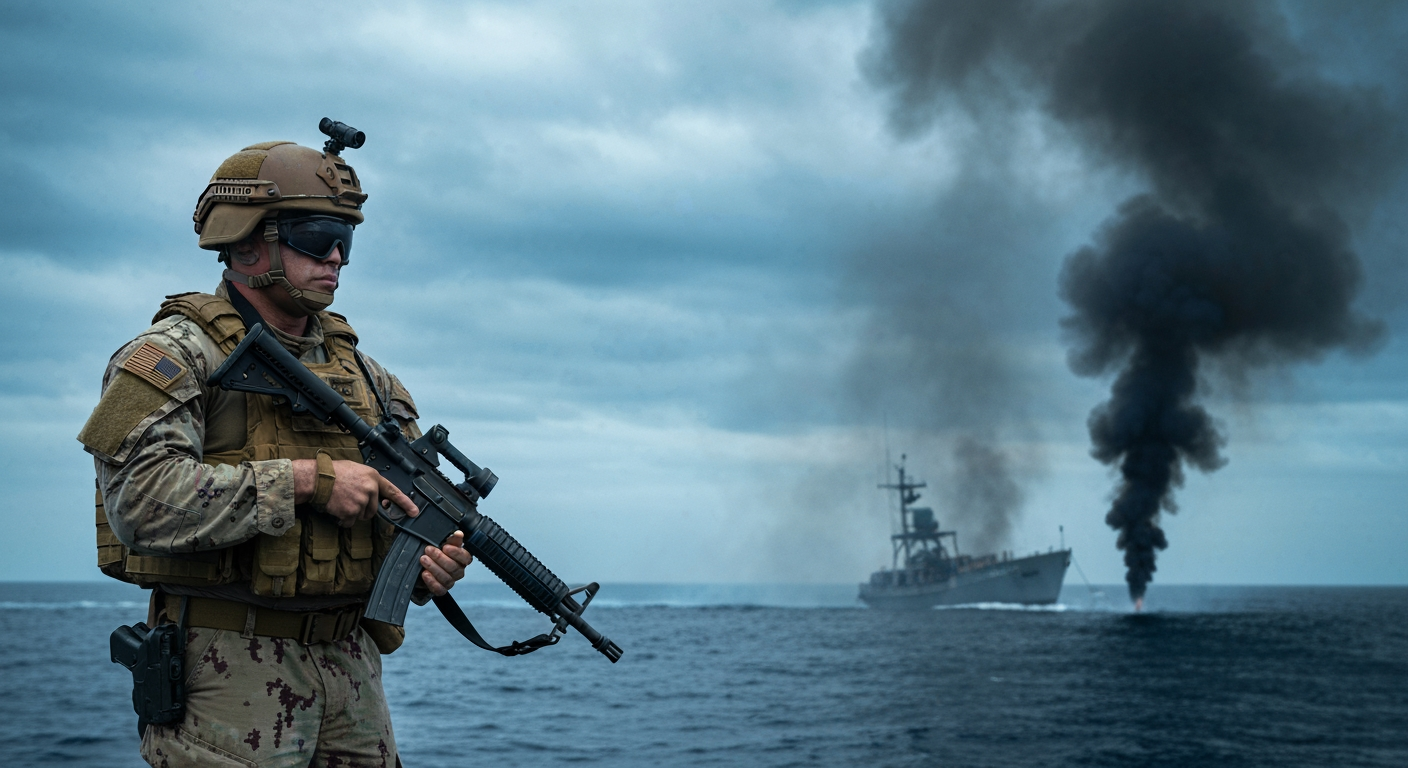
Eastern Pacific Ocean – A U.S. military strike on an alleged drug-smuggling vessel in the Eastern Pacific on Friday resulted in the deaths of two individuals and left one survivor, according to statements from the U.S. Southern Command. The incident marks the latest in an aggressive and expanding U.S. campaign aimed at disrupting maritime narcotics trafficking routes, a strategy that has drawn both praise for its purported effectiveness and sharp criticism over its lethality and legal implications.
The Deadly Encounter Unfolds
The kinetic strike, carried out by Joint Task Force Southern Spear under the direction of Secretary of Defense Pete Hegseth, occurred on January 23, 2026. U.S. Southern Command announced the operation, stating that "Intelligence confirmed the vessel was transiting along known narco-trafficking routes in the Eastern Pacific and was engaged in narco-trafficking operations." The command further alleged that the vessel was operated by "Designated Terrorist Organizations." A video accompanying the social media announcement reportedly showed the boat moving through the water before erupting in flames. Following the strike, the U.S. Coast Guard was notified to initiate search and rescue operations for the sole survivor.
Escalating Maritime Interdiction
This recent incident is not isolated but rather part of a broader, intensified U.S. military offensive against drug-smuggling operations in the Latin American region. Since September 2, 2025, U.S. forces have conducted between 35 and 36 known strikes on alleged drug boats in South American waters, including the Caribbean Sea and the Eastern Pacific. These operations have tragically claimed the lives of at least 117 to 125 people. The expansion of these strikes into the Eastern Pacific in October 2025 signaled an escalation in the geographical scope of these interdiction efforts, which initially focused primarily on the Caribbean. Previous strikes in late December, just weeks prior to this latest incident, saw five alleged drug-smuggling boats hit over two days, resulting in eight deaths as others reportedly jumped overboard.
Allegations of Narco-Terrorism and Strategic Shift
The Trump administration has framed these maritime interdictions as a crucial component in its fight against international drug trafficking and what it terms "narco-terrorism." The justification for these lethal strikes rests on intelligence indicating the vessels' involvement in drug operations and alleged ties to groups designated as terrorist organizations. This policy has become particularly intertwined with the U.S. stance on Venezuela. The January 23 strike marks the first such attack since the U.S. launched a military operation on January 3 to capture Venezuelan President Nicolás Maduro and his wife, Cilia Flores, who are now facing narcotics trafficking charges in a federal jail in Brooklyn, New York. The administration has repeatedly accused Maduro of drug trafficking and collaborating with designated terrorist groups, allegations Maduro denies. President Trump has asserted that these aggressive military actions are having a significant impact, claiming to have "virtually stopped almost 100 percent of all drugs coming in by water."
Human Rights Concerns and Policy Debate
Despite the administration's assertions of success, the increasing frequency and lethal nature of these strikes have sparked considerable alarm among world leaders and human rights advocates. Critics have likened these boat bombings to extrajudicial killings, raising serious questions about the legality, ethics, and accountability surrounding the use of lethal force in these interdiction operations. The operational tactics and their broader implications have also fueled debate within the U.S. Congress. Democratic-led war powers resolutions, aimed at scrutinizing or limiting the scope of military actions in Venezuela and related operations, have recently faced defeats in both the Senate and the House. This legislative pushback underscores the deep divisions over the administration's aggressive posture in Latin America and the Caribbean, highlighting concerns about the balance of power and the humanitarian consequences of such military engagements.
Conclusion
The deadly strike in the Eastern Pacific, while presented by U.S. officials as a necessary action against drug trafficking and terrorism, adds another grim chapter to the ongoing and controversial U.S. military campaign in South American waters. As the death toll from these operations continues to mount, the incidents highlight the complex and often violent realities of the international war on drugs. They also intensify the critical debate over the use of lethal force, the ethical boundaries of interdiction efforts, and the broader geopolitical implications of America's assertive strategy in the region. The human cost and the unresolved legal and ethical questions surrounding these strikes will undoubtedly continue to be a focal point for international scrutiny and domestic policy discussions.
Sources
Related Articles


Ratko Mladić, "Butcher of Bosnia" and Convicted War Criminal, Dies at 84
THE HAGUE, Netherlands – Ratko Mladić, the former Bosnian Serb military commander known as the "Butcher of Bosnia" and convicted of genocide, war crimes, and crimes against humanity, has died at the age of 84. Serbian...


Long-Awaited 9/11 Mastermind Trial Set for 2028, Decades After Attacks
GUANTANAMO BAY, Cuba – Nearly a quarter-century after the devastating terror attacks of September 11, 2001, a military judge has finally set a trial date for Khalid Sheikh Mohammed, the alleged mastermind behind the...