Decades After War, Nazi-Looted Art Resurfaces in Dutch Collaborator's Family, Reigniting Calls for Justice
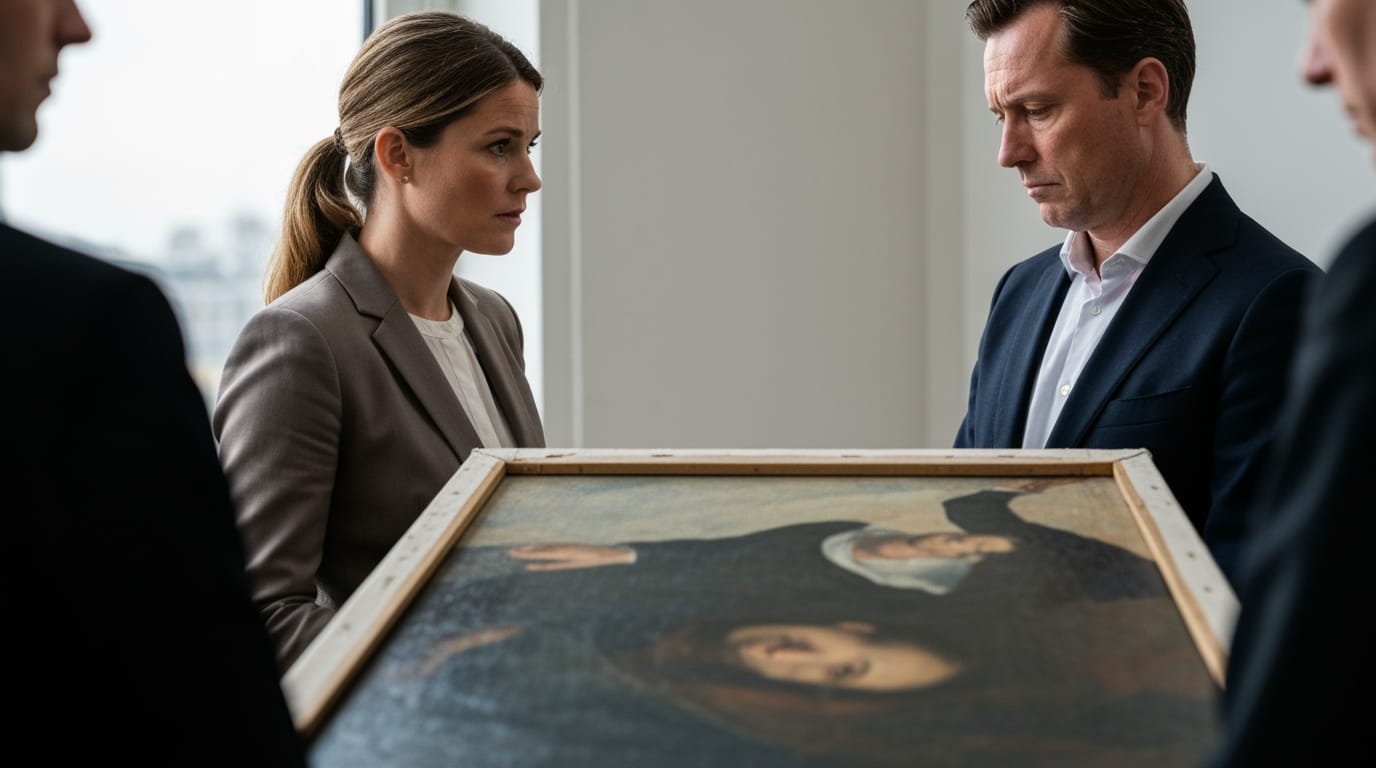
THE HAGUE, Netherlands – More than eight decades after its unlawful seizure during World War II, a painting belonging to the renowned Jewish art dealer Jacques Goudstikker has been discovered in the possession of the descendants of a high-ranking Dutch Nazi collaborator. The artwork, "Portrait of a Young Girl" by Dutch artist Toon Kelder, had reportedly been hanging for decades in the home of Hendrik Seyffardt's family, casting a stark spotlight on the enduring legacy of Nazi plunder and the complex ethical dilemmas surrounding restitution in the 21st century. The discovery, brought to light by Dutch art detective Arthur Brand, has been described by him as "the most bizarre case of my entire career," highlighting the profound historical and personal layers involved in the ongoing quest for justice.
The Revelation of a Stolen Legacy
The re-emergence of the Kelder portrait began with an anonymous tip to Arthur Brand, often dubbed the "Indiana Jones of the art world." A descendant of Hendrik Seyffardt, who wishes to remain anonymous, contacted Brand after uncovering two disturbing family secrets: his lineage to the notorious collaborator and the presence of what he suspected was looted art within his own family's possession. The anonymous individual reportedly saw the painting displayed in the hallway of Seyffardt's granddaughter. According to Brand, the granddaughter had previously acknowledged to this family member that it was "Jewish looted art, stolen from Goudstikker," advising them not to tell anyone because it was "unsellable." However, when directly confronted, she reportedly denied prior knowledge of its looted status, stating she received it from her mother. The anonymous descendant, reportedly feeling "ashamed," is advocating for the painting's return to the Goudstikker heirs.
The painting originally belonged to Jacques Goudstikker, a prominent Jewish art dealer in Amsterdam who operated a significant gallery before the war. In May 1940, as Nazi Germany invaded the Netherlands, Goudstikker fled to England, leaving behind a vast collection of approximately 1,100 artworks. His entire inventory was subsequently plundered by top Nazi official Hermann Goering. Art detective Brand speculates that Hendrik Seyffardt, the Dutch collaborator, likely acquired the painting at an auction orchestrated by the Nazis in 1940, after which it was passed down through generations within his family.
A Collaborator's Shadow: Hendrik Seyffardt
Hendrik Seyffardt was a deeply controversial figure in Dutch history, representing one of the highest-ranking collaborators with the Nazi regime. He commanded a Waffen-SS unit composed of Dutch volunteers on the Eastern Front, actively aiding the German war effort. His assassination by Dutch resistance fighters in 1943 was a significant event, even warranting front-page news in The New York Times at the time, followed by a lavish Nazi state funeral in The Hague, complete with a wreath from Adolf Hitler. The discovery of a Goudstikker painting in his family's hands underscores the direct involvement of local collaborators in the vast machinery of Nazi plunder, extending the complicity beyond German forces. This particular case resonates with others, such as Pieter Nicolaas Menten, another Dutch businessman and art collector who was also a Nazi collaborator, known for his extensive looting activities during the war, particularly in Poland and Ukraine. Menten amassed a significant private art collection, some of which he stored and later sold, ultimately being sentenced for war crimes, though initially only serving a brief prison term for his role as an interpreter.
The Enduring Plunder and the Quest for Restitution
The looting of art and cultural property by the Nazi regime between 1933 and 1945 was systematic and unprecedented in scale, primarily targeting Jewish individuals and institutions across Europe. For many Jewish families, the loss of their art collections was not merely financial; it was a profound stripping away of cultural heritage and a tangible link to their identity, often occurring under duress or as a direct consequence of persecution. After the war, only a fraction of the millions of stolen items was returned to their rightful owners or their descendants.
The Netherlands, occupied by Nazi Germany, suffered extensively from this organized plunder. In the immediate post-war years, initial restitution efforts were made, but many artworks remained undiscovered or unreturned. Over the past two decades, renewed international attention has focused on resolving these historical injustices. The Washington Conference Principles on Nazi-Confiscated Art, signed in 1998, established a framework for identifying art confiscated by the Nazis and facilitating "just and fair solutions" for pre-war owners or their heirs. These non-binding principles encourage countries to open archives, publicize looted art, and establish processes for restitution, recognizing the difficulties of proving provenance due to the passage of time and the circumstances of the Holocaust. The Dutch Restitutions Committee, established in 2001, plays a crucial advisory role in assessing claims for Nazi-looted art within the Netherlands, helping to determine if artworks should be returned to claimants. This committee has been instrumental in several high-profile restitutions, including the return of 92 Meissen porcelain objects to the heirs of Margarethe and Franz Oppenheimer in 2019.
Legal Impasse and Ethical Imperatives
Despite the clear moral imperative for restitution, the discovery of the Kelder portrait highlights a significant legal challenge: the limitations of current laws regarding privately held looted art. Lawyers representing the Goudstikker heirs have confirmed the painting's provenance and are calling for its return. However, law enforcement officials are reportedly "powerless" to compel its surrender due to the expiry of the statute of limitations for theft. Similarly, while the Dutch Restitutions Committee advises on claims, its authority does not extend to forcing private individuals to return artworks, particularly when legal ownership claims are time-barred. This creates a gap between legal enforceability and ethical accountability, leaving many victims' families without clear recourse.
The Goudstikker collection has been the subject of intensive restitution efforts for decades. In 2006, the Dutch government returned approximately 200 paintings from his collection to his family after a lengthy legal battle. Yet, an estimated 800 pieces remain missing, resurfacing periodically in various parts of the world. For instance, a painting titled "Adam and Eve" by Cornelis van Haarlem, also from Goudstikker's collection, was returned to his daughter-in-law and heir, Marei von Saher, in 2024, after being flagged by a French museum during a donation attempt. These cases underscore the persistent, cross-generational effort required to trace and reclaim stolen art.
A Continuing Pursuit of Justice
The surfacing of Toon Kelder's "Portrait of a Young Girl" in the hands of a Dutch Nazi collaborator's descendants is more than just the discovery of a single artwork; it is a poignant reminder of the unhealed wounds of history. It highlights the vast number of cultural objects still unaccounted for and the moral responsibility that persists long after legal statutes expire. While the police and restitution committees face legal constraints in compelling the return of privately held items, the public and ethical pressure on individuals and families who possess such artifacts continues to grow.
This case serves as a powerful call for greater transparency and voluntary restitution. The actions of the anonymous descendant who came forward, driven by a sense of shame and justice, exemplify the human conscience grappling with a dark inheritance. For the Goudstikker family and countless others whose lives and legacies were shattered by Nazi persecution, each returned artwork represents a small, yet significant, victory in a prolonged struggle for historical acknowledgment and closure. The pursuit of "just and fair solutions" for Nazi-looted art remains an essential endeavor, not only to correct past wrongs but also to uphold the principles of human dignity and cultural heritage for future generations.