Starmer Defiant After Local Election ‘Mauling,’ Vows to Stay Amidst Historic Losses
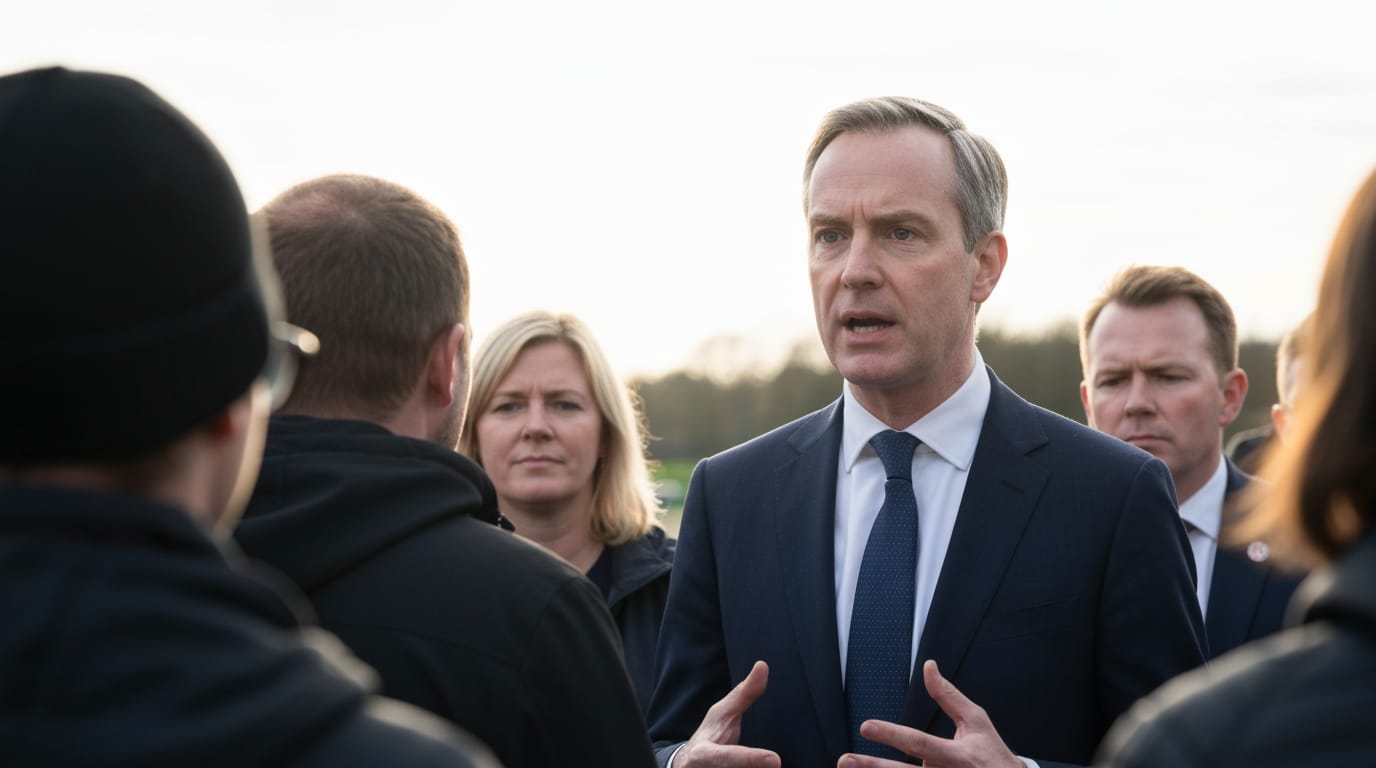
London, UK – British Prime Minister Keir Starmer has declared his unwavering commitment to lead the country, asserting he will "not walk away" despite his Labour Party suffering a historic "mauling" in the recent local elections across England, Wales, and Scotland. The electoral setback, less than two years after Labour swept to power in the July 2024 general election, has triggered intense debate about the party's direction and Starmer's leadership, even as he insists his government is a "10-year project" aimed at national renewal.
The May 7, 2026, elections, encompassing over 5,000 council seats in England, alongside contests for the Scottish Parliament and Welsh Senedd, were widely perceived as a critical mid-term barometer of the public's satisfaction with Starmer's administration. The results delivered a stark verdict, presenting Labour with its worst losses as a governing party in local elections in more than three decades.
A Staggering Setback for Labour
Labour's performance in these elections was unequivocally disastrous, marked by a net loss of more than 1,100 council seats across England. Official figures indicate a staggering decrease of 1,496 councillor positions for the party. This downturn forced Labour to relinquish control of numerous councils, including traditional strongholds in its northern heartlands such as Hartlepool, Tameside, Redditch, and Tamworth. Across England, Labour lost control of over a dozen councils, signaling a widespread erosion of its local power base.
The blow extended beyond England's borders, with Labour facing significant challenges in devolved nations. In Wales, the party was unseated after 27 years in power, losing the national vote for the first time in over a century and projecting a third-place finish in the Senedd elections. Meanwhile, in Scotland, Labour struggled to make any significant inroads, with the Scottish National Party (SNP) appearing set to remain the dominant political force. This dramatic reversal of fortunes comes despite Labour's landslide general election victory in 2024, highlighting a rapid decline in voter confidence.
Starmer's Defiant Stance Amidst Growing Pressure
In the wake of what he described as "tough" and "very tough" results that left "no sugarcoating it," Prime Minister Starmer has taken personal responsibility for the losses. Speaking at Kingsdown Methodist Church in Ealing, west London, he acknowledged the pain of losing "brilliant Labour representatives" and emphasized that "it hurts, and it should hurt."
Despite the severe electoral bruising and growing calls from some within his own party to resign, Starmer has remained resolute. He explicitly stated, "I'm not going to walk away from the job I was elected to do" and affirmed his commitment to lead Labour into the next general election, portraying his government as a "10-year project of renewal." He further asserted that he would not "plunge the country into chaos" by quitting, indicating his determination to stabilize the party and government. Starmer maintained that "tough days like this do not weaken my determination... They strengthen it," signaling his resolve to deliver the change he had promised. He has indicated that he will set out his government's plans to address issues such as child poverty and the cost-of-living crisis in the coming days, seeking to demonstrate a clear path forward.
The Rise of Fragmented Politics and New Contenders
The May 2026 elections underscored a profound shift in the British political landscape, signaling the further fragmentation of the traditional two-party system. The combined vote share of Labour and the Conservatives plummeted to a record low of approximately 34-35%, indicating a widespread disillusionment with the established parties.
The primary beneficiary of this seismic shift was Reform UK, led by Nigel Farage, which achieved a dramatic breakthrough. The party gained over 1,400 seats across England, securing 1,453 councillor positions, marking an increase of 1,451. Reform UK also seized control of four councils and now holds power in 14 local authorities. Farage declared the results a "truly historic shift in British politics," with Reform UK emerging as the clear winner with 27% of the national equivalent vote. The party also notably supplanted the Conservatives as the leading right-wing force in Wales and Scotland.
The Green Party also made significant advancements, adding over 300 seats and securing 587 positions, an increase of 411. Their success included taking control of Hackney council. The Liberal Democrats also saw modest gains, adding over 150 seats for a total of 844. Even the Conservative Party, despite their overall decline, managed some isolated victories, regaining Westminster from Labour and holding onto Harlow and Broxbourne.
Analysts point to several factors contributing to Labour's losses and the rise of other parties. The Labour Party's 2024 voter coalition fragmented significantly, with voters shifting not only to Reform UK but also, notably, to the Green Party and Liberal Democrats. Underlying reasons cited include a weak economy, public backlash over certain government appointments, and a perceived surge in antisemitism, which has been declared a "national emergency." Many voters expressed frustration over a "failed status quo" and a feeling that their lives were not improving quickly enough under the current administration.
Looking Ahead: General Election Implications and Leadership Questions
The dire local election results cast a long shadow over Labour's prospects for the next general election, which must be called by 2029 at the latest. The scale of Labour's losses and the dramatic surge of Reform UK, particularly in traditional Labour strongholds, signal a significant electoral challenge. Some analysts suggest these results indicate the potential "beginning of the end" for the Starmer government. Hypothetical national equivalent vote projections, based on the local results, suggest Reform UK could secure 284 Members of Parliament (MPs), with Labour's representation potentially plummeting to 110 MPs.
Despite Starmer's defiant stance and cabinet colleagues voicing support, internal dissent within the Labour Party has become audible. Several Labour MPs have publicly called for Starmer to establish a timeline for his departure, with one former minister, Catherine West, indicating she would consider seeking to trigger a leadership contest. The absence of a clear, immediate challenger may have temporarily staved off a leadership battle, but the pressure on Starmer is undeniable.
As Prime Minister Starmer pledges to rebuild and lead his government through what he envisions as a decade-long transformation, the recent local election results serve as a stark reminder of the volatility of the British electorate. The fragmentation of political allegiances and the ascendance of new forces have fundamentally reshaped the UK's political landscape, presenting a formidable test for Labour as it navigates the path towards the next general election.


