Decades of Defiance: A Timeline of Mass Protests Shaping Modern Iran
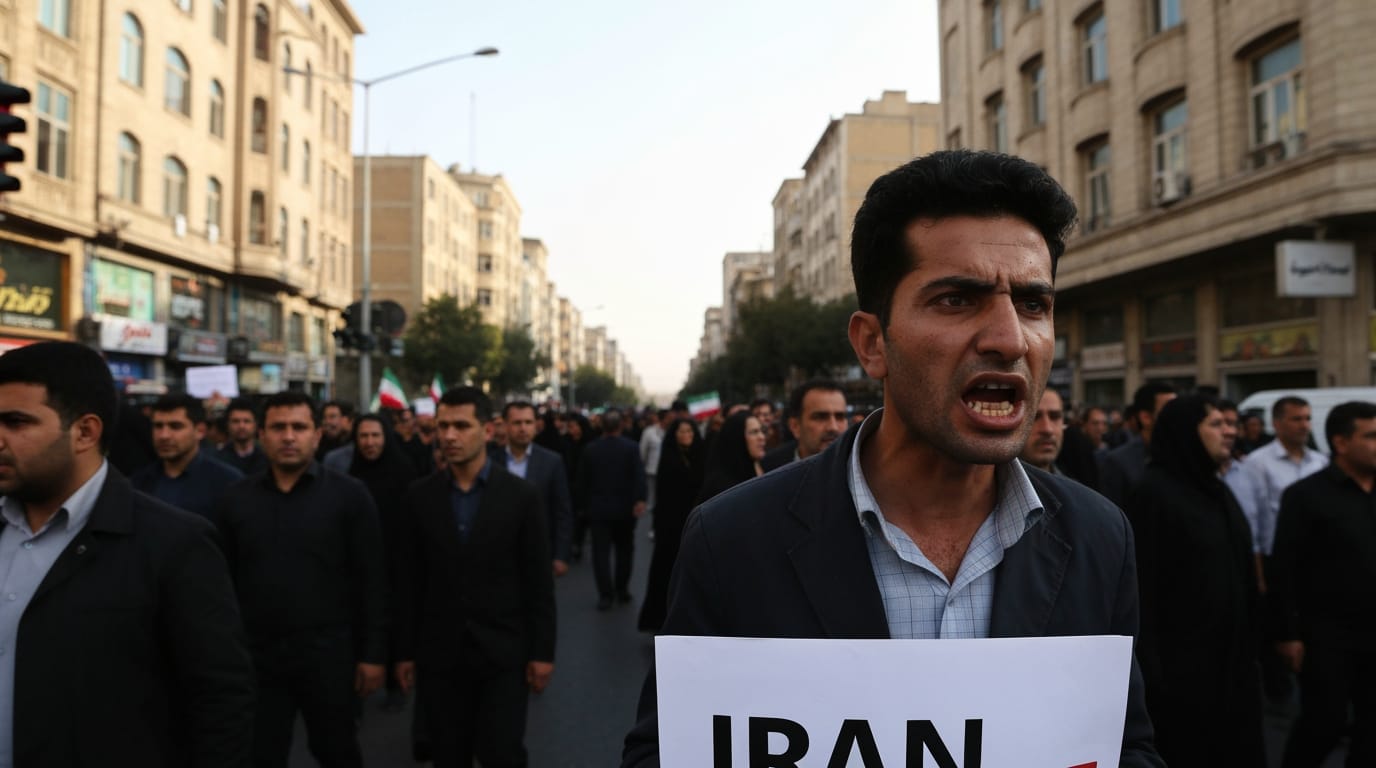
Since the turn of the millennium, Iran has been a crucible of public dissent, experiencing successive waves of mass protests driven by a complex interplay of political grievances, economic hardship, and social injustice. These demonstrations, ranging from student-led calls for reform to nationwide movements challenging the very foundations of the state, have repeatedly underscored the deep-seated tensions within Iranian society and the persistent quest for change by its populace. Each major uprising, met often with significant government suppression, has left an indelible mark on the nation's political landscape, revealing an evolving struggle between state authority and popular will.
The Echoes of Dissent: The 1999 Student Uprising
The summer of 1999 marked a significant eruption of civil unrest, particularly among university students, signaling the first major popular protests in Iran in a decade. The immediate catalyst for these demonstrations was the closure of the reformist newspaper Salam by the judiciary. Students at Tehran University, who largely supported then-President Mohammad Khatami's reformist agenda, viewed the action as a direct assault on press freedom and broader civil liberties.
What began as peaceful gatherings on July 8, 1999, quickly escalated when security forces and pro-regime militias attacked a Tehran University dormitory, where student protesters had taken refuge. Reports indicated that riot police beat students, set rooms on fire, and caused numerous injuries, with at least one student confirmed killed and hundreds wounded. This violent crackdown ignited further protests in Tehran and spurred solidarity demonstrations across other major Iranian cities, with an estimated 10,000 participants joining the movement. Despite calls for reforms including the separation of mosque and state, protection of basic civil liberties, and the advancement of gender equality, the regime ultimately suppressed the protests, leading to at least three deaths and the detention of 1,200 to 1,400 individuals. The reformist leaders' inability to fully support the protesters contributed to the waning of public enthusiasm and ushered in a period of relative calm that lasted nearly a decade.
The Green Wave: The 2009 Presidential Election Protests
A decade later, in the summer of 2009, Iran witnessed one of its most extensive and globally recognized protest movements, known as the Green Movement. This widespread unrest followed the disputed re-election victory of hard-line President Mahmoud Ahmadinejad, which reformist opposition factions vehemently contested as rigged. Millions of Iranians nationwide took to the streets, fueled by accusations of electoral fraud and a desire for greater democratic freedoms.
The protests reached their zenith on June 15 with a massive, silent march in Tehran and continued for months, extending into February 2010. The government responded with a brutal security force crackdown, resulting in dozens of deaths and thousands of arrests. Unofficial sources documented up to 100 deaths during this period. The image of Neda Agha-Soltan, a young woman shot and killed during a protest, became a powerful symbol of the movement and its tragic human cost. Despite the significant public mobilization and international attention, the Green Movement eventually lost momentum as its leaders failed to sufficiently challenge Supreme Leader Ali Khamenei, and the regime successfully quashed public displays of opposition.
From Economic Woes to Widespread Unrest: 2017-2020
The latter half of the 2010s saw a resurgence of protests, primarily driven by deepening economic grievances and mounting public frustration with the government. Beginning in December 2017, just months after President Hassan Rouhani's re-election, a significant wave of demonstrations erupted. These protests, initially sparked by anger over the economic situation and rising costs, rapidly spread to 160 cities, becoming the largest since the 1979 revolution. While official death tolls were not provided, unofficial reports estimated around 50 fatalities within 10 days.
This period of unrest continued into November 2019, when a sudden and drastic increase in fuel prices, ranging from 50% to 200%, triggered another massive wave of protests, sometimes referred to as "Bloody Aban". These demonstrations quickly escalated beyond economic concerns, with protesters explicitly calling for the overthrow of the government and Supreme Leader Ali Khamenei. Security forces responded with extreme violence, leading to a significant death toll and widespread arrests, further compounded by a near-total internet shutdown to hinder communication and organization among protesters.
The protests continued into January 2020, following the admission by Iranian officials that the Islamic Revolutionary Guard Corps had mistakenly shot down Ukraine International Airlines Flight 752, killing all 176 people on board, including many Iranians. Public outrage intensified due to the government's initial denial and subsequent admission, leading to anti-government protests across university campuses in Tehran and other major cities. Demonstrators chanted slogans like "Death to the liars," reflecting profound anger over the government's incompetence and lack of transparency.
"Woman, Life, Freedom": The Mahsa Amini Protests of 2022
The most recent and arguably most impactful wave of protests began in September 2022, ignited by the death of 22-year-old Mahsa Amini. Amini died following her arrest by the country's morality police for allegedly violating Iran's mandatory hijab law. United Nations investigators later found Iran responsible for the "physical violence" that led to her death.
Amini's death sparked immediate outrage, with protests commencing in Tehran and at her funeral in Saqqez before rapidly spreading nationwide. These demonstrations, often characterized by the slogan "Woman, Life, Freedom," quickly transcended the issue of mandatory hijab to encompass broader demands for women's rights, civil liberties, and fundamental changes to the Islamic Republic. Unlike many previous protests that focused on economic woes or election results, the Mahsa Amini protests aimed at the overthrow of the Islamic Republic, representing a significant challenge to the government.
The government responded with a severe crackdown, leading to the deaths of over 500 people, including 68 minors, and the detention of more than 22,000 individuals across numerous cities and universities by September 2023. Despite the widespread suppression, the protests were described as "unlike any the country had seen before" and the "biggest challenge" to the government since the 1979 Islamic Revolution. While the overt street protests largely subsided by spring 2023, the movement cemented a legacy of defiance, with many Iranian women continuing to refuse the compulsory hijab, symbolizing an enduring push for social change.
An Enduring Struggle for Change
The trajectory of mass protests in Iran since 1999 illustrates a continuous, if cyclical, struggle between the state and its citizens. From the reformist aspirations of student movements to the existential challenges posed by the "Woman, Life, Freedom" uprising, each period of dissent has contributed to a collective memory of resistance. While state crackdowns have consistently managed to suppress overt demonstrations, the underlying grievances – whether political, economic, or social – have continued to fuel new waves of activism. The evolving nature of these protests, moving from specific demands to broader calls for systemic change, highlights the persistent challenges facing the Islamic Republic and the enduring determination of a population seeking greater freedoms and accountability. The long-term impact of these movements continues to shape the future trajectory of Iran, with the pursuit of fundamental rights remaining a powerful undercurrent in the nation's political discourse.


