Myanmar's Civil War: A Shifting Battlefield Where No Clear Victor Emerges
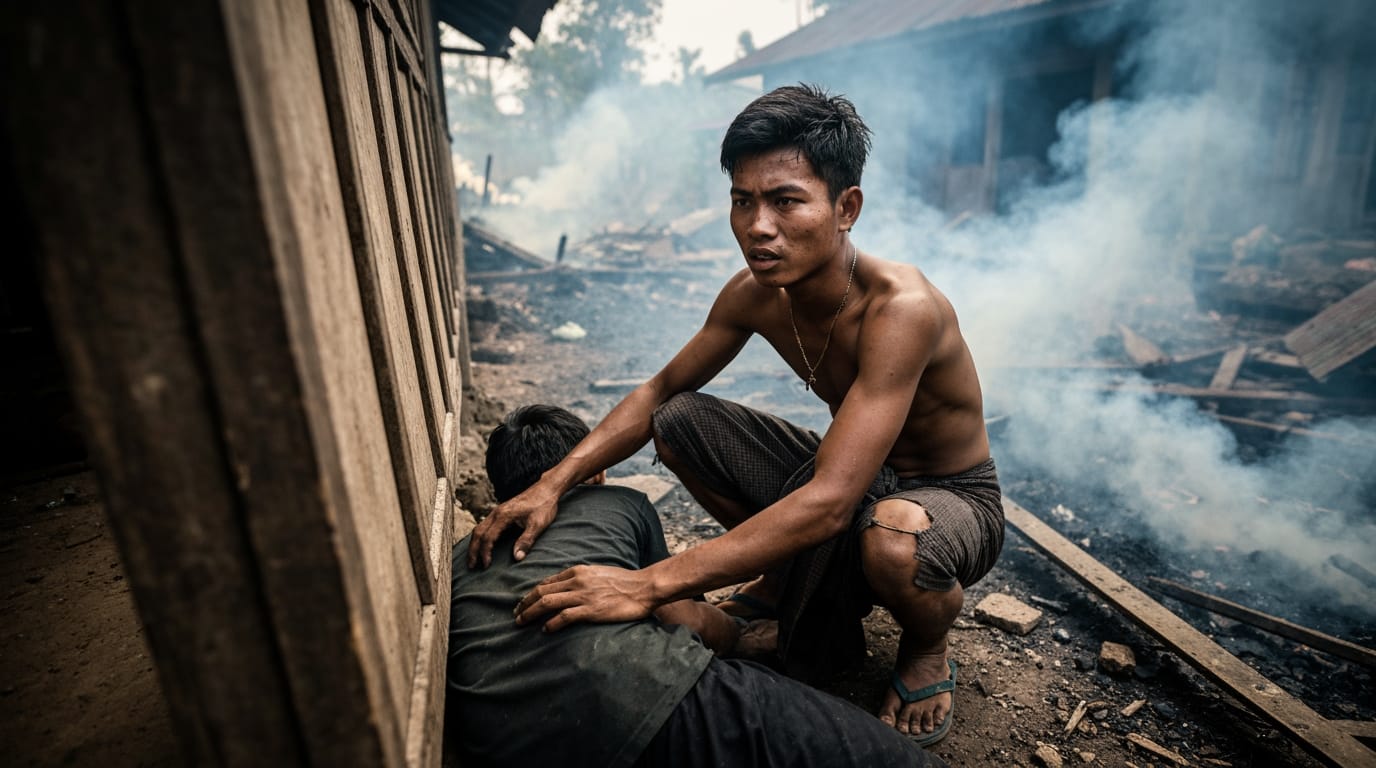
NAYPYITAW, Myanmar – More than five years after the military seized power in a coup, Myanmar remains engulfed in a brutal civil war with a fluctuating landscape of control, as the ruling junta, known as the State Administration Council (SAC), grapples with a determined and increasingly coordinated resistance. While resistance forces achieved unprecedented gains through 2024, recent developments in late 2025 and early 2026 suggest the Tatmadaw, Myanmar's armed forces, is attempting to regain some lost ground, albeit with significant internal struggles and heavy reliance on airpower. The conflict continues to exact a devastating toll on the civilian population, creating a profound humanitarian crisis with millions displaced.
The Spark of Resistance: From Coup to Nationwide Uprising
The current phase of Myanmar’s prolonged internal conflict ignited on February 1, 2021, when the Tatmadaw overthrew the elected civilian government, citing unsubstantiated claims of voter fraud in the 2020 general elections. The coup swiftly led to widespread pro-democracy protests, which the military met with violent suppression. This brutal crackdown, in turn, galvanized existing ethnic armed organizations (EAOs) and spurred the formation of new, civilian-led People's Defense Forces (PDFs) allied with the National Unity Government (NUG), a shadow government formed by ousted civilian leaders. This unprecedented unity among diverse opposition groups marked a new chapter in Myanmar's history, moving beyond decades of largely ethnic-based insurgencies to a broader, nationwide armed resistance against military rule.
Operation 1027: A Pivotal Shift in Momentum
The tide of the conflict began to turn dramatically in favor of the resistance with the launch of "Operation 1027" on October 27, 2023. This coordinated offensive was spearheaded by the Three Brotherhood Alliance, comprising the Arakan Army (AA), the Myanmar National Democratic Alliance Army (MNDAA), and the Ta'ang National Liberation Army (TNLA). Targeting key military positions in northern Shan State and Rakhine State, the operation achieved rapid and significant success, leading to the collapse of numerous regime strongholds and the capture of strategic border towns such as Chin Shwe Haw and Mong Ko.
The impact of Operation 1027 extended far beyond its immediate geographical scope, inspiring other anti-junta forces across the country to launch concurrent offensives. By November 2023, resistance forces had reportedly taken control of 80 bases, 220 SAC positions, and several towns. Kawlin, a town in central Myanmar, became the first district capital to fall to opposition forces, where the NUG flag was raised. Throughout 2024, the Tatmadaw continued to suffer significant territorial losses. By August 2024, the MNDAA captured Lashio, the largest town in northern Shan State and a critical commercial hub, seizing the Tatmadaw's Northeastern Command headquarters. In December 2024, the Arakan Army achieved another major victory by capturing the Tatmadaw's Western Command headquarters in Ann, Rakhine State, and had by then seized 13 of 17 townships in the state. By mid-2024, reports indicated the junta had lost control of over 100 towns nationwide.
The Junta's Deepening Struggles and Attempts at Reassertion
The widespread setbacks exposed severe vulnerabilities within the Tatmadaw. Reports from late 2023 and early 2024 highlighted significant issues with low morale, equipment losses, and acute manpower shortages. Thousands of military personnel, including six generals, were reported to have surrendered without a fight by February 2024. The junta's increasing reliance on forced conscription has sparked protests and led to a mass exodus of young people from urban areas, further indicating the military's desperate need for troops. Historically, the Tatmadaw's infantry, when facing heavy casualties, has withdrawn and relied heavily on air support, a pattern that has continued in the current conflict.
Despite these considerable challenges, the military has shown signs of attempting to reassert its authority in late 2025 and early 2026. Bolstered by tens of thousands of new conscripts, the Tatmadaw has reportedly recovered some lost territory and is preparing to step up attacks. Efforts to reconstitute mobile strike divisions using newly conscripted forces have been observed. For example, the Tatmadaw retook the district capital of Kyaukme in northern Shan state on October 2, 2025, after earlier losing it. The junta also managed to recapture Naunghkio in Shan State and Lashio in April 2025, having previously lost control. Analysts note that the military has "regained the initiative" in some areas and currently holds an advantage over some resistance forces, though the broader conflict is far from over. A significant factor in this shift has been China's intervention, which, after initially allowing Operation 1027 to proceed, later pressured members of the Three Brotherhood Alliance to agree to ceasefires, effectively sidelining the MNDAA and TNLA from active combat. This has left the Arakan Army as the primary member of the alliance still actively engaged in fighting, predominantly in Rakhine state.
A Deepening Humanitarian Crisis and International Stakes
The relentless conflict has exacted an appalling human cost. By late 2025, over 3 million people had been internally displaced, and an estimated 19.9 million are projected to be in need of humanitarian assistance in 2025. The military's tactics, including increased reliance on indiscriminate air and artillery strikes, have led to a sharp rise in civilian casualties. Accusations of deliberately targeting civilians in retribution for perceived support for resistance groups persist, despite military denials.
Internationally, the civil war has drawn complex responses. China, while concerned about stability along its border and issues like cyber-scam operations, has also been a key supplier of arms and diplomatic support to the junta, alongside Russia. Beijing's shifting stance, from tacit approval of resistance operations to pressuring for ceasefires, underscores its complex geopolitical interests in the region.
Conclusion: A Protracted Struggle with No Easy End
As of early 2026, the Myanmar military's grip on the country remains tenuous. While it controlled under 40% of the country's territory by October 2023 and as little as 21% by early 2024, its recent efforts to regain some tactical ground, particularly through forced conscription and concentrated aerial assaults, indicate a struggle to reverse its losses. Despite losing significant territory and facing severe internal challenges, the Tatmadaw is not on the verge of total collapse, maintaining control over major population centers and relying on its air superiority and external support.
The conflict remains a dynamic and protracted struggle, characterized by an ebb and flow of control. The resistance forces, though having achieved remarkable gains, now face a renewed push from a military that refuses to concede defeat. With no immediate end in sight, the future of Myanmar remains deeply uncertain, leaving its people trapped in a devastating humanitarian crisis as the complex civil war grinds on.


