Germany's Enduring Economic Strengths: Beyond the Headlines of Slowdown
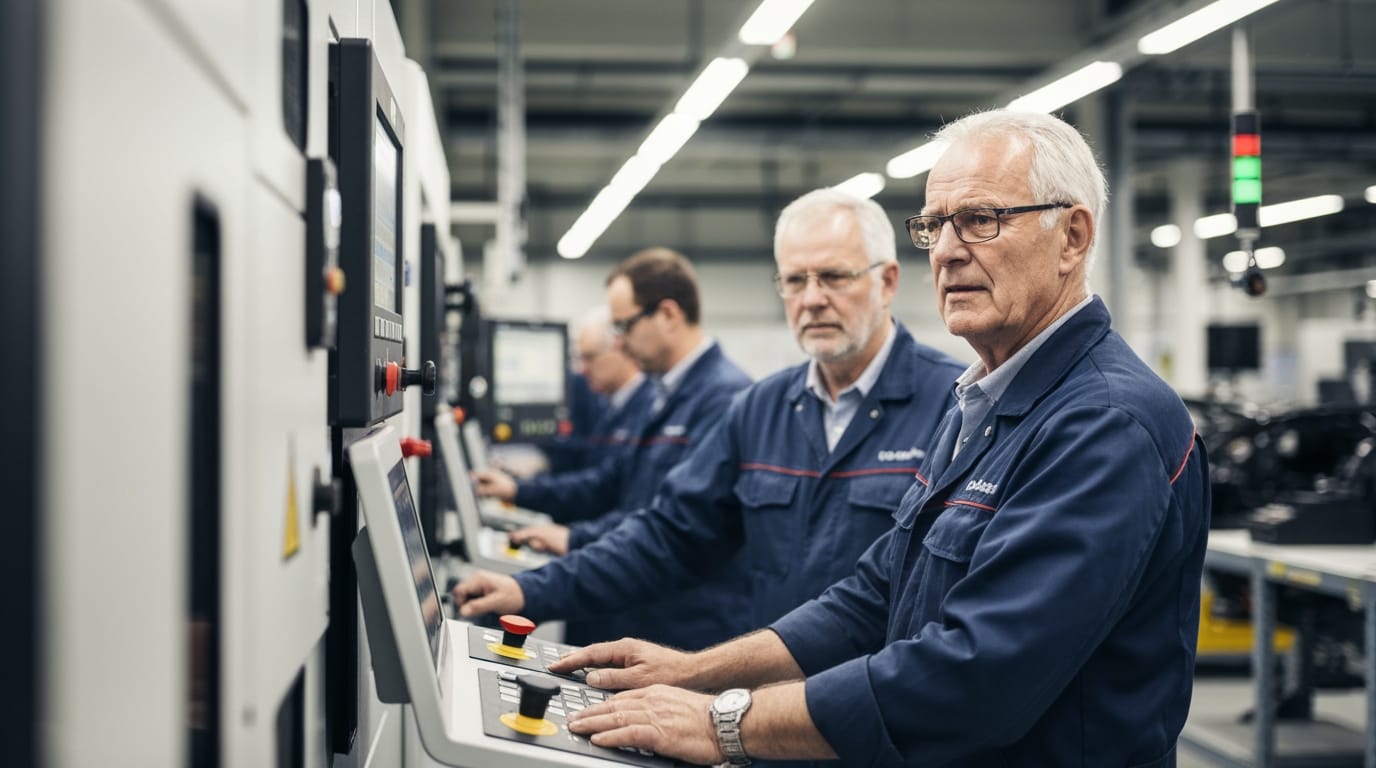
Despite recent narratives highlighting economic headwinds and challenges, Germany's economy continues to exhibit formidable strengths that underpin its position as Europe's largest and a global economic powerhouse. A deep dive beyond immediate concerns reveals a resilient industrial base, a unique ecosystem of specialized small and medium-sized enterprises, unwavering commitment to innovation, and a highly skilled workforce—pillars that have historically propelled the nation's prosperity and adapt to evolving global dynamics.
Germany's economic landscape, while facing pressures such as energy costs and global demand fluctuations, remains robust in several key areas. Its industrial sector far surpasses that of many peers, its export engine continues to deliver, and its distinctive "Mittelstand" companies demonstrate unparalleled global market leadership in niche sectors. Furthermore, significant investments in research and development, coupled with a world-renowned vocational training system, ensure a pipeline of innovation and expertise for the future.
Industrial Backbone and Export Dominance
Germany maintains an exceptionally strong manufacturing sector, which serves as the bedrock of its economy. In 2024, manufacturing accounted for approximately 17.8% of Germany's Gross Domestic Product (GDP), significantly higher than the European Union average of 14.0% and well above major economies like France (9.4%). This makes Germany home to the largest manufacturing economy in Europe, contributing about 26% of the EU's total industrial production.
The nation's economic model is inherently export-oriented, consistently ranking among the top three goods exporters globally. Exports alone comprised over 50% of Germany's national output in 2024, illustrating the critical role international trade plays in its prosperity. Key export categories demonstrate a focus on high-value industrial goods. In 2024, motor vehicles and parts were the single largest export category, accounting for around 17-17.8% of total exports and valued at approximately €263 billion. This automotive dominance is complemented by strong showings in machinery, which made up 14-14.2% of exports, and chemical products, contributing 9%. The enduring global appeal of "Made in Germany" products stems from a reputation for technological innovation, precision, and uncompromised quality.
The Mittelstand: Germany's Hidden Economic Engine
A distinctive and often underestimated strength of the German economy lies in its "Mittelstand" – a collective term for its small and medium-sized enterprises (SMEs). These companies form the vibrant core of German industry, making up over 99% of all firms in the country. Unlike larger, publicly traded corporations, Mittelstand firms are typically privately owned, often family-run across generations, and deeply integrated into local communities.
These businesses are not merely smaller versions of large corporations; they embody a unique business philosophy characterized by specialization, long-term strategic planning, low debt levels, and a strong emphasis on customer value and technical competence. Their focus on niche global markets has led to Germany boasting approximately 1,300 "hidden champions"—SMEs that are global market leaders in their highly specialized fields. Crucially, these export-oriented Mittelstand companies account for a substantial 68% of Germany's total exports, highlighting their disproportionate impact on the nation's trade success. Their resilience, demonstrated during economic downturns like the 2008 financial crisis and the COVID-19 pandemic, is attributed to their pragmatic approach, discipline, innovation, and a strong sense of responsibility towards employees and communities.
Commitment to Innovation and Research
Germany's dedication to innovation is reflected in its significant investment in research and development (R&D). For nearly a decade, R&D spending has been on a consistent upward trend. In 2023, public and private sectors collectively invested approximately €129 billion in research projects, representing 3.1% of the country's GDP. This commitment places Germany fourth among EU nations in R&D spending as a percentage of GDP, surpassing the EU average and France.
The country's dynamic R&D environment is highly regarded internationally, with Germany ranking fourth in the 2024 Global Innovation Index published by the World Intellectual Property Organization (WIPO). German companies are at the forefront of developing new technologies, making the nation Europe's top exporter of high-tech goods, with exports reaching €236 billion in 2023. However, there is an ongoing discussion regarding the allocation of this investment. While significant, over 85% of corporate R&D spending often remains within internal labs, with limited collaboration with startups, a factor some analysts suggest could hinder Germany's progress in emerging fields like artificial intelligence and deep tech. Despite this, ambitious targets are in place to increase R&D expenditure to at least 3.5% of GDP by 2030, underscoring a strategic intent to maintain and enhance its innovative edge.
A Highly Skilled and Adaptable Workforce
A cornerstone of Germany's economic strength is its highly skilled workforce, nurtured by a globally recognized vocational training system. The "dual system" of vocational education, known as "Ausbildung," seamlessly integrates theoretical classroom instruction with extensive practical experience gained through on-the-job training within companies.
This unique model ensures that trainees acquire market-relevant skills directly applicable to industry needs, leading to a continuous supply of competent and productive employees. Businesses frequently invest their own resources in training, recognizing it as an effective strategy for developing their future workforce. This system not only provides excellent employment opportunities and financial independence for trainees but also confers a high level of social recognition upon vocational careers, ensuring a respected alternative to traditional academic paths. The outcome is a workforce that is not only highly proficient but also adaptable, contributing significantly to the productivity and profitability of German enterprises.
Fiscal Discipline and Strategic Investment Shifts
Historically, Germany has been lauded for its fiscal prudence, notably through its "debt brake" (Schuldenbremse), a constitutional mechanism introduced in 2009 to limit new government borrowing. However, recent years have seen a notable, albeit strategic, shift in this approach. Facing increasing geopolitical instability and the imperative to invest in critical areas, Germany reformed its debt brake in March 2025. This reform allows for increased public spending, specifically targeting defense, infrastructure development, and climate protection projects.
While this move signals a departure from strict fiscal austerity and is projected to lead to a continuous rise in Germany's national debt—currently around 67% of GDP—it is viewed as a necessary step to address long-term strategic needs. Despite an increase of €57 billion in general government debt in 2024, bringing the total to €2.69 trillion, the debt ratio actually decreased to 62.5% due to robust nominal GDP growth. This strategic recalibration of fiscal policy, while potentially creating tensions with EU fiscal rules, is largely seen within Germany as a pragmatic effort to bolster the nation's security and future economic competitiveness without threatening the overall sustainability of its public finances.
Conclusion
Germany's economic narrative, while often subject to scrutiny regarding its challenges, is fundamentally one of enduring strength and strategic foresight. The nation's formidable manufacturing base, fueled by a network of specialized Mittelstand companies, combined with a relentless pursuit of innovation and a highly skilled workforce, provides a robust foundation. These elements enable Germany to maintain its competitive edge in global markets and navigate complex economic landscapes. The recent adjustments in fiscal policy signal a pragmatic adaptation to new realities, underscoring a commitment to future-proofing its economy through targeted investments. As global economies continue to evolve, these deeply ingrained strengths position Germany not just for stability, but for sustained leadership in the decades to come.


