Denmark Issues Sharp Rebuke as Trump Renews Greenland Acquisition Push
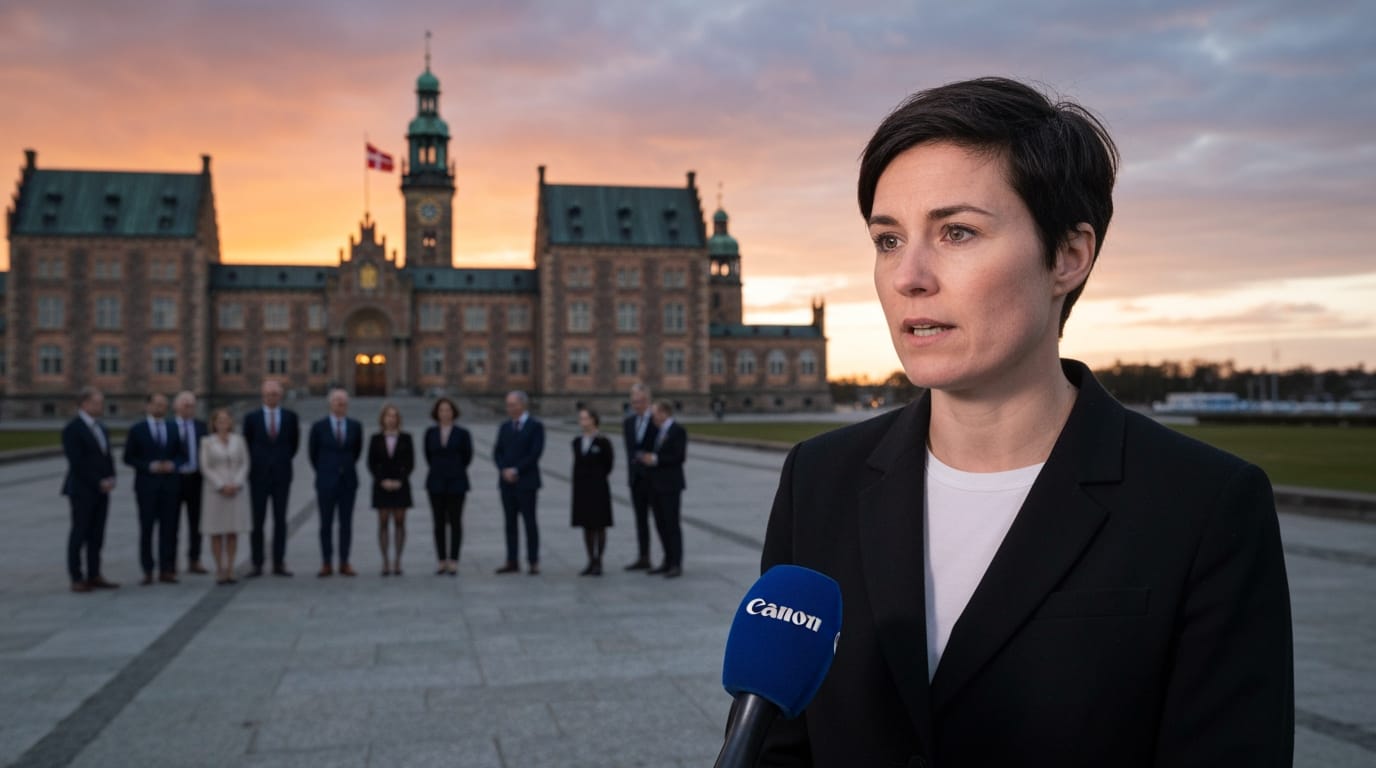
Copenhagen, Denmark – In a forceful diplomatic exchange, Denmark has unequivocally called on Donald Trump to cease what it characterizes as "threats" to take over Greenland, following renewed assertions from the former U.S. president regarding the vast Arctic territory. The robust condemnation, issued on January 4, 2026, by Danish Prime Minister Mette Frederiksen, came in response to Trump's public statements reiterating his desire for U.S. control of Greenland and a provocative social media post from a key aide's spouse. The incident underscores the persistent geopolitical tensions surrounding the strategically vital island.
Greenlandic Premier Jens-Frederik Nielsen echoed Copenhagen's stance, firmly declaring that the island is "not for sale" and its future is not dictated by external declarations or social media. The unified front from Denmark and Greenland highlights the enduring principles of national sovereignty and self-determination in the face of what many perceive as a direct challenge to international norms.
Renewed Assertions and Diplomatic Fallout
The latest diplomatic friction ignited after Trump, in an interview with The Atlantic magazine, stated, "We do need Greenland, absolutely. We need it for defense." These comments followed closely on the heels of a January 3 social media post by Katie Miller, the wife of top Trump aide Stephen Miller, which featured an image of Greenland draped in an American flag, captioned "SOON." This symbolic gesture, widely interpreted as a hint towards annexation, was deemed "disrespectful" by Greenlandic Premier Nielsen.
The timing of Trump's remarks also drew international scrutiny, occurring just a day after the U.S. military conducted a raid resulting in the capture of former Venezuelan leader Nicolás Maduro. This action raised concerns in Copenhagen and Nuuk that similar aggressive tactics could be contemplated for Greenland. Adding to the diplomatic discomfort, Trump's appointment of Louisiana Governor Jeff Landry in December 2025 as a special envoy to Greenland, an individual who publicly advocates for Greenland's integration into the U.S., further fueled Danish and Greenlandic apprehension.
Prime Minister Frederiksen's response was swift and unambiguous. She stated that it makes "absolutely no sense to talk about the need for the United States to take over Greenland," emphasizing that the U.S. "has no entitlement to annex one of the three countries of the Kingdom of Denmark." Frederiksen highlighted Greenland's status as part of NATO, covered by the alliance's security guarantees, and pointed to existing defense cooperation that already grants the U.S. extensive access to the territory. Denmark, she added, has significantly invested in Arctic security, underscoring its commitment to regional stability. Denmark's Ambassador to the U.S., Jesper Møller Sørensen, reinforced this message, stressing the importance of mutual respect for territorial integrity among allies.
Greenland: A Strategic Arctic Chess Piece
The recurring U.S. interest in Greenland stems from the island's undeniable strategic importance. Situated between the Arctic and Atlantic Oceans, Greenland holds a pivotal position in global geopolitics, particularly amidst increasing competition in the Arctic region. Its vast landmass, the world's largest non-continental island, influences emerging shipping routes as Arctic ice melts, presenting new opportunities for trade and navigation that could bypass traditional choke points.
Beyond its geographical significance, Greenland is rich in untapped natural resources, including critical minerals essential for high-tech industries, as well as potential oil and gas reserves. The island also possesses an estimated 20% of the world's fresh water, a resource whose value is expected to escalate globally. From a military perspective, Greenland is home to the Pituffik Space Base (formerly Thule Air Base), a critical U.S. military installation vital for missile defense and space surveillance, reinforcing NATO's security architecture. The U.S. has a long-standing defense agreement with Denmark concerning Greenland, in place since 1951.
A History of "Not for Sale"
This is not the first instance of a U.S. president expressing interest in acquiring Greenland. The idea has resurfaced periodically throughout history, with unsuccessful attempts dating back to 1867, and again in 1910, 1946, and 1955. Most recently, in 2019, during his first term, Trump also floated the idea of purchasing Greenland. This earlier proposal was met with similar disdain from Denmark, with Prime Minister Frederiksen famously labeling it "absurd," a comment that led to a diplomatic disagreement and Trump's cancellation of a planned visit to Copenhagen.
The consistency of Denmark's and Greenland's response over time underscores a fundamental principle: territories and their populations are not commodities to be bought or sold. Despite previous suggestions by Trump that "ownership and control" of Greenland are an "absolute necessity" for U.S. national security, the sovereign nations involved have consistently rejected such notions.
Greenland's Path to Autonomy and Self-Determination
Greenland operates as a self-governing entity within the Kingdom of Denmark. While Denmark maintains authority over foreign affairs, defense, and security, Greenland has exercised extensive autonomy over domestic matters since gaining self-rule in 2009. Under the 2009 Self-Government Act, Greenlanders are recognized as a people with the right to self-determination under international law. This includes the possibility of declaring full independence, a process that could be initiated by a referendum where a majority votes in favor.
Economically, Greenland still relies on substantial annual subsidies from Denmark, which constitute a significant portion of its public revenue. However, the Greenlandic government actively explores ways to diversify its economy and profit from its natural resources, aiming for greater financial independence. The focus remains on allowing the people of Greenland to decide their own future, a sentiment strongly articulated by Premier Nielsen.
Conclusion
The renewed calls for a U.S. takeover of Greenland have once again highlighted the deep-seated respect for national sovereignty and self-determination held by Denmark and Greenland. The firm rejection from Copenhagen and Nuuk serves as a clear reminder that geopolitical ambitions must operate within the bounds of international law and mutual respect. As the Arctic region continues to gain global importance, the dialogue surrounding Greenland's future will undoubtedly continue, but the clear message from its people and its sovereign partner remains: Greenland is not for sale, and its future rests with those who call it home.


