Deutsche Bahn Pulls Plug on Humorous Ad Campaign Amid Public and Political Backlash
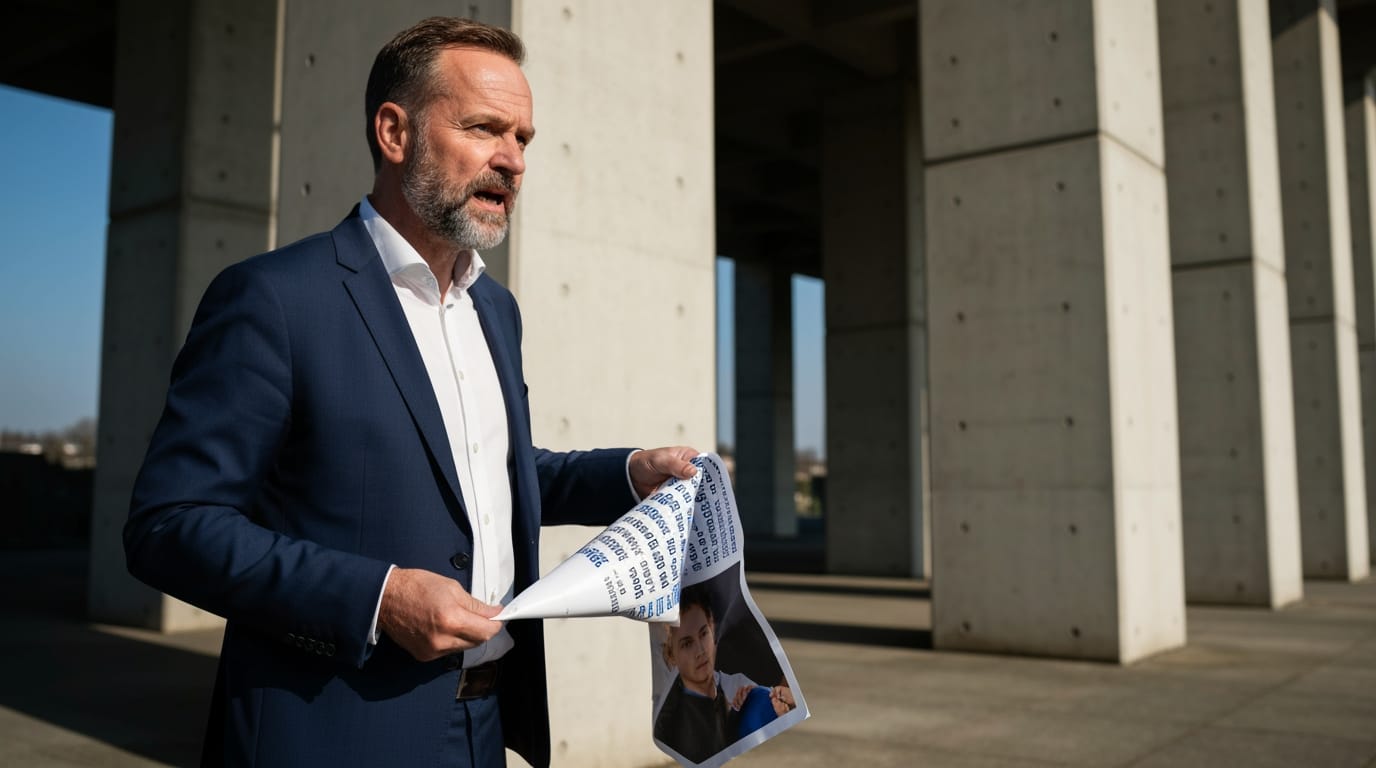
Deutsche Bahn (DB), Germany's national railway company, has abruptly halted its "Boah, Bahn!" publicity campaign, a humorous web series starring comedian Anke Engelke. The decision comes after increasing criticism from political figures and trade unions who argued that the self-deprecating advertising no longer aligned with the public mood, particularly concerning the railway's persistent operational challenges and recent safety concerns. Launched with the intent to humanize the often-maligned rail service through humor, the campaign ultimately fell victim to a climate of discontent over service reliability and questions regarding the allocation of significant advertising expenditures.
A Humorous Attempt to Connect with Passengers and Staff
The "Boah, Bahn!" campaign, which began in October 2025, represented a notable shift in Deutsche Bahn's public relations strategy. Featuring popular German comedian Anke Engelke as "Tina," a fictional train conductor, the web series aimed to tackle the everyday frustrations of rail travel with self-irony and a lighthearted touch. Episodes, typically three to four minutes in length, depicted exaggerated scenarios from the daily lives of train staff, replete with delays, broken coffee machines, and the general chaos often associated with train journeys in Germany. Michael Peterson, DB board member for long-distance passenger services, initially framed the series as a "humorous declaration of love to railway employees," intended to foster a sense of connection and understanding.
Initial reception for the campaign appeared positive, with Deutsche Bahn reporting that "Boah, Bahn!" reached an estimated 50 million people within its first week. Millions of viewers reportedly watched the clips on platforms like YouTube, and the company claimed "overwhelming" feedback from both employees and customers, suggesting that the self-aware humor was resonating. For a company frequently battling an image problem characterized by dilapidated infrastructure, plummeting punctuality, and frustrated passengers, the campaign seemed to offer a novel approach to public engagement by acknowledging deficiencies rather than ignoring them. This strategy was perhaps an attempt to turn a national embarrassment over slow-downs and an "identity crisis" for a country once synonymous with efficiency into an opportunity for relatable comedy.
The Backlash Gathers Steam: From Humor to Controversy
However, the initial warmth surrounding "Boah, Bahn!" quickly dissipated as more critical voices emerged, questioning the appropriateness and cost-effectiveness of using humor in the face of serious operational issues. The turning point arrived with sharp criticism from political figures and trade unions, who contended that the campaign's lighthearted tone was jarringly out of step with the grim realities facing both passengers and railway staff.
Sebastian Fiedler, the Social Democratic Party (SPD)'s spokesperson for internal affairs in the Bundestag, emerged as a prominent critic. He publicly condemned the expenditure on the campaign, describing it as "scandalous" that Deutsche Bahn's management would spend "millions of euros on supposedly funny advertising spots." Fiedler argued pointedly that the same funds could have been far better utilized, specifically suggesting that they could have financed at least 100 additional security staff for a full year. This critique resonated deeply, tapping into public concern over safety on public transport, particularly following tragic incidents.
The trade union EVG, representing railway employees, also voiced strong objections. Its chairman, Martin Burkert, directly challenged Deutsche Bahn's assertion that the campaign was a "declaration of love" to its staff. Burkert questioned whether renovating staff rest areas or equipping employees with body cameras would not constitute a more meaningful and tangible demonstration of care and appreciation. This sentiment was underscored by the recent killing of a train conductor during a routine ticket inspection, an incident that brought the dangers faced by railway personnel into stark focus and made a humorous campaign seem tone-deaf to many. The issue quickly gained political traction, with Fiedler confirming that it would be raised in the Bundestag's internal affairs and transport committees.
Deutsche Bahn's Retreat and the Cost Controversy
In response to the escalating criticism, Deutsche Bahn announced its decision to cease funding for the "Boah, Bahn!" series. The company's official statement attributed the cancellation to the format no longer reflecting the "spirit of the times," a subtle acknowledgment of the shifting public sentiment and political pressure. While Deutsche Bahn declined to disclose the exact cost of the campaign, citing commercial and operational secrets, an investigation by Der Spiegel newspaper reported the expenditure to be approximately €7 million. This figure, though disputed by DB as being in line with comparable campaigns, fueled further public outrage and intensified scrutiny of the company's financial priorities.
The debate surrounding the campaign's cost highlighted a recurring tension for Deutsche Bahn: balancing commercial interests and public service responsibilities. As a state-owned company, albeit one operating with significant autonomy, its spending decisions are subject to intense public and political examination. The perception that millions were spent on an advertising campaign that many viewed as inappropriate, while fundamental service issues persisted and staff safety remained a concern, proved to be a critical miscalculation.
A Broader Picture of Public Discontent and PR Challenges
The "Boah, Bahn!" controversy is not an isolated incident but rather fits into a broader narrative of Deutsche Bahn grappling with its public image amidst ongoing operational struggles. For years, the German railway system has been plagued by a litany of problems, including frequent delays, cancellations, and an aging infrastructure in need of extensive modernization. Statistics show that a mere 56 percent of trains are considered "on time," a definition that itself includes delays of up to six minutes, further illustrating the severity of the punctuality crisis. This chronic unreliability has eroded public trust and transformed what was once a symbol of German precision into a frequent subject of national frustration and even international ridicule.
This incident also underscores the delicate balance required of large public-facing corporations when attempting to use humor. While self-deprecating comedy can sometimes foster relatability, it risks being perceived as dismissive or insensitive when the underlying issues cause genuine hardship or concern. Deutsche Bahn has encountered similar public relations challenges in the past, such as the widely criticized proposal in 2017 to name a high-speed train after Anne Frank, which evoked painful historical associations with Nazi deportations. More recently, the company faced criticism in 2024 for its Sparpreisticket model, accused of excluding customers without smartphones and demanding unnecessary personal data. These episodes collectively highlight a pattern of communication missteps that exacerbate an already strained relationship with the public.
Lessons in Public Relations for a Public Service
The swift termination of the "Boah, Bahn!" campaign serves as a cautionary tale for public services navigating the complex landscape of modern public relations. While the intent might have been to disarm critics and foster empathy through humor, the execution ultimately failed to account for the prevailing mood of the public and the very real anxieties of its workforce. For a crucial public service provider like Deutsche Bahn, the threshold for perceived insensitivity is considerably lower than for a private company.
The episode reinforces that humor, particularly self-irony, can be a double-edged sword. It demands a keen understanding of the audience's current emotional state and a genuine commitment to addressing underlying problems rather than merely acknowledging them playfully. Moving forward, Deutsche Bahn faces the ongoing challenge of not only modernizing its infrastructure and improving service reliability but also rebuilding trust through transparent communication and actions that genuinely reflect a commitment to passenger satisfaction and employee welfare. The "spirit of the times" for Deutsche Bahn, it appears, demands less comedy and more tangible progress.


