European Union Bolsters Drone Defenses Amid Escalating Hybrid Threats
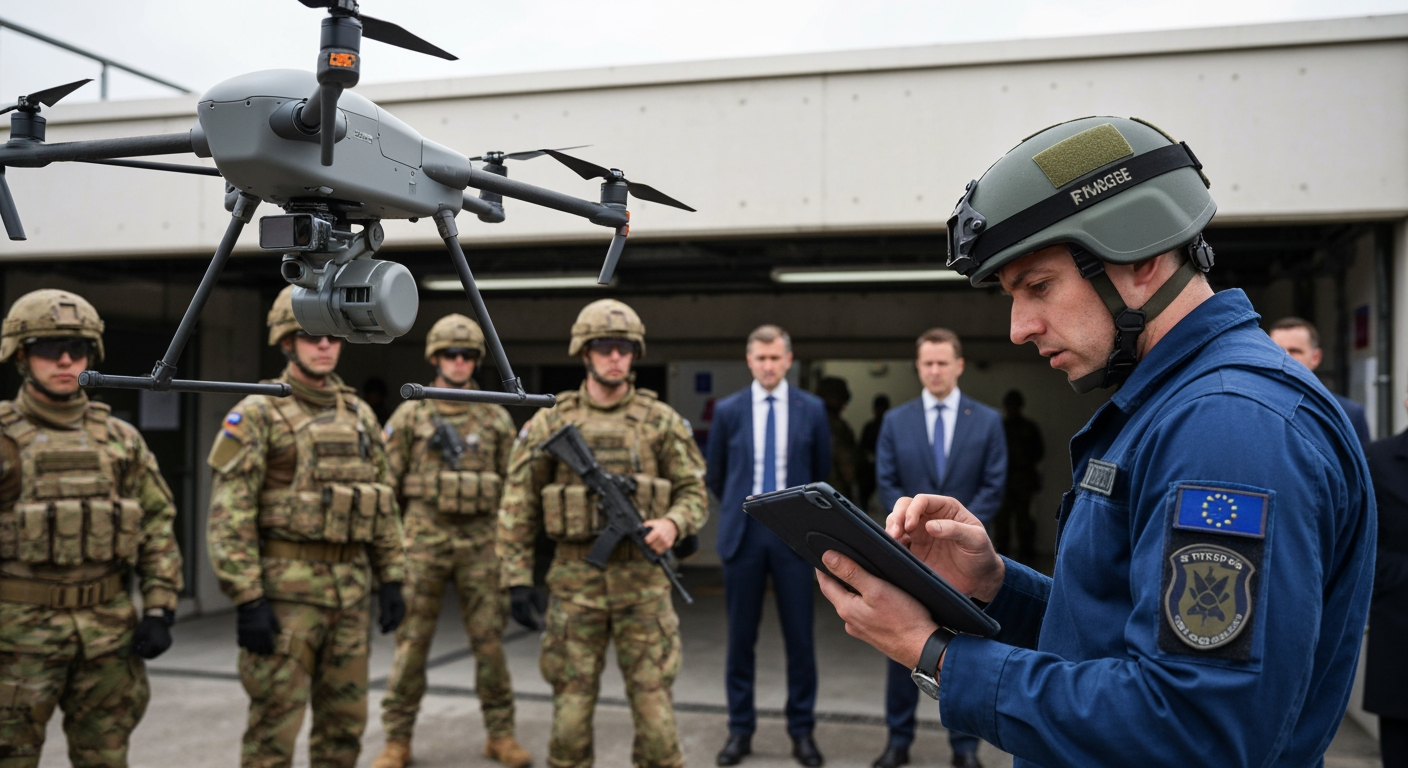
Brussels, Belgium – The European Union is significantly stepping up its drone cooperation efforts, driven by a pronounced surge in unmanned aerial vehicle (UAV) incursions across the continent and an escalating landscape of hybrid threats primarily attributed to Russia. This coordinated response underscores a growing consensus among EU leaders that sophisticated, low-cost drone technology now represents a critical frontier in modern warfare and security, demanding a unified and technologically advanced defense strategy. The urgency has been amplified by incidents ranging from airspace violations over member states to disruptions at critical infrastructure sites, pushing the bloc to forge a cohesive "European Drone Shield" to protect its skies and citizens.
The Evolving Shadow of Hybrid Warfare
For years, hybrid warfare has been characterized by a blend of conventional and unconventional tactics, including cyberattacks, disinformation campaigns, and economic coercion. However, the recent spate of drone incursions has introduced a tangible, aerial dimension to this strategy, particularly along the EU's eastern flank. European Commission President Ursula von der Leyen has explicitly labeled these incidents as "something new and dangerous," directly linking them to Russia's hybrid warfare campaign aimed at sowing disruption and fear across the bloc. Countries such as Poland, Lithuania, and Denmark have reported increased unauthorized drone activities in their airspace, leading to operational disruptions at airports and heightened security alerts. These cheap, deniable, and disruptive UAVs challenge traditional defense paradigms, compelling European nations to reassess their readiness against threats that differ significantly from conventional military confrontations. The economic asymmetry of such attacks, where an inexpensive drone can necessitate costly defensive measures, further highlights the strategic challenge.
A Unified Front: The "Drone Wall" Initiative
In response to this evolving threat, the concept of a "drone wall" has rapidly gained traction at the highest levels of the European Union. Proposed by President von der Leyen, this initiative envisions a continent-wide defense system that integrates advanced surveillance, intelligence sharing, and sophisticated electronic countermeasures to neutralize UAVs before they can threaten safety or infrastructure. This pioneering project aims to cover Europe's extensive eastern border, which spans approximately 2,250 kilometers with Russia and an additional 1,200 kilometers with Belarus. The "drone wall" is designed to be more than just a technological barrier; it represents a commitment to collective security and political unity, requiring seamless coordination among national air forces, intelligence agencies, and civilian aviation authorities. While most eastern flank member states are participating, a few, notably Slovakia and Hungary, are currently not involved in this coordinated effort.
Technological Innovation Meets Operational Imperative
The implementation of the European Drone Shield will rely heavily on cutting-edge technology and a departure from traditional air defense methods. Recognizing that conventional missile systems are often disproportionately expensive and ineffective against small, fast, and often swarming drones, the EU strategy emphasizes electronic warfare and AI-based surveillance. The proposed defense architecture includes better radar and sensors for early detection, acoustic and electronic jammers to disrupt drone communication and navigation, and artificial intelligence to differentiate between real threats and decoy drones. This layered defense approach is crucial for establishing a robust counter-UAS capability, ensuring that any drone entering European airspace can be tracked and stopped immediately. Furthermore, the EU is adapting civil regulatory frameworks, such as EASA's U-space, to manage unmanned flights in digitally controlled airspace, thereby enhancing authorities' ability to segregate or restrict drone operations in sensitive areas.
Navigating Political Currents and Practical Challenges
Despite the urgent need for a unified response, the path to a fully operational European Drone Shield is not without its obstacles. Political consensus, particularly regarding funding and resource allocation, remains a significant challenge among the 27 member states. While there is broad agreement on the necessity to act swiftly against Russian drone incursions, divisions persist on the optimal approach and the sharing of burdens. Some EU diplomats have voiced concerns that the pace of drone innovation far outstrips the EU's policymaking process, potentially delaying crucial implementations. Moreover, some member states, particularly those on the southern flank like Italy and Spain, emphasize that security resources must also be directed towards managing immigration and other challenges along their borders, highlighting competing priorities within the bloc. The sentiment has also been echoed from outside, with Ukrainian President Volodymyr Zelenskyy openly criticizing Europe's "weak reaction" to Russian threats, drawing on his country's extensive, firsthand experience with modern drone warfare.
A Defining Moment for European Security
The intensification of drone-related hybrid threats marks a critical juncture for European security and defense cooperation. Leaders, including the Danish Prime Minister, have characterized the current period as "the most dangerous moment since the Second World War," underscoring the gravity of the situation. The establishment of a comprehensive European Drone Shield will not only be a technological achievement but also a profound test of the EU's collective will and unity in the face of external aggression. Successfully integrating diverse national capabilities, harmonizing regulatory frameworks, and overcoming budgetary hurdles will be paramount to building a resilient defense against these evolving aerial challenges. The outcome of this endeavor will significantly shape Europe's ability to protect its territory, critical infrastructure, and its citizens in an increasingly complex and interconnected security environment.
Sources
Related Articles


Mounting Frustration Grips Russia as Economic Hardship and War's Toll Deepen
Moscow, Russia – A palpable shift in public sentiment is emerging across Russia, with growing frustration among citizens fueled by a confluence of economic pressures, increasing internet restrictions, and the undeniable...


Germany's Strategic Calculus: Ukraine Aid is an Investment in European Security, Not Charity
Berlin – The ongoing provision of substantial aid to Ukraine by Germany and its allies is increasingly being framed not as an act of altruism, but as a crucial investment in European security and stability. This...