Dietrich Bonhoeffer: Remembering a Theologian's Resistance 80 Years After His Death
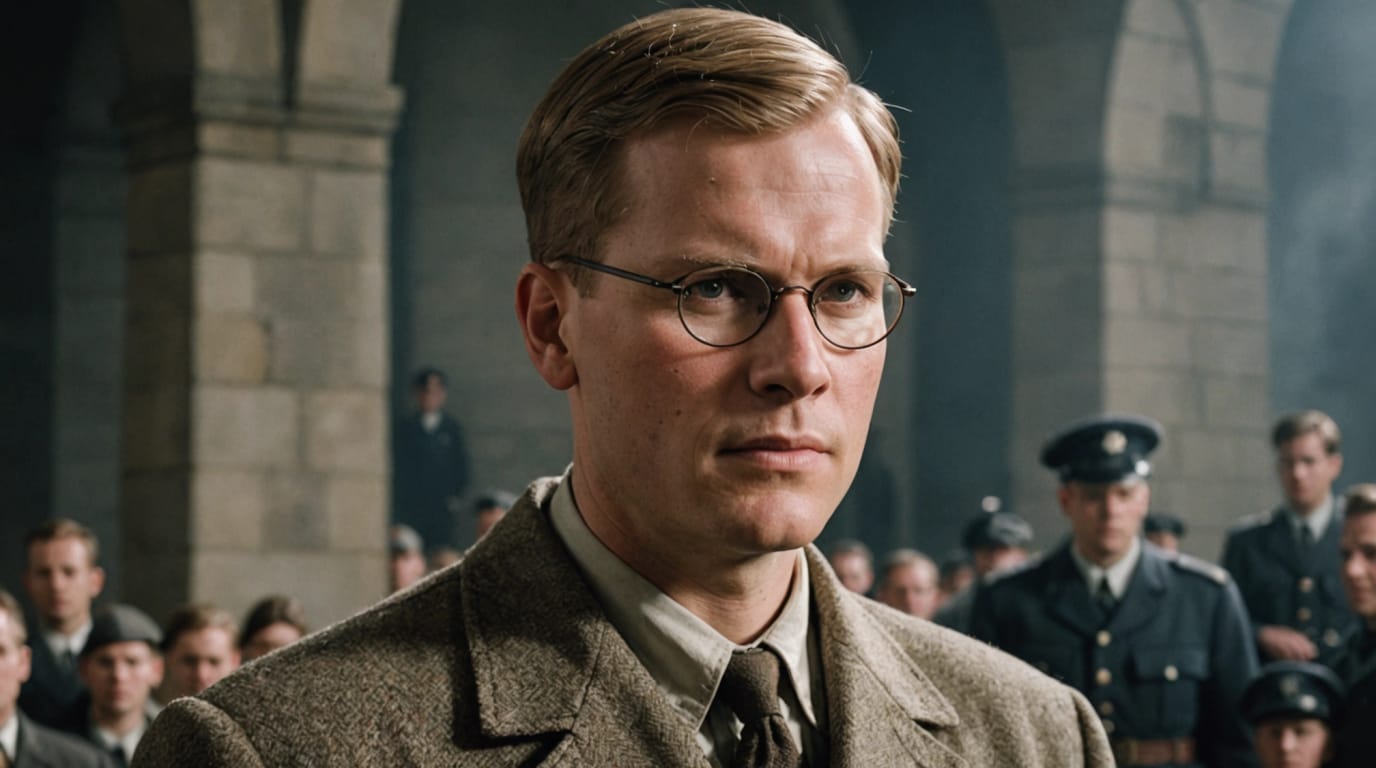
Eighty years ago this week, on April 9, 1945, Dietrich Bonhoeffer, a German pastor and theologian, was executed by the Nazis at the Flossenbürg concentration camp. His death marked the end of a life dedicated to resisting the Nazi regime and defending Christian principles in the face of tyranny. Bonhoeffer's unwavering commitment to his faith and his active involvement in the resistance movement have cemented his legacy as a martyr, a hero, and a profound theological voice for generations.
Early Life and Theological Development
Born in 1906 in Breslau, Germany (now Wrocław, Poland), Dietrich Bonhoeffer came from a large, prominent family with strong intellectual and cultural ties. Although his family was not particularly religious, Bonhoeffer decided at the age of 14 to study theology, a decision that surprised some who knew him as a talented pianist. He pursued his theological studies at the University of Tübingen and the University of Berlin, earning a doctorate in theology at the young age of 21.
Bonhoeffer's early theological work focused on the nature of the church and Christian community. His dissertation, Sanctorum Communio, explored the sociological and theological dimensions of the church, emphasizing the importance of fellowship and mutual support among believers. He spent a year at Union Theological Seminary in New York, where he was exposed to the social gospel movement and the vibrant Black church community in Harlem. This experience profoundly shaped his understanding of the church's role in addressing social injustice.
Resistance to the Nazi Regime
As the Nazi Party rose to power in the 1930s, Bonhoeffer became an outspoken critic of their ideology and policies. He saw the Nazis' attempts to control the German Evangelical Church as a direct threat to Christian faith and freedom. Bonhoeffer was a key figure in the Confessing Church, a movement that opposed the nazification of the church and upheld traditional Christian teachings.
In 1933, shortly after Hitler became Chancellor, Bonhoeffer delivered a radio address denouncing the Führerprinzip (leader principle) and warning against the dangers of idolatry. The broadcast was cut off mid-sentence, but it signaled Bonhoeffer's early and unwavering opposition to the regime. He argued that the church had a responsibility not only to care for the victims of injustice but also to challenge the state when it acted unjustly.
As the situation in Germany deteriorated, Bonhoeffer explored ways to actively resist the Nazi regime. He initially advocated for non-violent resistance, but he eventually became involved in a conspiracy to assassinate Hitler. This decision was a difficult one for Bonhoeffer, who struggled with the moral implications of violence. However, he concluded that the extraordinary circumstances demanded extraordinary action.
Involvement in the Conspiracy and Imprisonment
Bonhoeffer joined the Abwehr, the German military intelligence organization, which served as a cover for resistance activities. He used his international contacts to gather information and seek support from Allied countries. He also helped Jews escape from Germany to Switzerland.
In 1943, Bonhoeffer was arrested and imprisoned for his involvement in the resistance. During his imprisonment, he continued to write and reflect on theological and ethical issues. His letters and papers from prison, published posthumously as Letters and Papers from Prison, offer profound insights into his evolving understanding of Christian faith in a secular world. He grappled with questions of discipleship, suffering, and the meaning of God's grace in the midst of evil.
Execution and Legacy
As the war drew to a close, Bonhoeffer was moved to several different prisons and concentration camps. Finally, he was taken to Flossenbürg concentration camp, where he was hanged on April 9, 1945, just weeks before the camp was liberated. His brother Klaus and two brothers-in-law were also executed for their involvement in the resistance.
Bonhoeffer's last recorded words were, "This is the end—for me, the beginning of life." These words reflect his unwavering faith and his belief in the ultimate triumph of good over evil.
Since his death, Bonhoeffer has become a widely admired figure, revered for his courage, his integrity, and his profound theological insights. His writings continue to inspire Christians and others who seek to live faithfully in the face of injustice and oppression. He is remembered as a martyr, a hero, and a powerful voice for Christian resistance to tyranny. Churches worldwide commemorate him with statues and stained glass.
Contemporary Relevance and Debates
Bonhoeffer's legacy remains relevant and contested in contemporary society. His writings are often invoked in discussions about political engagement, social justice, and the role of the church in public life. However, there are differing interpretations of his views, and his words have sometimes been used to support conflicting political agendas.
Some have attempted to portray Bonhoeffer as a supporter of specific political ideologies, but many scholars and family members caution against such simplistic interpretations. They emphasize that Bonhoeffer's primary concern was faithfulness to Christ and that his actions were rooted in his theological convictions.
Recently, a new film about Bonhoeffer, "Bonhoeffer: Pastor. Spy. Assassin," has sparked debate about how his story is being presented to contemporary audiences. Some critics argue that the film portrays him as a swashbuckling action hero, rather than the more complex and conflicted theologian that he was. Descendants of Bonhoeffer have voiced concerns about the misuse of his image to promote political violence and Christian nationalism.
Despite these debates, Bonhoeffer's core message of discipleship, resistance to evil, and commitment to social justice continues to resonate with people around the world. His life and writings serve as a powerful reminder of the importance of standing up for what is right, even in the face of great personal risk.
Conclusion
Dietrich Bonhoeffer's life and death serve as a powerful testament to the enduring power of faith, courage, and resistance in the face of tyranny. Eighty years after his execution, his legacy continues to inspire and challenge us to confront injustice and live faithfully in a world marked by conflict and division. As we reflect on his life, let us remember his words and actions, and strive to embody his commitment to truth, justice, and love in our own lives.


