Digital Memory at Stake: News Outlets Erect Barriers to the Internet's Archive

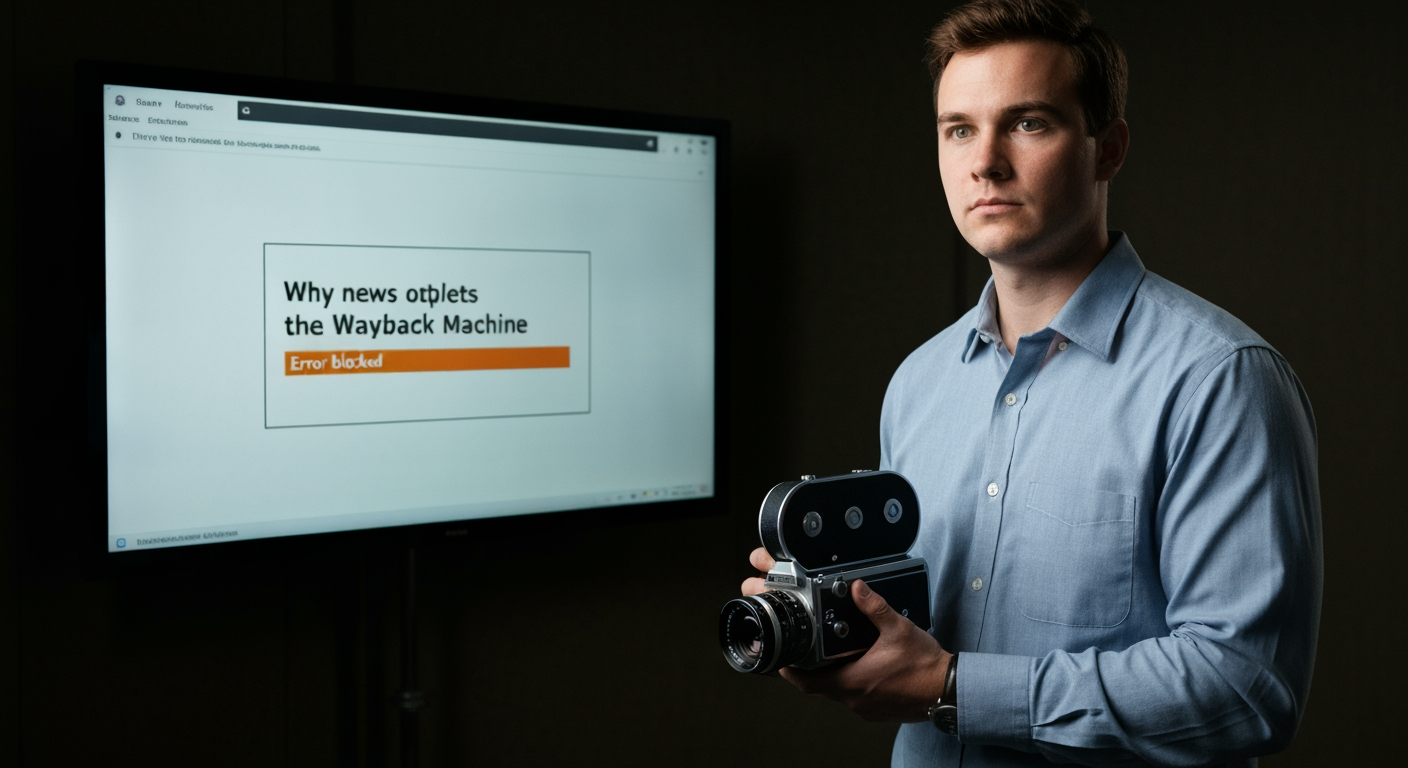
In a significant shift impacting the preservation of digital history, a growing number of prominent news organizations are blocking the Wayback Machine, the Internet Archive's essential web preservation service. This escalating trend stems primarily from publishers' concerns over artificial intelligence (AI) companies allegedly using archived content to train their large language models without authorization, raising complex questions about copyright, fair use, and the future of public access to information. The actions by these outlets threaten to create vast "digital blind spots," potentially eroding the historical record at a time when verified information is more critical than ever.
The AI Scrape and Copyright Conundrum
At the heart of the standoff is the fear that content archived by the Wayback Machine is being exploited by AI developers. News publishers contend that AI companies are leveraging these archives as an indirect route to scrape vast amounts of text for model training, bypassing any direct agreements or licensing fees. This concern is not entirely unfounded; an analysis of Google's C4 dataset revealed that the Internet Archive was among the websites used in the training data for models like Google's T5 and Meta's Llama. The New York Times, for instance, has explicitly stated its belief that "Times content on the Internet Archive is being used by AI companies in violation of copyright law to directly compete with us." Similarly, platforms like Reddit, which recently announced lucrative licensing deals with AI firms, have blocked the Wayback Machine, viewing it as a potential "backdoor" for unauthorized access to content they are now monetizing.
Publishers are increasingly protective of their intellectual property, especially as newsrooms face significant financial pressures. Their efforts to block the Internet Archive's crawlers, such as
ia_archiverbotrobots.txtThe Stakes for Digital History and Public Record
The implications of these blocking actions extend far beyond the immediate commercial disputes. The Wayback Machine, operated by the non-profit Internet Archive, has meticulously preserved over a trillion web pages, serving as an indispensable resource for researchers, historians, legal professionals, and the public. Its mission is to provide "Universal Access to All Knowledge," respecting copyright while ensuring long-term accessibility. By preventing this neutral third party from archiving their content, news outlets risk creating a fragmented and incomplete digital historical record.
This weakening of independent archiving raises fundamental questions about who controls digital history and who is responsible for preserving it. Without a comprehensive, publicly accessible archive, verifying past claims, tracing editorial changes, or understanding historical contexts becomes significantly more challenging. In an era characterized by the proliferation of misinformation and the potential for AI models to "hallucinate" convincing but false information, the accuracy and accessibility of historical information are more critical than ever. If major outlets continue to restrict access, it could lead to information asymmetries where only powerful organizations control their own narratives and revisions of past statements, potentially undermining public accountability.
A Tool Under Siege: Impact on Journalism and Research
For journalists, the Wayback Machine is not an abstract concept but a vital, practical accountability tool. It allows reporters to investigate how online content evolves, track changes in official statements, and verify facts that might otherwise be altered or removed from the live web. Ironically, some news organizations that are now blocking the Wayback Machine have previously relied on its archives for their own investigative work. For example, USA Today utilized the Wayback Machine to analyze how U.S. Immigration and Customs Enforcement altered detention statistics, even as its parent company blocks the Archive from preserving its own content. This contradiction highlights the dual role of the archive as both a potential source of commercial concern and an essential public utility.
A coalition of over 120 journalists, including prominent figures like Rachel Maddow, has signed an open letter championing the Wayback Machine. They emphasize that the work of safeguarding journalism's record increasingly falls to the Internet Archive, especially given the closure of many newspapers and the lack of clear pathways for local libraries to preserve digital-only reporting. Weakening this independent archiving mechanism makes fundamental reporting tasks significantly harder and diminishes the collective ability to understand ongoing developments in the world.
The Internet Archive's Defense and the Path Forward
Mark Graham, director of the Wayback Machine, describes the Internet Archive as "collateral damage" in a broader copyright battle initiated by publishers against AI companies. He and the Internet Archive are actively engaged in discussions with various news outlets to find a resolution that allows the archiver's bot to regain access while addressing publisher concerns. The Internet Archive acknowledges copyright and intellectual property rights, stating it will remove content if made aware of infringement and that its services are intended for "scholarship and research purposes only."
However, the challenge lies in balancing the legitimate concerns of publishers over unauthorized AI scraping with the public interest in preserving an accessible and verifiable digital history. While publishers have a right to protect their content, some argue that entirely blocking a neutral preservation service is not the solution, as it harms a broader ecosystem of information and accountability. The ongoing legal landscape concerning AI training data and copyright is complex, with over 100 active copyright cases in the United States alone. This intricate legal and ethical environment underscores the need for a collaborative approach to ensure both content creators and the public good are served.
The trend of news outlets blocking the Wayback Machine represents a critical juncture in the digital age. It underscores the tension between commercial interests, technological advancements, and the fundamental societal need for a transparent and accessible historical record. As conversations continue between the Internet Archive and publishers, the outcome will significantly shape the future of online memory, impacting how future generations access, understand, and verify the news that defines our times.
Related Articles


Landmines Resurge Globally, Shattering Two Decades of Progress
The global effort to eradicate antipersonnel landmines, once heralded as a monumental success in humanitarian disarmament, is facing a perilous reversal. Despite an international treaty banning these indiscriminate...

Disinformation Campaigns Cloud Michigan's Critical US Senate Race
LANSING, Mich. — The fiercely contested Democratic primary for the U.S. Senate in Michigan has become a battleground not just of policy and ideology, but of pervasive disinformation, with progressive candidate Abdul...