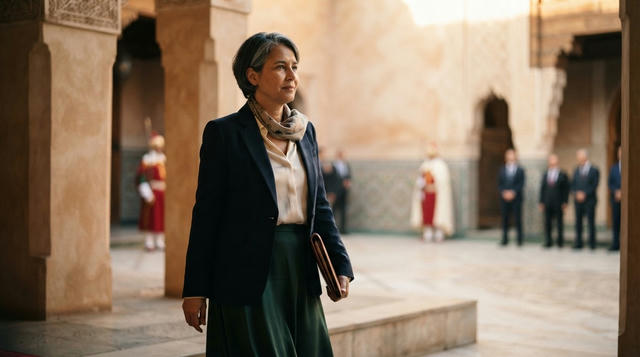
Diplomatic Crossroads: Zelenskyy Courts Saudi Support as Putin Weighs G20 Appearance Amid Shifting Global Alliances
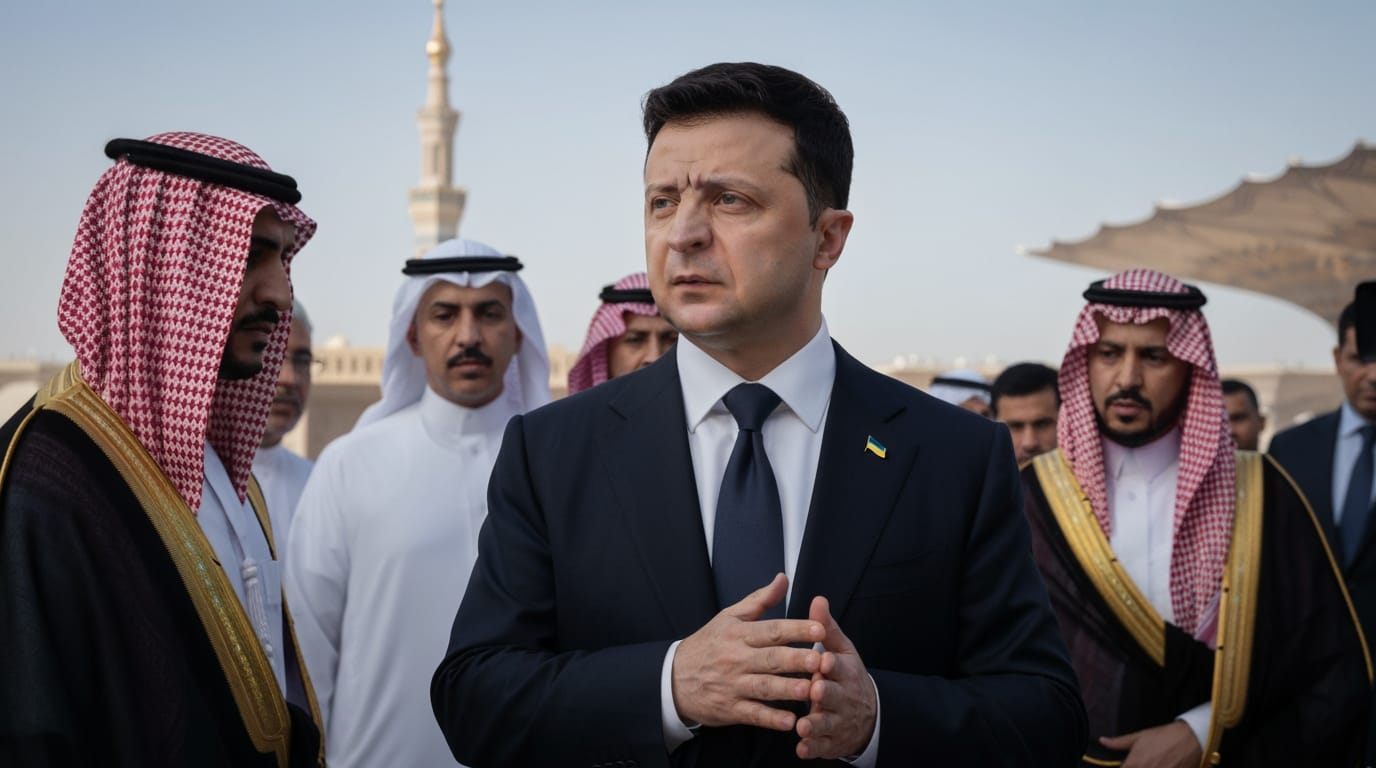
In a flurry of high-stakes diplomatic activity, Ukrainian President Volodymyr Zelenskyy has embarked on a strategic visit to Saudi Arabia, seeking to bolster security cooperation and economic ties, while a significant question mark hangs over Russian President Vladimir Putin's potential attendance at the upcoming G20 summit in Miami. These parallel developments underscore a complex international landscape where key global players are maneuvering for influence and seeking pathways, however convoluted, toward a resolution of the ongoing conflict in Ukraine. The engagements highlight Saudi Arabia's assertive role as a mediator and the United States' evolving approach to engaging with adversaries, even as the war in Eastern Europe grinds on.
Zelenskyy's Outreach to the Gulf: A Bid for Security and Influence
Ukrainian President Volodymyr Zelenskyy arrived in Jeddah, Saudi Arabia, on April 24, marking his second visit to the kingdom within a month. The trip's primary objectives centered on deepening cooperation in security, energy, and infrastructure, alongside efforts to strengthen Ukraine's diplomatic footprint across the Middle East. Zelenskyy's itinerary included a critical meeting with Saudi Crown Prince Mohammed bin Salman, building on defense cooperation agreements initiated during his previous visit in late March 2026. These agreements notably covered areas such as joint drone production and the development of advanced counter-drone systems, leveraging Ukraine's battle-tested expertise gained from over four years of conflict with Russia.
The timing of Zelenskyy's visit is particularly pertinent, occurring amidst what sources describe as a "US-Israeli war with Iran," currently under a cease-fire, which has heightened regional tensions. Ukraine has actively positioned itself as a provider of military technology and expertise to Middle Eastern nations grappling with evolving security challenges, particularly in countering drone threats. Beyond military collaboration, discussions also focused on advancing Ukraine's "Peace Formula" — a 10-point plan aimed at ending the war with Russia, which includes calls for the complete withdrawal of Russian forces and accountability for war crimes. On the day of Zelenskyy's visit, a significant prisoner exchange saw 193 Russian and Ukrainian captives returned, a testament to the ongoing, albeit fragile, diplomatic channels.
Saudi Arabia's Ascendant Role as a Global Mediator
Saudi Arabia has increasingly cultivated an image as a pivotal global mediator, a role that has gained prominence since the onset of the Russia-Ukraine conflict. The kingdom has meticulously maintained a neutral stance, engaging with both Kyiv and Moscow while actively facilitating dialogue and humanitarian efforts. This strategic positioning was evident in its successful mediation of prisoner swaps between Ukraine and Russia, notably securing the release of foreign nationals in 2022 and continuing with exchanges like the one on April 24, 2026.
Riyadh’s diplomatic initiatives extend beyond prisoner exchanges. In 2023, Saudi Arabia hosted a significant two-day peace summit on Ukraine, bringing together officials from over 40 countries to discuss pathways to peace, including elements of Zelenskyy's peace plan. Crown Prince Mohammed bin Salman has been instrumental in these efforts, leveraging the kingdom's strong ties with both Russia and the West. Analysts suggest that Saudi Arabia's mediation efforts are driven by a multi-pronged strategy: diversifying its economy beyond hydrocarbon dependence, maintaining its role as a vital energy supplier, and acting as a bridge between opposing global powers to enhance its international influence and soft power.
Putin's G20 Conundrum: Invitation Extended, Attendance Uncertain
Meanwhile, attention is also fixed on the upcoming G20 Leaders' Summit, scheduled for December 14-15, 2026, in Miami, Florida. The United States, holding the G20 Presidency, has extended an invitation to Russia, a member nation, for the summit, which will be hosted at Trump National Doral Miami. This invitation comes despite an International Criminal Court (ICC) arrest warrant issued against Russian President Vladimir Putin in March 2023 for alleged war crimes related to the unlawful deportation of Ukrainian children.
Kremlin spokesman Dmitry Peskov confirmed that Russia received an invitation but stated that Putin has not yet decided on his attendance, indicating that Russia would be "adequately represented" regardless. Putin has not participated in an in-person G20 summit since 2019, initially due to the COVID-19 pandemic and subsequently due to the ongoing war in Ukraine. However, the US is not a signatory to the Rome Statute, which established the ICC, meaning the arrest warrant does not legally compel the United States to detain Putin. This legal distinction allowed Putin to travel to Alaska for a summit with then-President Donald Trump in August 2025.
President Donald Trump, for his part, expressed that it would be "very helpful" if Putin were to attend the Miami summit, emphasizing the importance of dialogue with all parties. Trump has publicly stated his desire to broker a peace deal between Moscow and Kyiv, viewing such direct engagement as potentially beneficial to achieving that objective.
Intersecting Agendas: A Bid for Stability
The diplomatic overtures from both Ukraine and the United States, set against the backdrop of Saudi Arabia's burgeoning mediation efforts, illustrate a multifaceted approach to navigating the protracted conflict in Ukraine. Zelenskyy's proactive engagement with Saudi Arabia seeks to diversify international support, securing not only defense and economic partnerships but also critical backing for his peace initiative from influential non-Western states. Saudi Arabia, by hosting Ukrainian and US officials and facilitating talks, reinforces its claim as an indispensable bridge between global powers, aiming to foster stability in a volatile world.
Concurrently, the potential presence of Vladimir Putin at the G20 summit, facilitated by a US administration keen on direct engagement, signals a pragmatic, albeit controversial, strategy to keep diplomatic channels open. While the ICC warrant casts a shadow over Putin's international mobility in many countries, the US's non-membership in the court offers a unique platform for such an encounter. These converging and sometimes contrasting diplomatic efforts collectively underscore the complex web of international relations currently at play, as nations seek to manage the implications of the Ukraine war and shape a future global order.
These diplomatic maneuvers, from Jeddah to Miami, highlight the enduring search for leverage and resolution in a conflict that continues to reshape geopolitical alliances and challenge existing international norms. The coming months will likely reveal whether these engagements can translate into tangible steps toward de-escalation and, eventually, a lasting peace.