Explosions and Gunfire Rock Mali's Main Military Camp Near Capital
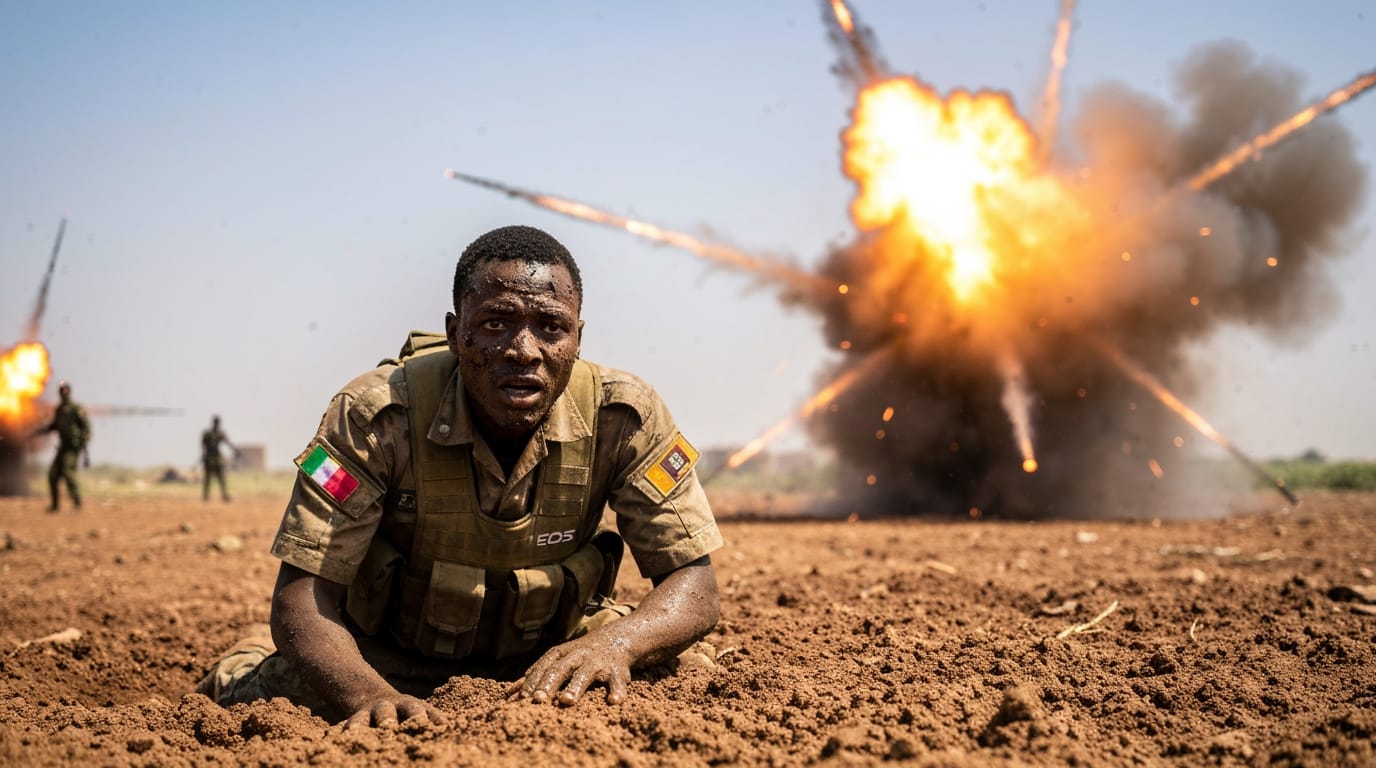
Kati, Mali – In a fresh display of the persistent security challenges facing Mali, loud explosions and sustained gunfire were reported early Saturday morning near the main military base in Kati, on the outskirts of the capital Bamako. Soldiers swiftly deployed, establishing roadblocks in the area, according to eyewitness accounts. The incident underscores the volatile security landscape in the West African nation, which has grappled with a decade-long Islamist insurgency and recurrent political instability.
The Recent Incident at Kati
The tranquility of Kati, a garrison town approximately 15 kilometers (about 9 miles) northwest of Bamako, was shattered around dawn on Saturday, April 25, 2026, by a series of powerful blasts and prolonged automatic weapon fire. Residents in the vicinity reported the sounds, which emanated from the strategic military base. The Malian military, without immediately identifying the perpetrators or the cause of the explosions, moved quickly to secure the area, with soldiers blocking off roads leading to the camp. No group immediately claimed responsibility for the assault. This event marks another episode in a series of attacks that have increasingly targeted military installations and areas close to the capital, challenging the ruling junta's efforts to stabilize the nation.
A History of Attacks on a Strategic Base
The Kati military camp holds significant symbolic and operational importance in Mali. It is not only the country's largest military base but also served as the launchpad for the 2020 coup that brought Lieutenant Colonel Assimi Goita, the current leader of Mali's ruling junta, to power. Goita is known to frequently reside at the camp, further cementing its status as a critical security asset.
The Saturday morning events echo a major assault that occurred on July 22, 2022, when jihadi rebels mounted a sophisticated attack on the same Kati base. That incident, which unfolded around 5:00 a.m., involved two vehicles packed with explosives detonating at the camp's entrance, followed by shelling and an ground assault by militants. It was the first time Kati had been directly targeted by extremist rebels in their more than 10-year insurgency. The Malian Armed Forces reported "vigorously repelling" that attack, with varying casualty figures initially reported. Ultimately, military statements indicated between two and seven attackers were killed, eight were arrested, and one Malian soldier died, with five soldiers and one civilian wounded. French nationals received cautionary text messages from their embassy, and residents described helicopters circling overhead in the aftermath.
Responsibility for the 2022 attack was later claimed by Katiba Macina, an al-Qaeda-linked group and a key component of the larger Jama'at Nusrat al-Islam wal-Muslimin (JNIM) alliance. The group cited the presence of Russia's Wagner Group mercenaries in Mali as a primary motivation for their actions.
Mali's Escalating Security Crisis
Mali has been engulfed in a severe security crisis since 2012, when a Tuareg rebellion in the north morphed into a full-blown jihadist insurgency following its hijacking by extremist groups. While the initial conflict was concentrated in the northern regions, the extremist threat, spearheaded by groups like JNIM and Islamic State Sahel Province (ISSP), has steadily expanded into central and southern Mali, increasingly encroaching upon areas previously considered secure, including the vicinity of the capital.
The attack on Kati in 2022, and the similar incident in April 2026, are indicative of this dangerous trend. In the days leading up to the 2022 Kati attack, there had been a coordinated series of insurgent assaults, including a deadly strike on a police base in Kolokani, approximately 60 kilometers (37 miles) north of Bamako, which resulted in the deaths of two Malian soldiers. More recently, JNIM has been observed implementing blockades on crucial routes throughout southern and western Mali, including around Bamako, targeting fuel convoys and establishing checkpoints. These actions, alongside major attacks on military bases in areas like Timbuktu and Boulkessi, signal an increased capability and intent to destabilize the country's core. The withdrawal of the UN peacekeeping mission (MINUSMA) in December 2023 has further exacerbated the security situation, contributing to an upsurge in terrorist attacks.
Political Instability and Shifting Alliances
The persistent security woes are intertwined with Mali's turbulent political landscape. The country has experienced multiple military coups, with the current junta seizing power in 2020 and consolidating it in 2021. These military takeovers derailed a promised return to civilian rule, with elections initially slated for February 2022 now postponed, first to 2026 and then revised to 2025 under regional pressure. This political uncertainty has created a vacuum that extremist groups have exploited.
Following a deterioration of relations with its traditional Western allies, particularly France, Mali's military leadership has pivoted towards Russia for security assistance. The presence of Russian Wagner Group personnel in Mali, described by the Malian government as military instructors, has been a contentious issue, drawing criticism from international human rights organizations and serving as a stated casus belli for groups like JNIM. Accusations of human rights abuses have also been leveled against the Wagner Group and Malian security forces. Despite this shift in alliances, the recent attacks, including those near the capital, demonstrate the ongoing and severe limitations of the current security strategy in containing the widespread insurgency.
Conclusion
The renewed explosions and gunfire near Mali's main military camp in Kati serve as a stark reminder of the country's deepening security crisis. These incidents, alongside the broader pattern of escalating militant activity, challenge the military government's foundational promise of restoring stability. With extremist groups demonstrating an expanding reach and an ability to strike at the heart of the nation's military infrastructure, Mali faces a complex and formidable struggle. The interplay of political instability, the pivot to new international alliances, and a resilient, adaptable insurgency continues to threaten not only the immediate security of Mali but also the broader stability of the Sahel region.


