Wildfires Force Mass Evacuations Across Japan, Climate Change Cited as Intensifying Factor
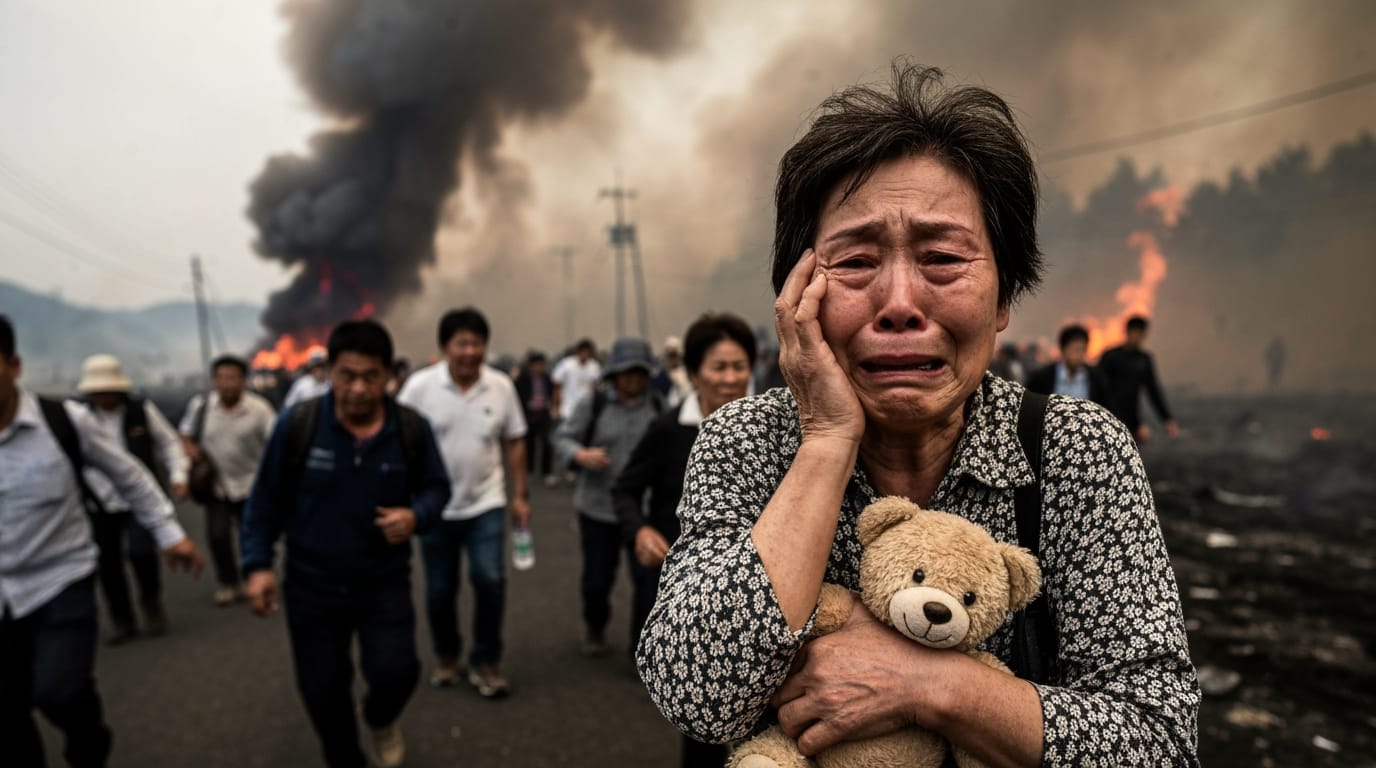
Northern Japan is currently grappling with widespread wildfires, prompting the evacuation of thousands of residents as emergency services battle to contain multiple blazes fueled by dry conditions and strong winds. The latest incidents, concentrated in Iwate Prefecture, unfold against a backdrop of increased wildfire activity across the nation in recent years, raising concerns among officials and experts about the escalating impact of human-induced climate change. As communities confront immediate threats to life and property, the recurring nature of these environmental disasters highlights a pressing need for enhanced preparedness and adaptive strategies.
Northern Japan Confronts Uncontained Blazes
In Iwate Prefecture, specifically around the coastal town of Otsuchi, two significant forest fires that ignited on Wednesday, April 22, 2026, continue to spread, necessitating expanded evacuation orders for more than 3,000 people. These blazes, which erupted in the Kozuchi and Kirikiri districts, approximately 10 kilometers apart, have already scorched over 200 hectares of land and destroyed at least seven buildings, including one residence. Authorities have issued mandatory evacuation orders affecting approximately 1,229 to 1,541 households, with more than 245 residents seeking shelter in designated evacuation centers by early Thursday morning. Local officials, including Otsuchi Mayor Kozo Hirano, have acknowledged the rapidly evolving situation, stating that conditions are "changing by the minute".
The firefighting effort is considerable, involving helicopters from the Iwate prefectural government and Japan's Self-Defense Forces, alongside firefighters mobilized from across the prefecture and even neighboring Miyagi Prefecture. Despite these extensive efforts from both ground and air, the fires remain uncontained. The challenges are compounded by warnings from the local weather observatory regarding persistent dry air and strong winds, conditions conducive to rapid fire spread. Adding to the precarious situation, the region is simultaneously under a week-long earthquake alert following a magnitude 7.7 temblor off Iwate earlier in the week, creating a complex multi-disaster scenario for residents and responders. All elementary, junior high, and high schools in Otsuchi were closed on Thursday as a precautionary measure, and rail services have been disrupted.
Echoes of Recent Disaster: The Ofunato Blaze of 2025
The current crisis in Otsuchi follows closely on the heels of another major wildfire that devastated the city of Ofunato, also in Iwate Prefecture, just over a year ago. In late February and early March 2025, Ofunato experienced what was described as Japan's largest wildfire in decades, burning through an estimated 2,100 to 3,370 hectares (5,190 to 7,170 acres) of forest. This extensive blaze led to the destruction of at least 84 to 210 homes and other buildings and forced the evacuation of approximately 3,200 to 4,596 people. Tragically, at least one fatality was reported, with the body of a man discovered on a road in Ofunato.
The Ofunato fire was attributed to a combination of unusually dry winter conditions, record-low February rainfall (just 2.5 millimeters compared to an average of 41 millimeters), and strong winds. At its peak, over 2,000 firefighters and Self-Defense Forces personnel, supported by 16 helicopters, were deployed to combat the inferno. The severity and scale of the Ofunato incident had already shocked many in Japan who typically considered large-scale wildfires uncommon in the country's humid climate, bringing national attention to the increasing risk.
A Nation Under Threat: Broader Wildfire Activity
Beyond the significant events in Iwate Prefecture, Japan has witnessed a broader increase in wildfire incidents across several regions. In March 2025, multiple fires broke out in western Japan, affecting areas such as Okayama, Imabari in Ehime prefecture, and Aso in Kumamoto prefecture. These fires resulted in at least two injuries, forced dozens of residents to evacuate, and damaged several homes. In Okayama, a fire on Mount Kaigara burned 250 hectares, while in Imabari, a firefighter sustained a slight injury. While a smaller fire in Aso was quickly extinguished, the incidents collectively underscored a growing pattern of wildfire threats across the country.
The Fire and Disaster Management Agency recorded an average of 1,300 wildfires annually, with a concentration during the dry and windy period between February and April. However, recent years have seen events of much greater intensity and scale than the historical average.
The Climate Connection and Future Outlook
A growing body of scientific analysis links the intensified wildfire activity in Japan and neighboring South Korea to human-induced climate change. Research conducted by European experts, including the EU-backed project ClimaMeter, indicates that ongoing wildfires are made more severe by persistently dry soil, strong winds, and unusually high temperatures. These studies reveal that weather patterns similar to those triggering recent blazes now bring up to 2 degrees Celsius hotter and up to 30% drier conditions, along with stronger winds, compared to previous decades.
Experts emphasize that while some natural variability exists, the undeniable contribution of human-driven climate change is amplifying extreme weather events. The prolonged dry conditions, coupled with an abundance of dried-up leaves on forest floors and a lack of undergrowth management in some areas, create an environment highly conducive to rapid fire spread. The concern among risk experts is that large-scale wildfires, once considered rare in Japan, could become a more frequent and severe risk due to changing climatic and environmental conditions. This shift necessitates urgent climate adaptation strategies, as climate change not only warms the planet but also fuels interconnected extremes that exacerbate wildfire potential.
A Resilient Nation Adapts to New Realities
The widespread wildfires ravaging parts of Japan, particularly the current uncontained blazes in Iwate Prefecture and the devastating Ofunato fire of last year, represent a profound challenge to affected communities and the nation's emergency response capabilities. The mass evacuations underscore the immediate human cost, forcing thousands from their homes and disrupting daily life. As Japan faces an apparent increase in the frequency and intensity of these natural disasters, driven by a confluence of dry weather, strong winds, and broader climate change impacts, the emphasis shifts toward building greater resilience. The ongoing efforts of firefighters and the Self-Defense Forces highlight the dedication to protecting lives and property, but the recurring nature of these events signals a critical juncture for strategic planning, improved forest management, and robust climate adaptation measures to safeguard communities against future threats.


