Diplomatic Earthquake Rocks Horn of Africa as Somalia Condemns Israeli Minister's Somaliland Visit
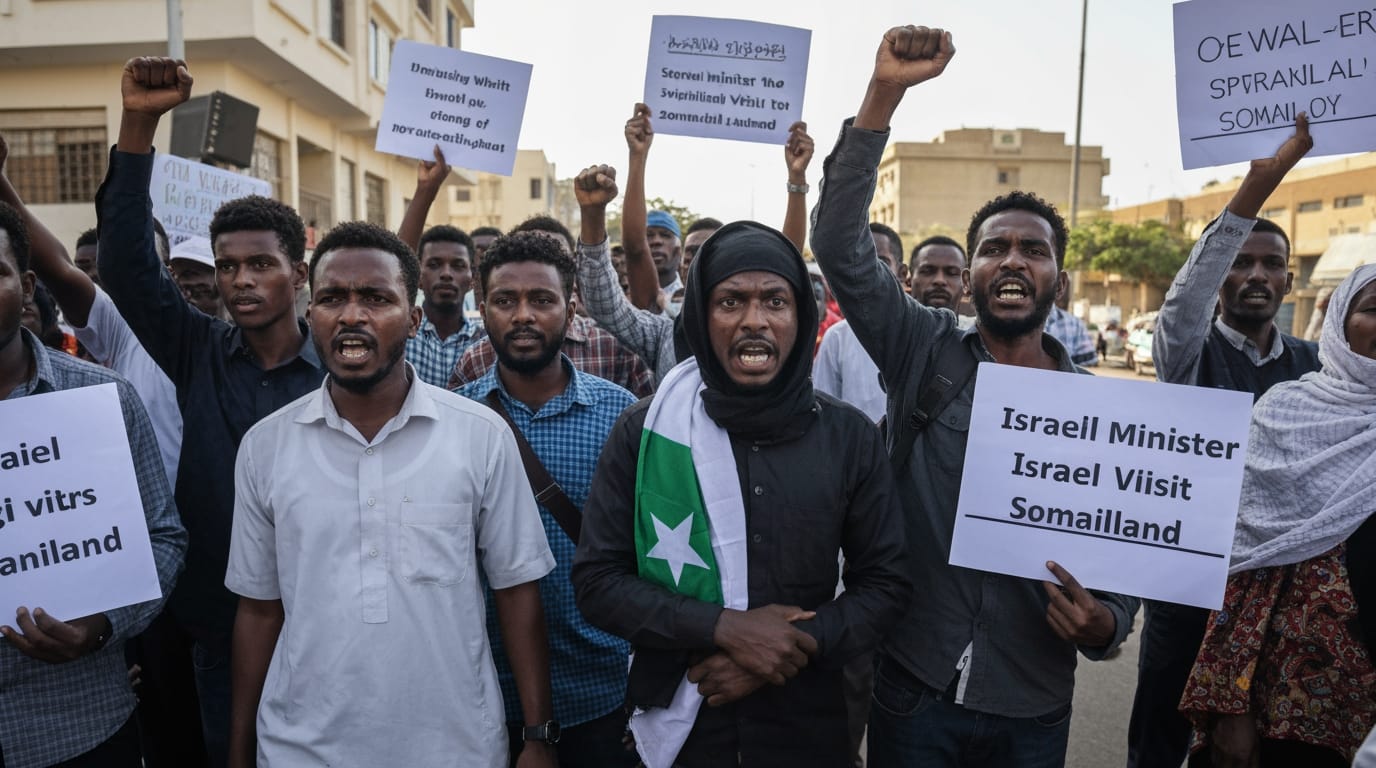
Mogadishu, Somalia – The Horn of Africa has been plunged into a fresh diplomatic crisis following an unprecedented visit by Israeli Foreign Minister Gideon Saar to Somaliland on January 6, 2026. The visit, marking the first high-level engagement since Israel unilaterally recognized the self-declared state of Somaliland just weeks prior, drew immediate and fierce condemnation from Somalia, which labeled it an "unauthorized incursion" and a blatant violation of its sovereignty and territorial integrity. This dramatic development has ignited regional tensions and challenged long-standing international norms regarding state recognition and diplomatic protocol.
Somalia's Outcry and International Repercussions
Somalia's Ministry of Foreign Affairs and International Cooperation issued a strong statement denouncing Foreign Minister Saar's presence in Somaliland. Mogadishu unequivocally declared the visit an "unacceptable interference" in its internal affairs and a serious breach of international law, including the UN Charter and the African Union Constitutive Act. The federal government reiterated its unwavering stance that Somaliland remains an "integral and inseparable part" of Somalia, emphasizing that any official engagement within its territory without explicit consent from Mogadishu is "illegal, null, and void" and carries no legal effect.
The condemnation from Somalia was swiftly echoed by a significant portion of the international community, including regional and global organizations. The African Union, the Arab League, the Organization of Islamic Cooperation (OIC), and numerous countries, particularly within the Middle East and Africa, voiced strong opposition. They largely described Israel's recognition of Somaliland as an unlawful step that threatens regional peace and security and undermines the principle of territorial integrity. Concerns were raised that such a move could set a dangerous precedent for secessionist movements across the continent. Egypt and Djibouti, among others, reaffirmed their support for Somalia's unity and sovereignty. Mogadishu has called upon the United Nations and other international partners to reaffirm their support for Somalia's internationally recognized borders. Somalia has also reserved the right to take all appropriate diplomatic and legal measures to safeguard its sovereignty and national unity.
The Controversial Recognition and Visit
The diplomatic firestorm erupted on December 26, 2025, when Israel formally announced its recognition of Somaliland as an independent, sovereign state. This decision made Israel the first and, so far, the only United Nations member state to acknowledge Somaliland's bid for statehood. Just ten days later, Foreign Minister Gideon Saar arrived in Somaliland's capital, Hargeisa, for official meetings with President Abdirahman Mohamed Abdullahi (also known as Irro) and other senior government officials.
During his visit, Saar affirmed Israel's commitment to advancing bilateral relations with Somaliland and declared that the two entities would "soon" open embassies and appoint ambassadors. He outlined areas of proposed cooperation including agriculture, health, technology, and the economy, and announced plans for Somaliland professionals to visit Israel for training, starting with the water sector. Deflecting international criticism, Saar reportedly stated that Israel was undeterred by objections, asserting, "Nobody will determine for Israel who we recognize and who we maintain diplomatic relations with." This sentiment underscores Israel's resolve to forge new alliances despite the diplomatic fallout.
Somaliland's Decades-Long Quest for Statehood
Somaliland, a former British protectorate, unilaterally declared independence from Somalia in 1991, amidst the collapse of Somalia's central government and the onset of a protracted civil war. Since then, it has functioned as a de facto independent state, maintaining its own government, currency, military, and electoral system. Despite its relative stability and democratic governance compared to its southern neighbor, Somaliland has struggled for international recognition, which has largely been withheld due to concerns over upholding Somalia's territorial integrity and fears of encouraging other secessionist movements in Africa.
Somaliland's claim to sovereignty is rooted in historical arguments, asserting that it was a separate entity during the colonial era and briefly gained independence in 1960 before voluntarily uniting with Italian Somaliland. Its proponents argue that the Act of Union was legally flawed and never properly ratified, thus positioning its current status not as secession but as a restoration of original sovereignty. President Abdullahi hailed Israel's recognition as a "historic and courageous decision" that opens a new chapter for diplomatic, security, economic, and development cooperation, serving mutual interests and contributing to peace and stability in the Horn of Africa. He also accepted an invitation from Israeli Prime Minister Benjamin Netanyahu to visit Israel, signaling a deepening of their newfound relationship.
Geopolitical Stakes in a Volatile Region
The timing and nature of Israel's move and the subsequent high-level visit highlight significant geopolitical calculations. Somaliland occupies a highly strategic location on the Gulf of Aden, directly across from Yemen and the crucial Bab el-Mandeb strait, a vital shipping lane connecting the Red Sea to the Indian Ocean. This area has gained increased importance, particularly with ongoing attacks by Iran-backed Houthis on maritime traffic in the Red Sea since October 2023.
For Israel, establishing a formal presence in Hargeisa could provide a strategic vantage point to monitor maritime threats, enhance Red Sea security, and expand its influence in the Horn of Africa. Reports suggest discussions may include security and defense cooperation, with the possibility of Israeli defense facilities in the region. This alignment could serve as a new pillar in Israel's broader Africa strategy, creating a security and diplomatic arc extending from the Maghreb to the Red Sea corridor. The move has also been seen as solidifying a new geopolitical divide, with an "agile" pro-recognition bloc led by Israel and potentially the UAE, pitted against a "pro-unity" camp supported by countries like Turkey, Egypt, and Saudi Arabia, who back Somalia's territorial claims.
An Unfolding Diplomatic Saga
The Israeli foreign minister's visit to Somaliland, following Tel Aviv's groundbreaking recognition, has undeniably created a profound shift in the complex political landscape of the Horn of Africa. While Somaliland celebrates a long-sought validation of its statehood aspirations, Somalia and a broad array of international actors view it as a dangerous affront to national sovereignty and international law.
The establishment of diplomatic ties and potential security cooperation between Israel and Somaliland carries significant implications for regional stability, maritime security, and the future of self-determination movements. The diplomatic saga is far from over, with Somalia pledging legal and diplomatic measures, and the international community grappling with the ramifications of this bold move. The long-term consequences for the intricate web of alliances and rivalries in one of the world's most strategically vital regions remain uncertain.


