Divergent Paths: Pope Leo XIV and Donald Trump Chart Contrasting Futures for the United States
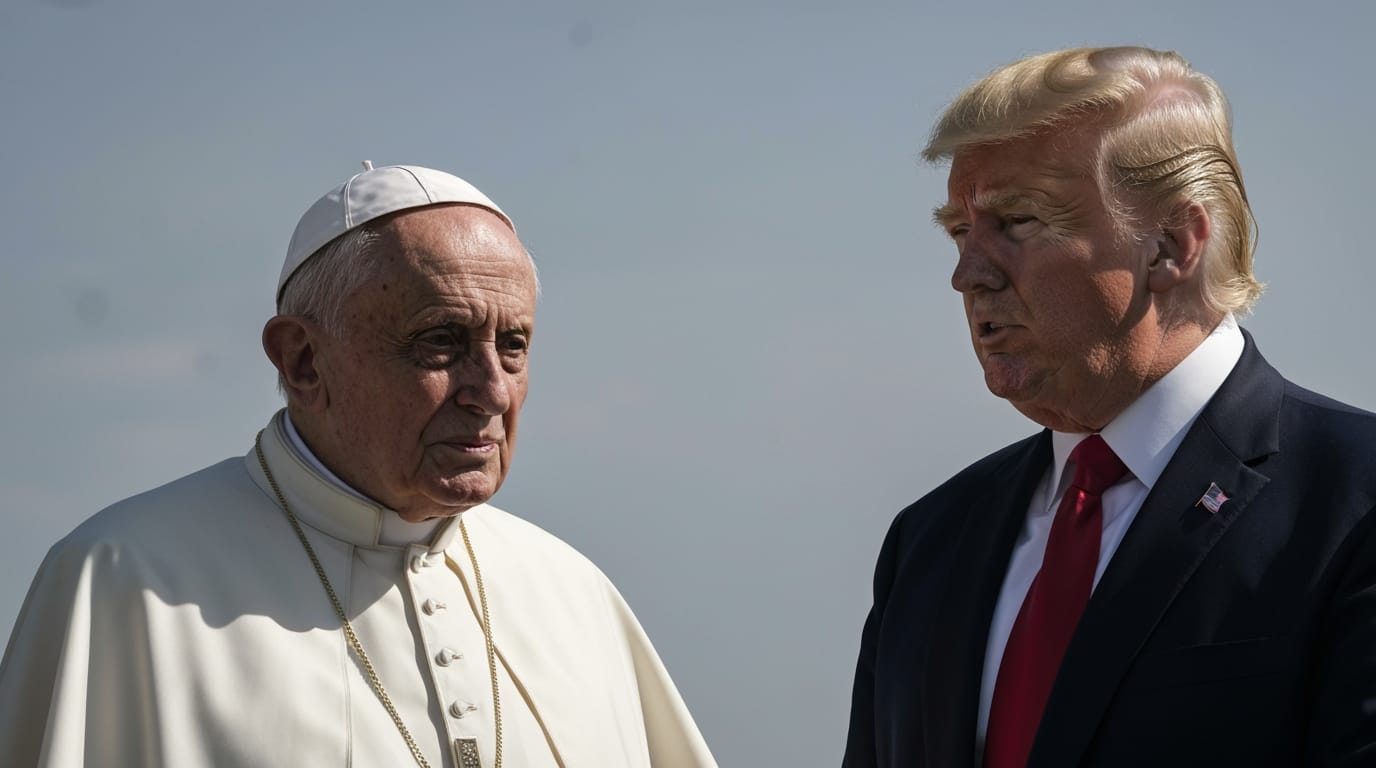
Vatican City — A clear ideological chasm has emerged between Pope Leo XIV, the newly elected American pontiff, and former U.S. President Donald Trump, setting the stage for a compelling contrast in visions for the United States' domestic and international course. Since his election in May 2025, Pope Leo XIV, born Robert Francis Prevost, has subtly but consistently articulated a global and socially-minded perspective, frequently diverging from the "America First" nationalism championed by Trump. This distinction is not merely rhetorical but manifests in stark differences on critical issues such as immigration, social justice, and international relations, defining a unique moment where two prominent American figures, leading in vastly different realms, present profoundly different pathways forward.
A New Pontiff, A Resurgent Social Ethos
Pope Leo XIV's ascension to the papacy marked a historic moment, as he became the first American to lead the Roman Catholic Church. Choosing the name Leo, a direct nod to Pope Leo XIII, known as "The Pope of the Workers" and architect of modern Catholic social teaching, signaled the new pontiff's commitment to social justice. Growing up on Chicago's South Side and spending two decades as a missionary in Peru, Leo XIV's personal experiences have deeply informed his advocacy for the poor and marginalized, making social justice and the fight against inequality cornerstones of his mission. This background contrasts sharply with the policy decisions of former President Trump, particularly his administration's budgets which critics argue slashed vital programs for vulnerable populations.
Immigration at the Forefront of Disagreement
One of the most prominent areas of divergence lies in immigration policy. Pope Leo XIV has repeatedly questioned the morality of mass deportation policies and the treatment of immigrants, urging a more humane and welcoming approach. He publicly backed a rare message from the U.S. Conference of Catholic Bishops (USCCB) that warned against "fear, dehumanization, and indiscriminate deportations." In one notable instance, the Pope questioned whether "inhuman treatment of immigrants" could align with a "pro-life" stance, implicitly broadening the traditional definition of the term beyond abortion. This perspective directly clashes with former President Trump's signature hardline immigration policies, which included mass deportations and increased border enforcement. While Trump initially offered congratulations on Leo XIV's election as an American pontiff, his administration's response to the Church's criticisms on immigration has been dismissive, with White House officials asserting the humane enforcement of laws.
Competing Visions for Global Engagement
The contrast extends to international affairs, where Pope Leo XIV has demonstrated a commitment to multilateralism and existing alliances, which stands in opposition to Trump's more isolationist "America First" doctrine. The pontiff critically viewed Trump's proposed Ukraine peace plan, expressing concern that it could "break apart the alliance between Europe and the United States." Observers note Leo XIV's "pre-Trumpian" view of the West and his enthusiasm for the transatlantic alliance, a position distinct from even his predecessor, Pope Francis, who at times criticized NATO. Furthermore, the Vatican, under Leo XIV, has engaged in diplomatic efforts concerning Venezuela, a situation where the Pope has been seen as a potential partner for the U.S. in avoiding foreign wars, despite underlying "differences of opinion with the Trump administration" on this issue. This reflects a consistent effort by the Pope to engage in global politics with a diplomatic and unifying tone, in contrast to Trump's often confrontational style.
The Broader "Pro-Life" Spectrum and Social Morality
Pope Leo XIV has made it clear that the Church's "pro-life" stance encompasses more than just opposition to abortion. His remarks have expanded the concept to include the dignity of human life in all its stages and conditions, explicitly extending to the treatment of immigrants and the condemnation of practices like the death penalty. This broader interpretation challenges a segment of conservative American Catholics who have historically focused primarily on abortion. The Pope's nuanced approach suggests a more comprehensive social morality that prioritizes the welfare of the vulnerable across various policy domains. This comprehensive vision implicitly critiques policies that might disproportionately affect the poor or those seeking refuge, areas where Trump's administration faced considerable criticism.
Conclusion: An American Pope, A Global Perspective
The election of Pope Leo XIV has introduced a powerful, distinctly American voice to the global stage, yet one that often stands in ideological opposition to the former American president, Donald Trump. While Trump celebrated the American identity of the new pontiff, the policy and moral perspectives articulated by Pope Leo XIV signal a profound departure from Trump's approach to governance. From the sanctity of human life as it pertains to immigration, to the imperative of social justice and the value of international alliances, the pontiff offers a vision rooted in Catholic social teaching and global solidarity. This ongoing ideological interplay between Pope Leo XIV's universalistic appeal and Donald Trump's nationalistic platform underscores a pivotal moment for both the Catholic Church's engagement with American politics and the future trajectory of the United States on the world stage.