Doumbouya Secures Presidency in Guinea, Concluding Contentious Transition from Coup to Civilian Rule
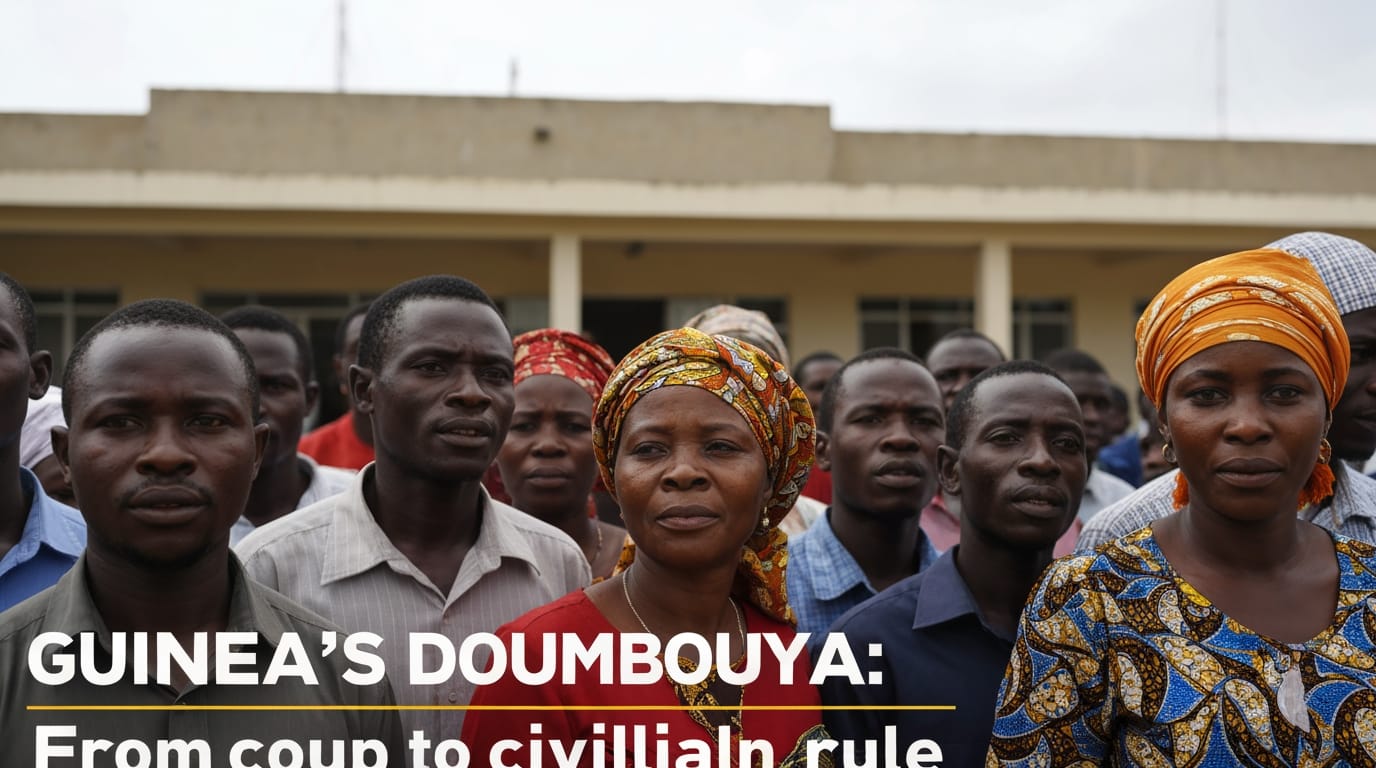
CONAKRY, Guinea – General Mamady Doumbouya, who seized power in a 2021 military coup, has officially been declared the victor of Guinea's December 28, 2025, presidential election, according to provisional results announced on December 31, 2025. This election marks the culmination of a turbulent political transition period, moving the West African nation from military rule to a new constitutional order, albeit one that has drawn significant scrutiny regarding its democratic integrity and the legitimacy of its outcome. Doumbouya's election, granting him a seven-year mandate, follows a controversial path that saw him abandon earlier pledges not to run for office and navigate a revised constitution designed to facilitate his candidacy.
The Coup's Genesis and Initial Promises
The journey to the 2025 elections began on September 5, 2021, when then-Colonel Mamady Doumbouya, commander of Guinea's Special Forces, led a bloodless coup that overthrew the civilian government of President Alpha Condé. Condé, who had been Guinea's first democratically elected leader in 2010, had sparked widespread opposition and protests by pushing through a new constitution in March 2020 that allowed him to seek a controversial third term. Doumbouya justified the military takeover as a response to perceived corruption, human rights abuses, and political stagnation under Condé, promising to restore democracy, tackle endemic corruption, and usher in a new era for Guinea. Crucially, in the immediate aftermath of the coup, Doumbouya explicitly pledged that neither he nor any member of his transitional junta would contest future elections aimed at returning power to civilians.
The coup, which saw the dissolution of the constitution and government, and the temporary closure of borders, was initially met with a mix of public weariness and some initial welcome by Guineans tired of Condé's extended rule. Doumbouya, then in his early 40s and a former French Foreign Legionnaire, assumed the role of interim president in October 2021, heading the National Committee of Reconciliation and Development (CNRD).
International Pressure and Shifting Timelines
The international community swiftly condemned the military takeover. Regional bodies like the Economic Community of West African States (ECOWAS) and the African Union (AU) immediately suspended Guinea's membership and imposed sanctions. ECOWAS initially demanded a return to civilian rule within six months and called for the unconditional release of former President Condé. Sanctions included freezing financial assets and imposing travel bans on junta members and their families.
Under mounting pressure, Doumbouya's transitional government engaged in negotiations regarding a timeline for restoring constitutional order. Initially, Doumbouya proposed a 39-month transition period in May 2022, which was later adjusted to 36 months by the National Transition Council (CNT). This was considerably longer than the timeframe desired by ECOWAS, leading to continued tension and further sanctions. However, following protracted negotiations, an agreement was reached with ECOWAS in October 2022, outlining a commitment to hold elections by January 2025. Despite this, the transition process faced repeated delays, missing subsequent deadlines, including one set for December 2024. By February 2025, ECOWAS decided to lift financial and economic sanctions against Guinea, marking a step towards resuming dialogue and reflecting a nuanced approach to avoid pushing Guinea towards the Alliance of Sahel States (AES) — a bloc formed by other military-led governments in the region.
Paving the Way for Doumbouya's Candidacy
A significant turning point in Guinea's transition was the process of constitutional reform. In his New Year's address on December 31, 2024, General Doumbouya reaffirmed his commitment to restoring constitutional order and announced a constitutional referendum for the first quarter of 2025. A draft of a new national constitution was formally received by Transitional President Doumbouya in June 2025. This new constitution was subsequently approved in a national referendum held in September 2025.
Crucially, this new constitutional framework diverged significantly from the initial post-coup charter. The original charter explicitly barred members of the military junta from contesting future elections. However, the new constitution, drafted under Doumbouya's administration and overwhelmingly approved with 90.6% of votes in favor, removed these restrictions, effectively paving the way for his presidential candidacy. It also stipulated a seven-year presidential term, renewable once, and introduced age and residency requirements for candidates, which critics argued were strategically designed to exclude political opponents. This move drew sharp criticism from opposition parties and civil society groups, who denounced it as a "betrayal of the democratic transition" and a power grab.
The 2025 Election and its Implications
On December 28, 2025, Guinea held its first presidential election since the 2021 coup, with some 6.7 million registered voters. General Mamady Doumbouya formally declared his candidacy in November 2025, marking a reversal of his earlier promise. He campaigned with slogans such as "Building Together," promising peace and stability, and often appeared in civilian attire, replacing his military fatigues.
According to provisional results announced on December 31, 2025, Doumbouya secured a landslide victory with 86.72% of the vote, with a reported turnout of 80.95%. However, opposition figures and analysts raised questions about the legitimacy of the results and the electoral process. Several prominent opposition leaders were either barred from participating or excluded from the contest. For example, former Prime Minister Cellou Dalein Diallo, a leading opposition figure, faced legal proceedings and residency requirements that prevented his candidacy. The electoral code, criticized for favoring Doumbouya, required independent candidates to secure endorsements from a significant percentage of mayors, many of whom had been appointed by his administration after the dissolution of municipal councils. Critics viewed the election as a means for Doumbouya to legitimize his rule under a civilian façade.
Conclusion: A New Chapter with Lingering Questions
Mamady Doumbouya's transition from coup leader to elected president closes one chapter of Guinea's recent political instability, ushering in an era of ostensible civilian rule. His administration has highlighted efforts in resource nationalism, notably advancing the long-delayed Simandou iron ore project, and presenting itself as a stable partner for international stakeholders.
However, this journey has been fraught with controversy. The repeated delays in the transition timeline, the repression of dissent, the banning of protests, and the constitutional maneuvers that enabled Doumbouya's candidacy have fueled significant skepticism about the genuine return to democracy. As Guinea embarks on this new presidential term, the core question remains whether the country has truly transitioned to a robust, inclusive democracy, or if the military-led government has simply shed its fatigues for civilian attire, maintaining power through modified constitutional means. The international community, particularly ECOWAS, will continue to monitor Guinea's trajectory, balancing diplomatic engagement with the imperative of upholding democratic principles in a region grappling with a "coup belt" of military takeovers.


