Drone Attack Claims Two Indian Lives in Oman Amid Escalating Regional Tensions
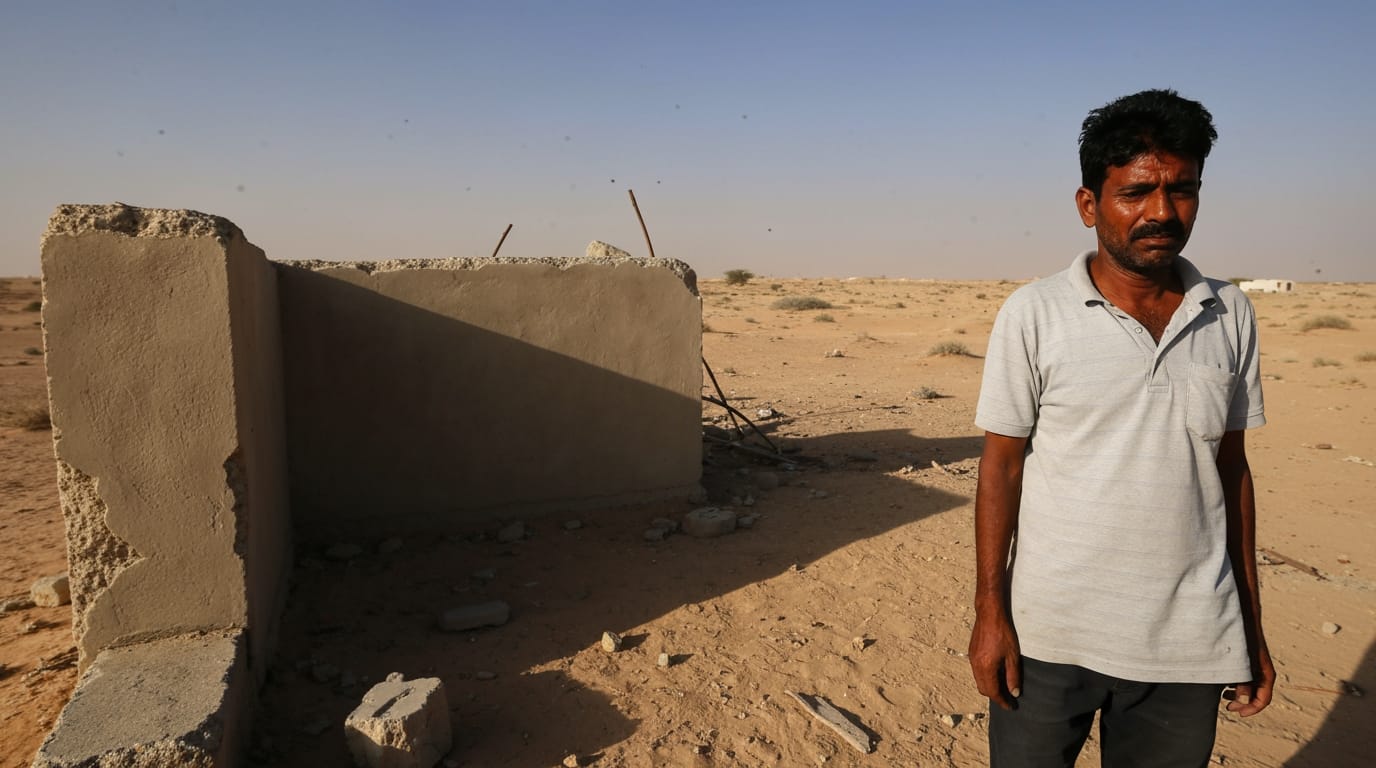
Sohar, Oman – Two Indian nationals were killed and ten others injured on Friday when an unmanned aerial vehicle struck the Al Awahi Industrial Area in Sohar, Oman, marking a grim escalation of regional hostilities impacting foreign workers. The incident, confirmed by Indian authorities, represents the first land-based fatalities for Indian citizens since the wider West Asia conflict intensified in late February. The tragic event underscores the perilous environment facing millions of expatriates as geopolitical tensions continue to destabilize the crucial Gulf region.
The Deadly Strike in Sohar
The attack unfolded on Friday, March 13, 2026, in Sohar, a significant industrial and port city approximately 200 kilometers northwest of Oman's capital, Muscat. According to reports from the Oman News Agency and subsequently confirmed by India's Ministry of External Affairs (MEA), two drones were detected in the vicinity. One of the aerial vehicles crashed directly into the Al Awahi Industrial Zone, a hub of economic activity, causing immediate devastation. The other drone reportedly fell in an open area nearby, fortunately causing no further casualties or damage.
The impact in the industrial zone resulted in the deaths of two expatriate workers, later identified as Indian nationals. Additionally, eleven individuals sustained injuries in the blast, with ten of them also being Indian citizens. Of the injured, five have since been discharged from local hospitals after receiving treatment, while the remaining five continue to recover, with no serious injuries reported. The local authorities in Oman have launched an investigation into the incident to ascertain the origins and perpetrators of the drone attack.
India's Grief and Diplomatic Response
The Indian government promptly responded to the news, expressing profound sorrow over the loss of life and extending condolences to the families of the deceased. Aseem Mahajan, Joint Secretary (Gulf) in the Ministry of External Affairs, confirmed the casualties during an inter-ministerial media briefing, emphasizing the gravity of the situation. The Indian embassy in Oman has been actively engaged with Omani authorities and the company employing the affected workers, providing all necessary assistance and support.
This incident marks a distressing turning point, as it represents the first time Indian nationals have been killed on land in the current phase of the West Asia conflict, which began in late February. Prior to this, three Indian sailors had tragically lost their lives in attacks on merchant vessels in the region, highlighting the growing dangers posed to maritime trade and personnel. The safety and welfare of the nearly 10 million Indian nationals residing and working across West Asian countries remain a paramount concern for New Delhi. Since the conflict's onset, approximately 150,000 Indian citizens have returned to India from the region, a testament to the heightened instability. The government has reiterated its commitment to ensuring their safety and providing consular support amidst the volatile geopolitical landscape.
Escalating Tensions in West Asia
The drone attack in Sohar is not an isolated event but rather a direct manifestation of the rapidly deteriorating security situation in West Asia. The broader conflict, ignited by US-Israeli strikes in late February, has seen a dangerous proliferation of drone and missile attacks across the Gulf. While Omani officials, in some reports, have attributed recent drone strikes to "Iranian aggression" and condemned them as "reckless and unprovoked violations of Omani sovereignty," other reports indicate that Oman has not publicly specified the origin of the drones involved in the Sohar incident, stating only that an investigation is underway.
The region has witnessed a series of destabilizing events in recent weeks. Saudi Arabia's air defenses have intercepted numerous hostile drones and ballistic missiles aimed at strategic locations, including Riyadh and Al-Kharj Governorate. The United Arab Emirates has also engaged and intercepted multiple aerial threats, with falling debris from an interception even damaging a building in central Dubai on the same day as the Sohar attack. Bahrain and Kuwait have also experienced incidents, including fuel tank fires and power outages linked to drone activity. This pattern of attacks underscores a dangerous regional proxy conflict, placing civilian infrastructure and non-combatant populations, including a vast expatriate workforce, directly in harm's way. The precise attribution for each individual attack remains a complex and often disputed matter, contributing to the persistent instability.
The Human and Economic Toll
The human cost of this escalating conflict is profoundly felt by communities far beyond the immediate battlegrounds. Expatriate workers, who form the backbone of many Gulf economies, find themselves caught in the crossfire of geopolitical struggles. The two Indian nationals killed in Sohar represent not just statistics but lives tragically cut short, leaving behind grieving families and communities. The psychological impact on other expatriates in the region, living with the constant threat of such attacks, cannot be overstated.
Beyond the immediate human tragedy, the continued instability poses significant economic threats. Oman, a nation that has historically maintained a diplomatic stance in regional conflicts, now finds its industrial zones targeted, raising concerns about its economic stability and investor confidence. The broader ripple effects on global supply chains, energy markets, and trade routes, particularly through the Strait of Hormuz, are substantial. Global oil prices have already shown sensitivity to the increasing risks of wider disruption, affecting economies worldwide. The repeated attacks threaten to undermine the economic vibrancy and developmental progress of the entire Gulf region, impacting not only local populations but also the numerous foreign workers who contribute significantly to these economies.
Conclusion
The drone attack in Sohar, Oman, claiming the lives of two Indian nationals and injuring ten others, serves as a stark reminder of the devastating human toll exacted by the intensifying regional conflict in West Asia. As investigations continue into the specific circumstances of the strike, the broader context points to a deeply volatile environment where drone and missile attacks have become a frequent and deadly reality.
The Indian government's swift response to assist its affected citizens highlights the international concern for expatriate communities caught in these escalating hostilities. While diplomatic efforts continue to navigate the complex web of regional rivalries, the incident underscores an urgent need for de-escalation and a renewed focus on protecting civilian lives and infrastructure. The continued instability not only threatens regional peace and economic prosperity but also impacts the livelihoods and safety of millions of foreign workers who contribute to the development of the Gulf nations. The international community watches closely as the region grapples with an unpredictable future.


