East Asia Shifts: Japan and South Korea Forge Stronger Alliance Amidst Mounting China Challenge
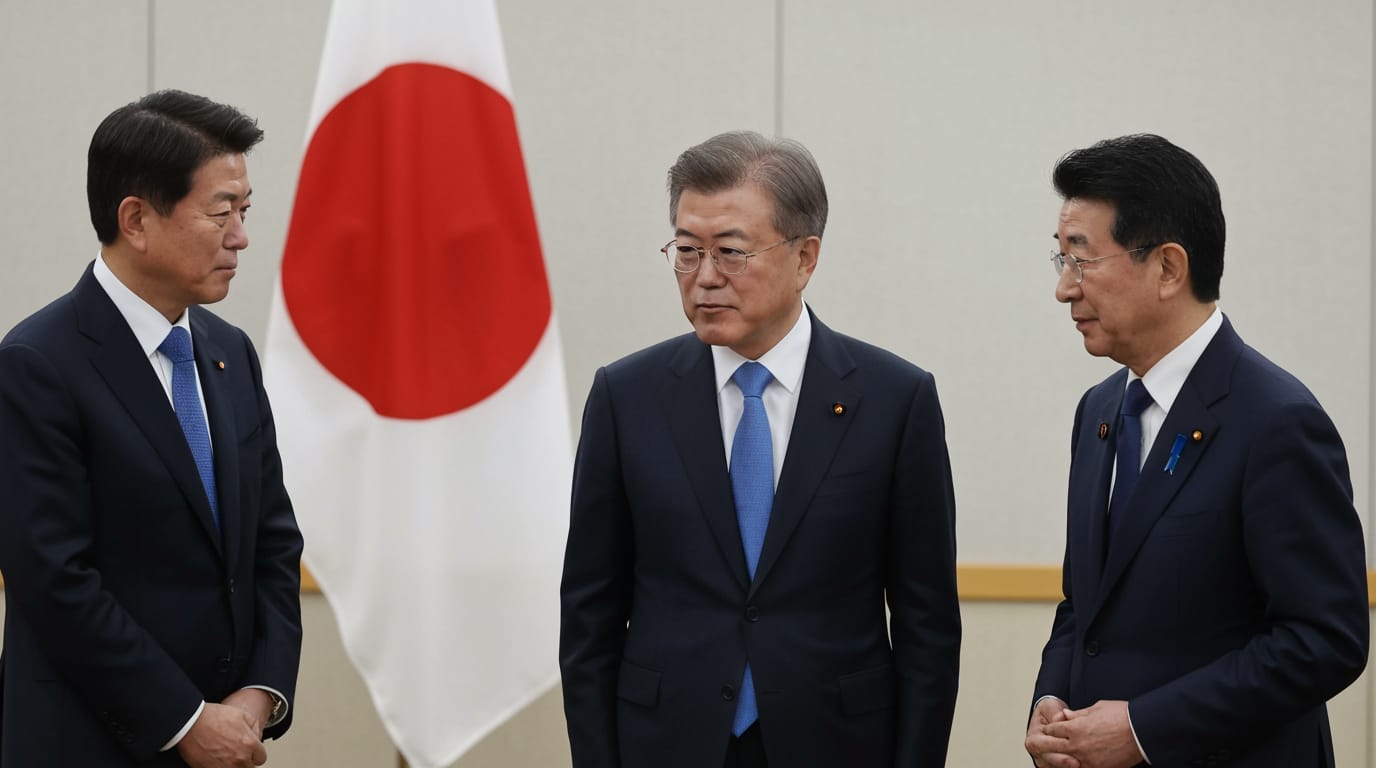
TOKYO – In a significant recalibration of regional dynamics, Japan and South Korea are deepening their strategic partnership, moving past decades of historical animosity to confront a rapidly evolving geopolitical landscape increasingly shaped by China's assertive rise and persistent threats from North Korea. This rapprochement, actively encouraged by the United States, marks a crucial turning point for stability and security in the Indo-Pacific, creating a united front among key U.S. allies to address complex economic and security challenges.
The warming of ties is a pragmatic response to shared concerns, particularly Beijing's growing military and economic influence, as well as Pyongyang's escalating nuclear and missile programs. While deeply rooted historical grievances continue to present underlying complexities, leaders in both Tokyo and Seoul have prioritized future-oriented cooperation, recognizing the imperative of a coordinated regional strategy.
From Discord to Dialogue: A Historic Thaw
For years, relations between Japan and South Korea have been plagued by the painful legacy of Japan's 1910-1945 colonial rule of the Korean Peninsula, particularly disputes over issues such as forced labor and comfort women. A significant low point was reached in 2018 when South Korean Supreme Court rulings ordered Japanese companies to compensate forced laborers, leading to Japan removing South Korea from its export whitelist in 2019 and escalating trade tensions.
However, a notable shift began with South Korean President Yoon Suk Yeol, who took office in 2022 and initiated efforts to establish "future-oriented" relations with Japan. His administration introduced a resolution to the forced labor issue in early 2023, signaling a departure from previous approaches and creating momentum for renewed dialogue. This diplomatic initiative has been met with reciprocal engagement from Japan, paving the way for a series of high-level meetings.
The most prominent display of this renewed cooperation occurred at the Camp David summit in August 2023, where U.S. President Joe Biden hosted President Yoon and Japanese Prime Minister Fumio Kishida. This landmark meeting institutionalized trilateral cooperation, establishing a framework for regular consultations and joint initiatives across various sectors. Subsequent bilateral summits between Japanese Prime Minister Sanae Takaichi and South Korean President Lee Jae Myung in early 2026 further underscored this commitment, with both leaders emphasizing the increased importance of bilateral cooperation in a "complex and dizzying international order."
The Pervasive Shadow of the China Challenge
The primary catalyst for this intensified collaboration is the shared apprehension over China's burgeoning assertiveness across the Indo-Pacific. Both Japan and South Korea have expressed deep concern regarding Beijing's "dangerous and escalatory behavior" in the South China Sea, its territorial claims, and the growing military imbalance in the region.
Economic security has emerged as a critical domain of concern. China's increasing use of economic coercion and its dominance in global supply chains, particularly for critical minerals essential to high-tech industries, pose significant vulnerabilities for both nations. Japan, for instance, has actively sought support from allies to mitigate the risks of potential Chinese rare earth export cut-offs, highlighting the necessity of diversified supply chains.
The Taiwan Strait also represents a crucial flashpoint. Japan and South Korea are increasingly acknowledging the interconnectedness of regional security, with Japan explicitly linking a potential Taiwan contingency to its own security and that of the U.S. alliance. China views the strengthening of this U.S.-Japan-South Korea security framework as a significant geopolitical shift, perceiving it as a "mini-NATO" designed to counter its influence. This perception fuels Beijing's efforts to cultivate closer ties with Seoul, aiming to create divisions between South Korea and Japan.
Broadening the Scope of Cooperation
The revitalized partnership extends across multiple strategic areas:
Security Collaboration: Beyond addressing the immediate threat from North Korea's nuclear and missile programs, Japan and South Korea, with U.S. backing, are expanding their security cooperation to encompass broader Indo-Pacific challenges posed by China. This includes the establishment of an Indo-Pacific Dialogue, institutionalized information sharing, and an increase in trilateral military exercises, such as "Exercise Freedom Edge," designed to enhance interoperability and deterrence. A landmark security cooperation framework has been agreed upon, signaling a long-term commitment to joint defense planning and operations.
Economic and Technological Resilience: Both nations are prioritizing efforts to fortify their economic and technological bases against external pressures. A key focus is strengthening the resilience of critical supply chains, particularly in semiconductors, batteries, electric vehicles, and essential minerals, thereby reducing over-reliance on any single country. Discussions also encompass cooperation in cutting-edge fields like artificial intelligence and green technologies, alongside exploring the potential for a trilateral free trade agreement that could also involve China. This complex economic dynamic sees Japan and South Korea seeking both to diversify away from China while also acknowledging the benefits of certain trilateral economic engagements that include Beijing.
Addressing Shared Societal Challenges: Cooperation is also extending to shared domestic issues. Discussions have included strategies to tackle common demographic challenges such as low birth rates and aging populations, highlighting a desire for comprehensive collaboration beyond traditional security and economic spheres.
Navigating Future Currents
The nascent alignment between Japan and South Korea, bolstered by the United States, represents a powerful force for stability in a region fraught with uncertainty. The U.S. has actively fostered this rapprochement, viewing the trilateral partnership as indispensable to its Indo-Pacific strategy.
However, the path forward is not without its challenges. South Korean President Lee Jae Myung is engaged in a delicate balancing act, seeking to improve economic ties with China while simultaneously strengthening security alliances with Japan and the U.S. Beijing, for its part, continues to exert influence and leverage historical narratives to potentially drive wedges between Seoul and Tokyo. Furthermore, despite the significant progress, lingering historical grievances and the potential for domestic political shifts in either nation could still test the durability of this renewed cooperation.
Ultimately, the strengthening of Japan-South Korea ties is a strategic imperative driven by the profound geopolitical transformations in East Asia. By transcending past differences, Tokyo and Seoul are working to build a more robust, integrated regional security and economic architecture, essential for navigating the complexities of the 21st century and promoting a stable and prosperous Indo-Pacific.


