Eastern Flank on Edge: NATO's Frontline Members Brace for Shifting US Commitments
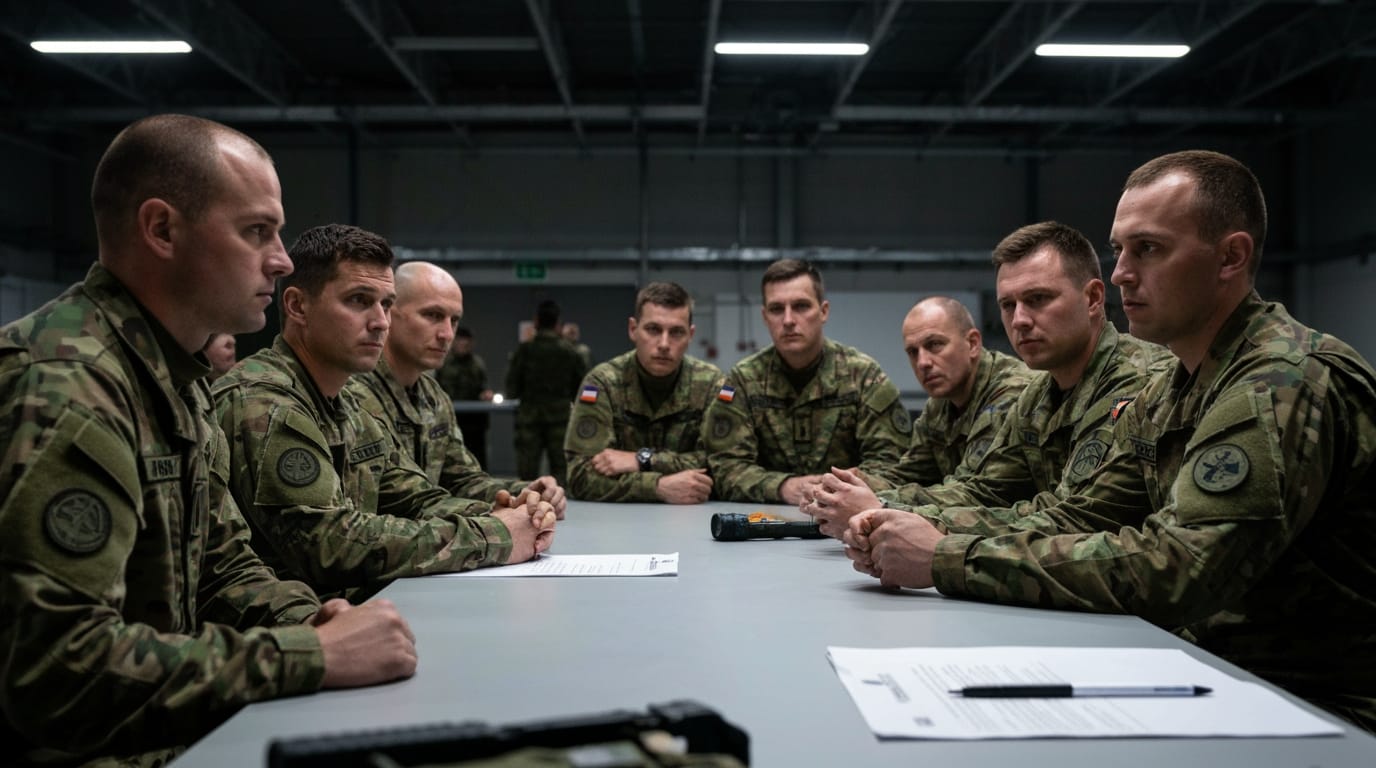
As geopolitical tensions continue to simmer across Europe, NATO's eastern members find themselves increasingly on high alert, bracing for the potential implications of a perceived shift in U.S. commitment to the transatlantic alliance. Amid fluctuating American rhetoric and strategic repositioning, nations bordering Russia are proactively bolstering their defenses and seeking reassurances, underscoring a deep-seated anxiety about their security in a volatile global landscape.
The apprehension is palpable from the Baltic states to Poland, where the memory of Soviet domination remains a stark reminder of the need for robust deterrence. For these nations, U.S. leadership and military presence within NATO have historically served as the cornerstone of their national security, a guarantee against potential Russian aggression. However, with recent pronouncements from Washington hinting at a re-evaluation of military footprints and a transactional approach to alliances, Eastern European leaders are confronting the urgent need to prepare for a future where American engagement might be less assured.
A History of Reliance and Renewed Fears
The U.S. military has maintained a significant presence in Europe since the end of World War II, initially as a bulwark against the Soviet Union. Following the dissolution of the Soviet Union, troop numbers saw a general reduction, but Russia's annexation of Crimea in 2014 and its subsequent full-scale invasion of Ukraine in 2022 dramatically recalibrated the security landscape. In response, the U.S. increased its military presence in Eastern Europe, particularly in Poland and the Baltic states, with deployments and multinational battlegroups aimed at strengthening NATO's eastern flank. Poland alone hosts approximately 10,000 U.S. troops.
This historical reliance, however, is now juxtaposed with renewed fears fueled by inconsistent U.S. signals. Statements questioning the value of NATO and calls for European allies to shoulder more of the defense burden have led to concerns that a significant U.S. withdrawal from Europe could occur, or that the U.S. commitment to NATO's foundational Article 5—the collective defense clause—might be undermined. Article 5, which states that an armed attack against one member is an attack against all, has only been invoked once in NATO's history, in support of the U.S. after the September 11, 2001, attacks. The credibility of this crucial commitment is seen by many as directly tied to the unwavering backing of the United States.
While the U.S. has confirmed some troop movements, such as reducing its presence in Romania from 2,000 to 1,000 troops and relocating personnel within Poland from Jasionka to other bases, it maintains these are strategic adjustments and not a sign of lessened commitment to NATO. Despite these assurances, the sentiment among Eastern members is one of heightened vigilance.
Implications for Regional Security and Deterrence
A potential disengagement or even a perceived weakening of U.S. commitment could have profound security implications for Eastern Europe. Without strong U.S. leadership, the cohesion and unity among NATO members could be difficult to maintain. The U.S. provides critical military capabilities that Europe currently lacks, including airlift, air-to-air refueling, high-altitude air defense, space assets, and operational intelligence. A reduction in these capabilities would leave Europe less integrated, slower to respond, and less capable of projecting power.
Experts warn that such a scenario could embolden Russia, which has continuously exerted pressure on the Baltic states through various means, including official denunciations, disinformation campaigns, military shows of force, and covert operations. Russia's military has been modernizing, with its defense spending reaching an estimated $149 billion in 2024, a 38% increase from 2023. The exclave of Kaliningrad, strategically located between Poland and Lithuania, houses precision strike systems and significant military assets, further complicating regional security. Without a strong transatlantic anchor, a weakened NATO might struggle to mount an effective conventional deterrent against potential Russian aggression, increasing the risk of destabilization on the EU's eastern borders. The psychological impact of a U.S. withdrawal, removing the "tripwire" effect of American troops, could also invite "testing actions below the threshold of full conflict."
Eastern Europe's Proactive Responses
Faced with this uncertainty, Eastern European countries are not waiting idly. They are taking tangible steps to bolster their own defense capabilities and forge alternative security arrangements. Defense spending has seen a significant surge across the region. Poland, for instance, is now spending 4% of its GDP on military defense, making it the highest in NATO. Latvia, Lithuania, Estonia, and Norway are also projected to spend over 3.5% of their GDP on defense by the end of this year. This increased expenditure reflects a strategic shift toward greater self-reliance and a recognition that the security landscape demands immediate and substantial investment.
Beyond increased spending, there is a strong emphasis on strengthening national forces and advocating for permanent basing of Allied combat forces to signal a robust deterrence to Moscow. Polish Foreign Minister Radoslaw Sikorski has underscored the seriousness of a potential U.S. withdrawal from NATO, urging allies to prepare "two insurance policies" rather than relying solely on one option.
The discussion around a stronger European defense identity is also gaining momentum. The European Union's Common Security and Defence Policy (CSDP), while not a direct replacement for NATO, is being increasingly viewed as a crucial component of European strategic autonomy. Initiatives are underway to enhance military capabilities, improve coordination among European forces, and reduce dependence on external powers for critical defense assets. However, significant challenges remain, including capability gaps in areas traditionally provided by the U.S. and the need for deeper political integration to effectively lead an independent European defense force.
The Path Forward: Unity and Strategic Foresight
The current juncture represents a critical test for the transatlantic alliance. While the U.S. insists that adjustments to its force posture do not signify a diminished commitment to NATO, the discussions surrounding potential disengagement have undoubtedly created unease among its Eastern European allies.
The future security of NATO's eastern flank hinges on a delicate balance: maintaining the invaluable transatlantic bond while simultaneously empowering Europe to take on a greater share of its own defense. The ongoing military buildup in Eastern Europe and the renewed focus on EU defense initiatives are clear indicators that these nations are preparing for a more autonomous role. The challenge will be to ensure that these efforts contribute to a stronger, more cohesive alliance, rather than inadvertently leading to fragmentation. The ability of NATO members to navigate these complex dynamics with strategic foresight and unwavering unity will ultimately determine the resilience of collective security in an increasingly uncertain world.