Echoes Across Continents: The Enduring Tapestry of German-Iranian Relations
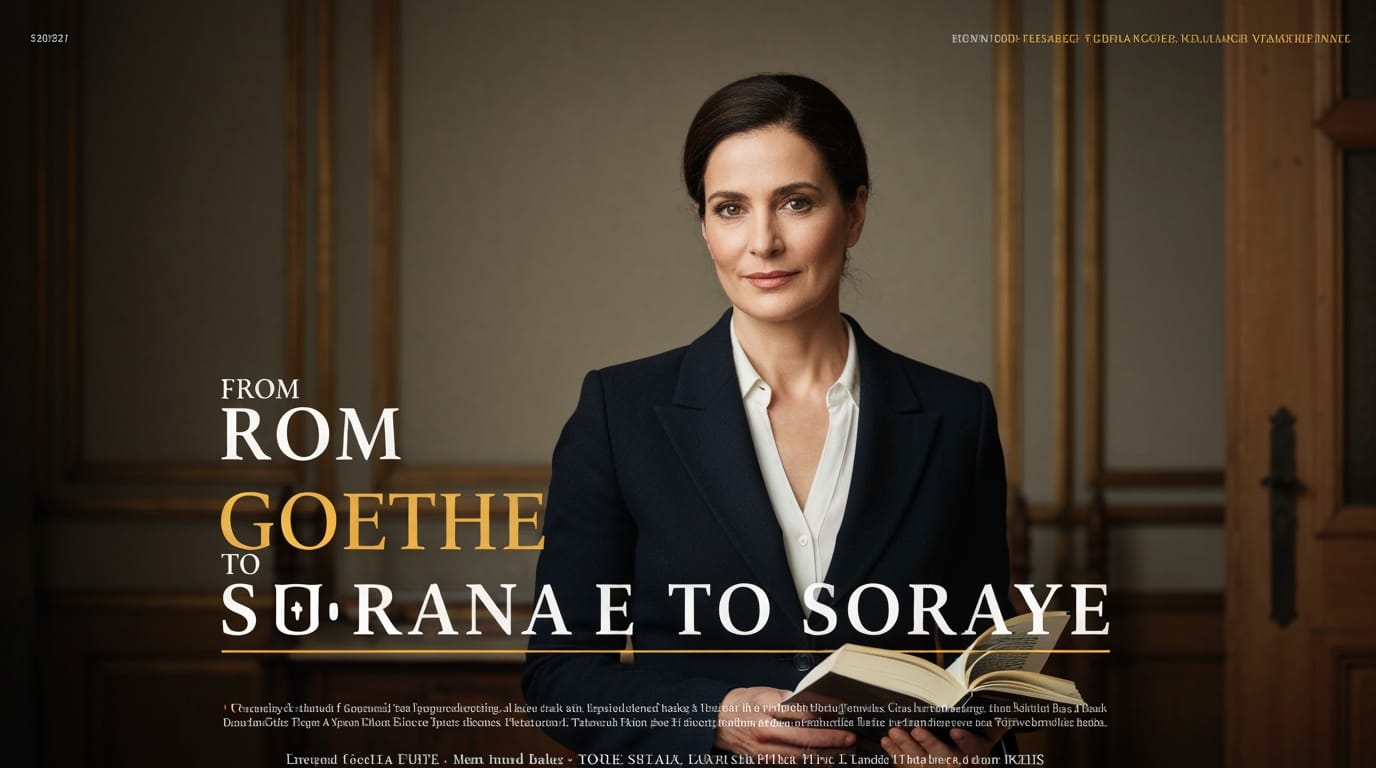
For centuries, a complex and often intertwined narrative has unfolded between Germany and Iran, a relationship characterized by profound cultural exchange, evolving political dynamics, and deeply personal stories that transcend geographical boundaries. From the intellectual curiosity of Johann Wolfgang von Goethe, who found inspiration in Persian poetry, to the royal lineage of Princess Soraya, whose life bridged two worlds, the ties between these nations have proven resilient, adapting through periods of cooperation, conflict, and shifting global landscapes. This enduring connection underscores the power of cultural diplomacy and the intricate human elements that shape international relations.
The Dawn of Connection: Literary and Diplomatic Foundations
The intellectual fascination between Germany and Persia predates formal diplomatic ties, notably illuminated by the towering figure of German literature, Johann Wolfgang von Goethe. In the early 19th century, Goethe immersed himself in the works of the 14th-century Persian poet Hafez, a journey that culminated in his profound poetic collection, "West-Eastern Divan." Inspired by a German translation of Hafez's divan in 1814, Goethe delved into Persian literature, learned Arabic, and explored Islamic teachings, seeking a creative dialogue between the "Orient" and "Occident." His work symbolizes a stimulating exchange between Latin and Persian, and Christian and Muslim cultures, laying an early intellectual cornerstone for bilateral understanding.
Formal diplomatic relations between the newly unified German Empire and Persia were established in May 1873 with a treaty of friendship, navigation, and commerce. This era marked the beginning of a unique German approach to Iran, distinct from the colonial ambitions of other European powers like Britain and Russia. Germany strategically positioned itself as an anti-colonial alternative, appealing to Iran by lacking a history of imperialism in the region. This perception fostered a degree of trust and opened avenues for cooperation that proved influential in the decades to follow.
A Century of Engagement: From Modernization to Wartime Shifts
The interwar period, specifically from 1918 to 1939, witnessed a significant expansion of cultural and economic ties between the two nations. Germany's cultural diplomacy in Iran took multiple forms, including the establishment of German-Iranian technical schools, such as the Tehran Industrial College in 1925. Hundreds of Iranian students received training in Germany between 1922 and 1938, and German professors were deployed to the newly founded University of Tehran after 1934, creating lasting institutional connections. Archaeological cooperation also flourished, exemplified by Ernst Herzfeld's excavations at Persepolis from 1928 to 1934, which provided technical expertise to uncover Iran's ancient past.
Economically, Germany's role grew substantially, becoming Iran's top foreign trade partner from 1939 to 1941, accounting for nearly 50% of its total trade. This period saw Germany assisting Iran in establishing modern sea and air communications. However, the rise of Nazi Germany introduced a complex ideological dimension. While the concept of "Aryan brotherhood" was promoted, Reza Shah cautiously distanced Iran from Germany after 1936 due to growing international pressure and recognition of Nazi imperial ambitions. As World War II progressed, the geopolitical landscape shifted dramatically. Allied demands led to the eventual breaking off of diplomatic relations, and under significant pressure, Iran declared war on Germany in 1943.
A Royal Bridge: The Story of Princess Soraya
Among the most poignant human interest stories linking Germany and Iran is that of Princess Soraya Esfandiary-Bakhtiary. Born in Isfahan on June 22, 1932, Soraya was the daughter of Khalil Esfandiary-Bakhtiary, an Iranian nobleman, and his German wife, Eva Karl. Her early life was partly spent in Germany, a country deeply connected to her maternal heritage.
In 1951, Soraya married Shah Mohammad Reza Pahlavi, becoming the Queen of Iran. Her brief but impactful tenure as queen saw her in a prominent role, yet it was shadowed by personal tragedy. Her inability to provide an heir led to immense pressure and, ultimately, her divorce from the Shah in 1958. Following this profound personal upheaval, Soraya returned to her parents' home in Cologne, Germany. She spent much of her later life in Europe, maintaining a strong connection to her German roots, and was eventually buried in Munich, Germany, alongside her parents and brother. Her story symbolizes the deeply personal and often challenging intersections of these two cultures.
Navigating Modern Challenges: Post-Revolution and Enduring Ties
Following the Islamic Revolution in 1979, the relationship between Germany and Iran entered a new, more complex phase. Official diplomatic relations, which had resumed in 1952 after World War II, faced considerable strain. Concerns over human rights in Iran and its nuclear program became prominent issues for the German government. Economic relations, once robust, experienced significant decline due to international sanctions, particularly after the United States' withdrawal from the Joint Comprehensive Plan of Action (JCPoA) in 2018. German exports to Iran, for instance, decreased substantially from 3.4 billion euros in 2017 to approximately 1.5 billion euros by 2024.
Despite these political and economic challenges, cultural and academic exchanges have shown remarkable resilience. Both countries acknowledge a long tradition of intellectual and artistic connection. There remains considerable interest within both civil societies for bilateral cultural and academic engagement. Recently, Iranian officials have expressed a desire to further strengthen these ties, proposing initiatives such as annual cultural conferences and joint museum exhibitions. These efforts highlight a continued recognition that cultural diplomacy can serve as a vital bridge, particularly when political relations face difficulties, fostering people-to-people connections and mutual understanding.
The narrative of German-Iranian relations is a rich tapestry woven from diverse threads of history, culture, and individual lives. From Goethe's poetic discovery of Persian philosophy to Princess Soraya's dual heritage, these stories illustrate a relationship that has consistently transcended immediate political currents. While modern challenges have undeniably impacted diplomatic and economic exchanges, the underlying currents of cultural interest and human connection persist. This enduring legacy serves as a testament to the power of shared intellectual heritage and the continued potential for dialogue between two nations, despite the complexities of their contemporary interactions.