Fifty Years On: Argentina's Enduring Quest for Justice in the Shadow of the 'Dirty War'
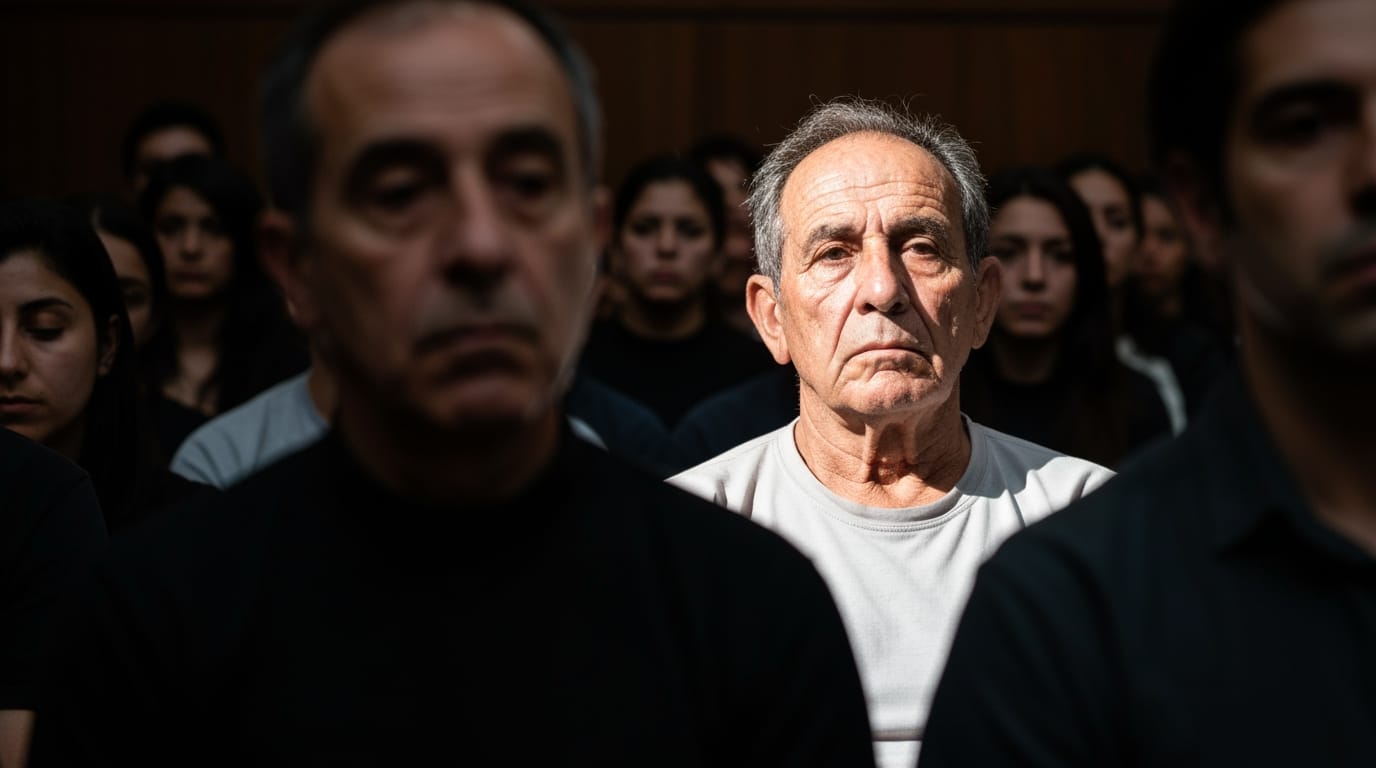
BUENOS AIRES, Argentina – Nearly five decades after the shadows of a brutal military dictatorship descended upon Argentina, the nation continues its relentless pursuit of truth and justice for the thousands who vanished during the period known as the 'Dirty War.' From 1976 to 1983, a military junta, styling itself the National Reorganization Process, unleashed state-sponsored terror that left an indelible scar on the country, with an estimated 10,000 to 30,000 citizens killed or forcibly disappeared. Today, the echoes of that dark era still resonate in courtrooms across Argentina, where aging perpetrators are confronted with the long-delayed consequences of their actions, underscoring a societal commitment to memory that defies the passage of time.
The Reign of Terror: A Nation Under Siege
The 'Dirty War' commenced as the military junta, led by figures like Lieutenant General Jorge Rafael Videla, Admiral Emilio Eduardo Massera, and Brigadier General Orlando Ramón Agosti, seized power on March 24, 1976. This period saw a systematic campaign against perceived political dissidents, including left-wing activists, students, unionists, writers, and journalists. The regime's methods were characterized by extreme violence and secrecy. Victims were subjected to illegal arrest, torture, and extrajudicial killings. Many were held in clandestine detention centers, such as the infamous School of Naval Mechanics (ESMA) in Buenos Aires, where they faced unimaginable atrocities. A particularly horrific practice involved "death flights," where drugged prisoners were thrown from aircraft into the Atlantic Ocean or the Río de la Plata, ensuring their bodies would disappear without a trace. Beyond direct killings, hundreds of babies born to pregnant detainees were stolen and illegally adopted, their identities erased and given to families often connected to the military.
The Long Road to Accountability: Overcoming Impunity
Following the collapse of the military dictatorship and the return to democracy in 1983, Argentina embarked on a complex journey toward reckoning with its past. The democratic government of Raúl Alfonsín initiated the National Commission on the Disappearance of Persons (CONADEP) to investigate the crimes, leading to the landmark Trial of the Juntas in 1985. This trial resulted in the conviction of high-ranking military officials, including Videla, setting a crucial precedent for accountability in Latin America. However, the initial momentum for justice was challenged by political pressures. In the late 1980s, facing military uprisings, the government enacted the "Full Stop Law" and "Due Obedience Law," effectively halting further prosecutions by granting immunity to most military personnel. These amnesty laws, which shielded an estimated 1,180 individuals from prosecution, generated significant controversy and frustration among human rights advocates.
A turning point arrived in the early 2000s. In 2003, the Argentine Congress formally annulled the amnesty laws, and in 2005, the Supreme Court declared them unconstitutional in the landmark Simón case. This judicial decision paved the way for the reopening of hundreds of cases and the renewed prosecution of those responsible for crimes against humanity. Since then, Argentina has witnessed a sustained period of trials, cementing its reputation as a global leader in pursuing justice for past atrocities.
The Continuing Trials: Unraveling Decades of Silence
In the decades since the annulment of the amnesty laws, Argentina has seen a continuous stream of trials, bringing to light the meticulous details of the regime's repressive apparatus. Courts across the country are actively investigating and prosecuting cases related to illegal detentions, torture, murder, and the abduction of children. The ESMA mega-trials, focusing on the atrocities committed at the former Navy School of Mechanics, have been particularly significant due to their scope, investigating crimes against hundreds of victims and resulting in numerous convictions. As of late 2021, more than 1,000 individuals had been convicted of crimes against humanity in Argentina since the trials resumed in 2005. These trials have not been without challenges, including the advanced age of many defendants and a persistent "pact of silence" within parts of the military that continues to hinder investigations. Yet, the judicial process continues to uncover crucial truths, offering a measure of justice to victims and their families. For instance, in one ESMA trial in 2021, eight former security force members were convicted of crimes including torture, murder, and taking children from their parents, with some receiving life sentences.
The Human Toll and the Power of Memory
The pursuit of justice in Argentina is deeply intertwined with the tireless efforts of human rights organizations and the profound human impact of the 'Dirty War.' Groups like the Mothers of the Plaza de Mayo and the Grandmothers of the Plaza de Mayo emerged during the dictatorship, bravely protesting and demanding answers about their disappeared loved ones. The Grandmothers, in particular, focused on finding the children stolen from their parents. Through pioneering work in genetic testing and unwavering dedication, they have successfully identified and reunited over 130 grandchildren with their biological families, a testament to their enduring hope and resilience.
The ongoing trials, coupled with initiatives like transforming former clandestine detention centers into "Sites of Memory," are crucial components of Argentina's commitment to ensuring that the atrocities of the 'Dirty War' are never forgotten. These sites serve as educational spaces, bearing witness to the past and fostering a collective memory that strengthens democratic values. The painstaking process of excavating former detention centers for evidence and artifacts further aids in reconstructing the narrative for future generations.
A Legacy Forged in Resilience
Fifty years after the inception of Argentina's 'Dirty War,' the nation's steadfast dedication to truth, memory, and justice stands as a powerful example globally. Despite the decades that have passed, the slow but steady march of legal proceedings continues to chip away at impunity, affirming the principle that perpetrators of grave human rights violations will ultimately be held accountable. The perseverance of victims, human rights advocates, and the judiciary has transformed a period of profound darkness into a beacon of hope, demonstrating that even against overwhelming odds, a society can confront its past and strive for a more just future. The ongoing trials are not merely legal processes; they are acts of historical reaffirmation, ensuring that the 'disappeared' are never truly forgotten, and their stories continue to shape Argentina's identity.