Echoes of a Cold War Past: Indonesia's Unreckoned Tragedy and a World on Edge
Sixty years after one of the 20th century's most horrific and often overlooked mass killings, Indonesia continues to grapple with the specter of its bloody past, while the international community debates whether the world is sliding into a new Cold War. The anti-communist purges of 1965-1966, which claimed an estimated 500,000 to 3 million lives, were a direct consequence of intense Cold War geopolitical struggles, with significant backing from Western powers. Today, as global tensions escalate, marked by a fierce rivalry between the United States and China, the lessons from Indonesia's tragic history offer a chilling reminder of how ideological conflicts can fuel internal strife and exact an unimaginable human cost.
The 1965 Purge: A Cold War Tragedy Unfolds
In the mid-1960s, Indonesia was a nation caught in the crosscurrents of the global Cold War. Under President Sukarno's "Guided Democracy," the country maintained a delicate balance between the military, nationalist factions, and the rapidly growing Communist Party of Indonesia (PKI), which had become the largest non-ruling communist party in the world. The Cold War-era fear of communist expansion was palpable, setting a volatile stage for the events that would follow.
The catalyst for the mass violence was the alleged "30 September Movement" (G30S) in 1965, during which six high-ranking army generals were kidnapped and killed. While the military swiftly blamed the PKI for orchestrating the abortive coup, historical accounts and declassified documents have since cast doubt on the extent of the PKI's involvement, suggesting it may have been an internal army operation. Regardless of the true instigators, the army, led by then-Major General Suharto, seized the moment to launch a brutal nationwide anti-communist purge.
From October 1965 to March 1966, a campaign of systematic violence unfolded, targeting not only alleged PKI members but also their sympathizers, ethnic Chinese, trade unionists, teachers, activists, and anyone perceived as leftist. Estimates of the death toll range from at least 500,000 to one million, with some higher figures reaching 2 to 3 million. The killings, described by a top-secret CIA report as "one of the worst mass murders of the 20th century," were carried out by the Indonesian Army, often with the active participation of civilian mobs, religious groups, and paramilitary organizations.
Crucially, declassified documents have revealed the extensive complicity of Western powers. The United States and the United Kingdom provided financial aid, equipment, and lists of suspected communists to the Indonesian military. British officials, through black propaganda campaigns, actively incited anti-communists to "cut out" the "communist cancer," while the U.S. government "actively supported" the killings despite knowing the scale of the atrocities. This foreign involvement was a clear manifestation of Cold War objectives, aiming to halt the spread of communism and bring Indonesia into the Western sphere of influence. The massacres ultimately paved the way for Suharto's 32-year authoritarian rule, transforming Indonesia's political and economic landscape to be pro-Western.
Unacknowledged Horrors and Lingering Scars
Six decades on, the shadow of 1965 continues to loom large over Indonesian society. The mass killings and human rights abuses have largely gone unaddressed, with no official reconciliation process, state apology, or justice for the victims and their families. The Suharto regime systematically suppressed the truth, and official historical narratives in Indonesia largely omitted or distorted the events, often portraying the perpetrators as national heroes. This deliberate erasure of history has compounded the suffering of millions who were imprisoned without trial, subjected to torture, sexual violence, and forced labor.
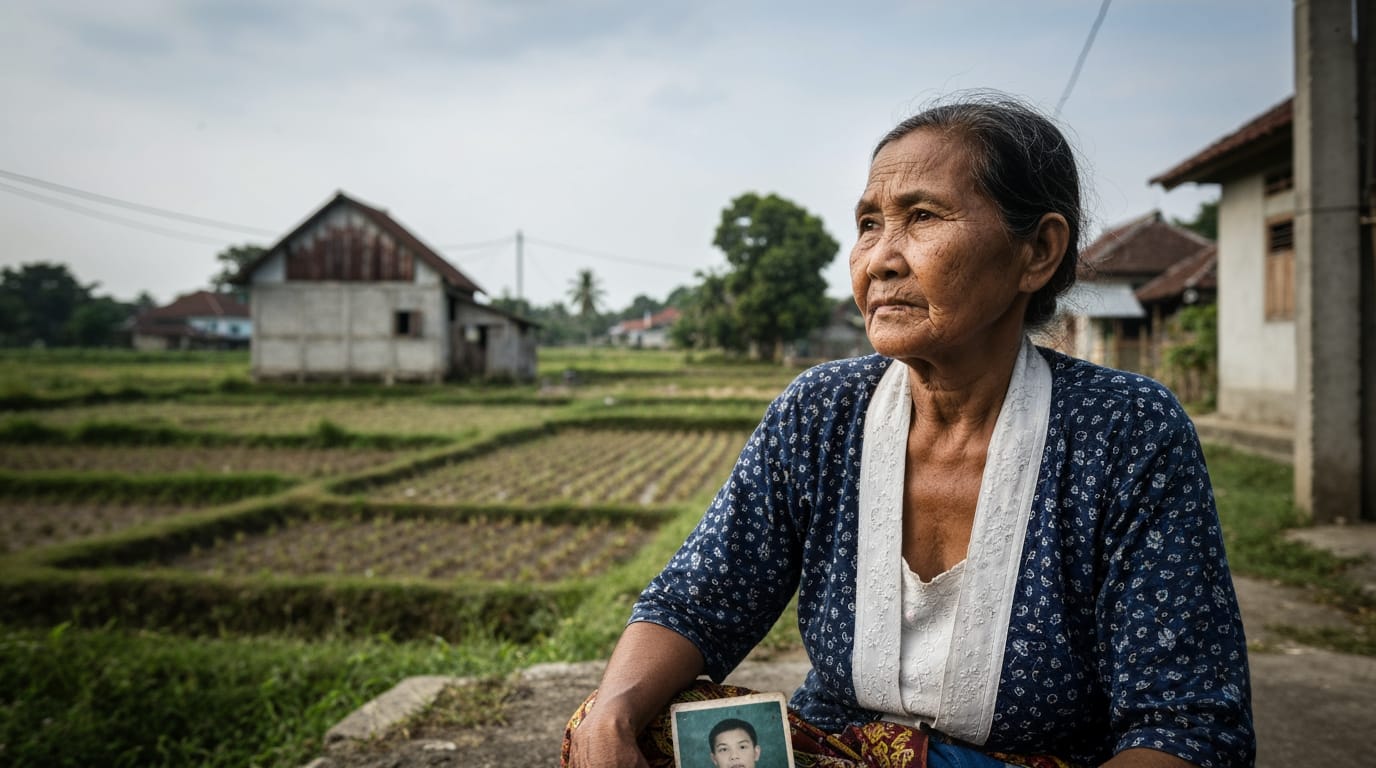
Survivors and their descendants have lived for decades with profound trauma, fear, and social stigma. While Indonesia's National Commission on Human Rights (Komnas HAM) designated the incident a gross human rights violation in 2012, efforts towards truth and justice remain largely stalled. Successive governments have made vague promises of non-judicial mechanisms for redress, but survivors lament the lack of concrete action, with many still unable to obtain official recognition of their suffering. The impunity enjoyed by perpetrators has allowed the underlying human rights issues to persist and, in some cases, has even been leveraged by political elites. The poignant memoir of Tari Lang, recalling the fear and silence following the 1965 events, underscores the deep and unhealed wounds within Indonesian society.
Geopolitical Echoes: The Shifting Global Landscape
The painful history of Indonesia's 1965 mass killings offers a critical lens through which to examine current global tensions. Many analysts and policymakers today frame the strategic rivalry between the United States and China as a "new Cold War" or "Cold War 2.0." This contemporary competition shares some structural similarities with the original Cold War, including a long-term struggle for political, economic, and military influence, and the development of competing networks of partners. Both eras feature technological races and, to some extent, ideological differences, although the ideological divide today is more nuanced than the rigid communism vs. capitalism of the past.
However, crucial distinctions differentiate the current landscape from the 20th-century Cold War. Unlike the Soviet Union, which was largely isolated economically, China is deeply integrated into the global economy, serving as a manufacturing hub and a major trading partner for many nations. This economic interdependence makes a complete decoupling costly and complex. Furthermore, the current international system is often described as multipolar, with various state actors holding significant influence, rather than the clear bipolarity of the US-Soviet era. Alliances today are often more pragmatic and transactional than ideologically bound, with countries navigating relations based on national interests rather than strict blocs. Shared global challenges like climate change and nuclear proliferation also necessitate a degree of cooperation that was largely absent during the Cold War.
Southeast Asia, in particular, has again become a critical theater for this great power competition. Countries in the region find themselves under increasing pressure to choose sides between the United States and China, a situation that evokes painful memories of the past when regional stability was often sacrificed for global ideological battles.
Indonesia's Evolving Role in a Fragmented World
Against this backdrop of renewed great power rivalry, Indonesia endeavors to uphold its long-standing "Bebas-Aktif" (Independent and Active) foreign policy doctrine, which emphasizes autonomy in international affairs and active participation in promoting global peace. This principle guides Indonesia's efforts to avoid alignment with major power blocs, allowing it to cultivate diverse partnerships and safeguard its national interests.
In navigating the complex US-China dynamic, Indonesia seeks to balance economic diversification, maintain security independence, and strengthen regional cooperation through platforms like ASEAN. The administration of President Prabowo Subianto, which took office in October 2024, is expected to further distance Indonesia from traditional Western alliances, prioritizing partnerships within Asia, particularly with China for trade and investment. This strategic pivot is driven by evolving domestic priorities and a growing skepticism towards perceived restrictive Western trade conditionalities. The historical experience of 1965, where foreign influence played a devastating role in its internal affairs, likely underpins Indonesia's strong commitment to strategic autonomy and non-alignment in the face of contemporary geopolitical pressures.
Conclusion
The 60th anniversary of the Indonesian mass killings serves as a stark historical warning. The tragedy of 1965-1966 was not merely an internal conflict but a devastating manifestation of Cold War ideological warfare, exacerbated by external intervention. The ongoing struggle for truth and justice in Indonesia underscores the long-term human cost of such conflicts and the profound societal scars they leave behind.
While the current geopolitical landscape differs significantly from the mid-20th century, parallels in great power competition, ideological tensions, and proxy battles are undeniable. The debate over whether a "new Cold War" is upon us is more than an academic exercise; it is a critical assessment of the risks of repeating history's gravest mistakes. For nations like Indonesia, which once bore the brunt of a global ideological struggle, the imperative to maintain sovereignty and navigate international relations with caution is paramount. The unreckoned tragedy of 1965 remains a powerful testament to the dangers of allowing external rivalries to dictate national destinies and the enduring importance of historical reckoning for a more peaceful future.