Ecuador Ignites Fracking Operations in Amazon, Fueling Environmental and Indigenous Tensions
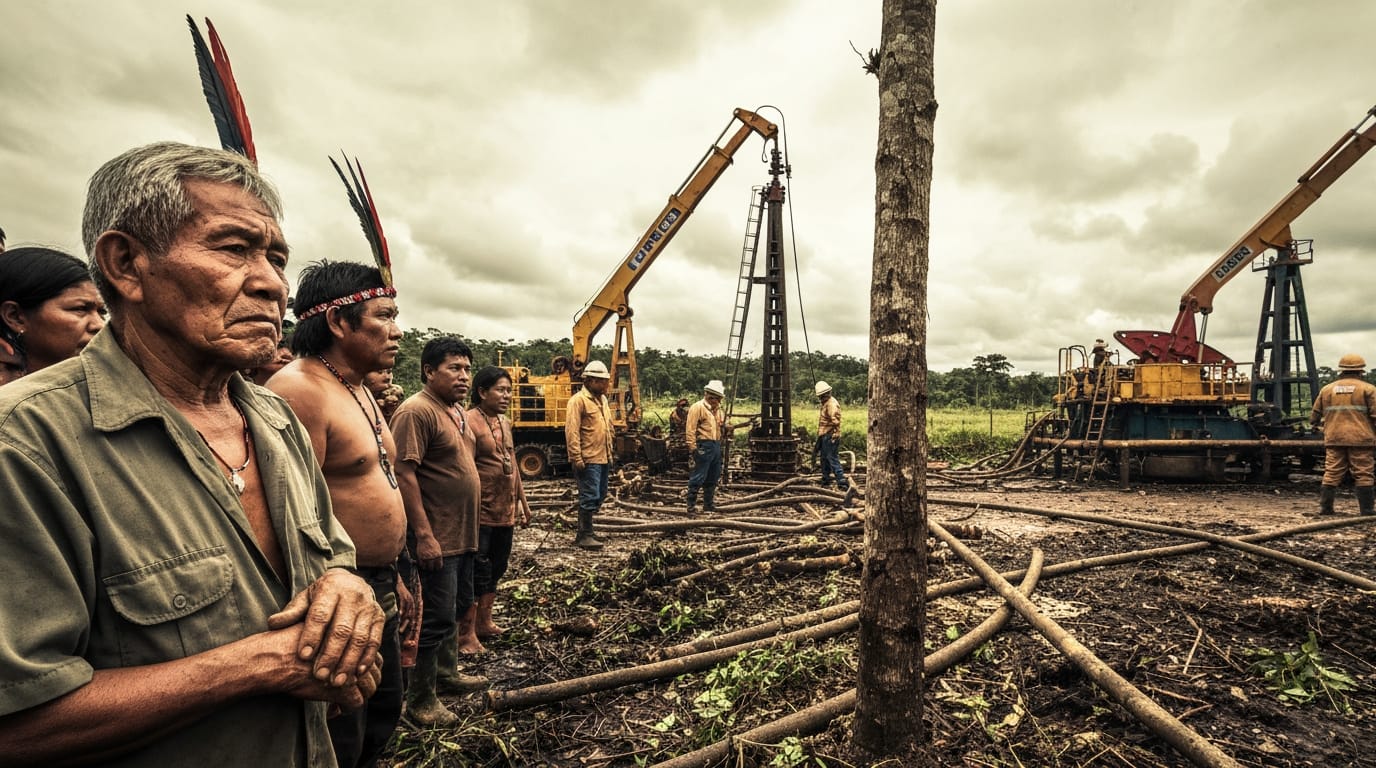
QUITO, Ecuador – Ecuador has initiated its first-ever hydraulic fracturing, or "fracking," operations within the sensitive Amazon rainforest, a move announced by the energy ministry on Wednesday, April 30, 2026. This marks a significant escalation in the nation's reliance on extractive industries and is poised to intensify long-standing conflicts between economic development, environmental conservation, and the rights of indigenous communities in one of the planet's most biodiverse regions. The controversial technique, used to extract natural gas and petroleum from subterranean rock formations, has commenced in the northeastern province of Sucumbios, in a joint venture with the Chinese company CCDC, signaling a new and potentially perilous chapter for the Ecuadorian Amazon.
The decision to embrace fracking comes as Ecuador grapples with chronic energy shortages and a pressing need to bolster its national revenue. The nation, which relies on hydroelectric power for 70 percent of its electricity, has faced prolonged outages due to droughts in 2024 and 2025, underscoring its energy vulnerability. With its crude oil production dipping to 441,000 barrels per day in 2025, of which 74 percent was exported, the government views new extraction methods as essential. Officials project that the fracking operations will yield more than 930 barrels of oil daily, contributing to the country's economic stability and energy matrix. However, environmental and indigenous groups have swiftly condemned the practice, citing concerns over water contamination, seismic activity, and further encroachment into critical ecosystems.
A New Frontier, Echoes of Past Conflicts
The inauguration of fracking in Sucumbios is not an isolated event but rather the latest development in Ecuador's decades-long and often contentious relationship with oil extraction in the Amazon. Oil exploration and production in the Ecuadorian Amazon date back to 1967, transforming regions near Lago Agrio and bringing significant environmental and social changes. This history is rife with examples of environmental degradation, including the dumping of billions of gallons of toxic waste by foreign oil companies like Texaco (now Chevron), which has left a legacy of pollution and health crises for indigenous populations.
The specter of Yasuní National Park looms large over these new fracking endeavors. Yasuní, widely recognized as one of the most biodiverse places on Earth and a UNESCO World Heritage site, is home to thousands of plant and animal species, as well as uncontacted indigenous tribes like the Tagaeri and Taromenane. For years, it has been the focal point of a global conservation effort. In 2007, then-President Rafael Correa proposed the Yasuní-ITT Initiative, a groundbreaking plan to forgo drilling for an estimated 920 million barrels of oil in the Ishpingo, Tambococha, and Tiputini (ITT) oil fields within the park, in exchange for $3.6 billion in international aid. The initiative ultimately failed to secure sufficient international funding, leading to the commencement of drilling in Yasuní in 2016.
More recently, in a landmark move in August 2023, Ecuadorian citizens voted overwhelmingly in a national referendum to halt all current and future oil drilling in the ITT block of Yasuní. Despite this clear democratic mandate, the implementation has been slow, with only a handful of the approximately 240 wells in the ITT block being closed. The government has cited severe economic implications as a reason for the delay, even proposing a moratorium on compliance. Human rights experts and environmental advocates have expressed alarm, urging the government to respect the will of its people and expedite the closure of operations in the park. Adding further pressure, an international human rights court in March 2025 ruled that Ecuador must cease oil operations on lands inhabited by uncontacted indigenous peoples in Yasuní, reinforcing the referendum's outcome.
Environmental and Human Costs
The introduction of fracking to the Amazon carries significant environmental risks that concern scientists and activists. Fracking is notorious for its intensive water requirements, the potential for chemical contamination of groundwater, and its association with inducing micro-earthquakes. In an ecosystem as delicate and vital as the Amazon, these risks are amplified. The rainforest is a global biodiversity hotspot, and any further industrial activity threatens its ecological balance and the delicate web of life it sustains.
Beyond the immediate environmental impact, the expansion of oil extraction continues to infringe upon the ancestral lands and traditional livelihoods of indigenous communities. Historically, oil activities have led to the extensive construction of infrastructure, widespread pollution, and disruptions to indigenous societies. Reports indicate that communities living near extraction projects in the Ecuadorian Amazon often experience worse health conditions, including skin disorders, malnutrition, and cancer, due to contaminated water and air. These communities frequently assert that their free, prior, and informed consent, as required by both Ecuadorian and international law, has not been obtained for these projects. Indigenous leaders, such as Nemonte Nenquimo, have been at the forefront of legal and social resistance, successfully challenging government plans to auction their territories for oil in the past. The recent international court ruling underscores the growing recognition of indigenous sovereignty and their right to protect their lands.
The Economic Imperative Versus Global Commitments
Ecuador finds itself in a precarious balancing act, torn between its pressing economic needs and its environmental responsibilities. Oil revenue is a cornerstone of the nation's economy, at times accounting for a third of the government's income, which funds crucial public services and infrastructure. For a country grappling with significant national debt, increasing oil production appears to be a direct path to fiscal stability. However, this pursuit of revenue stands in stark contrast to global efforts to transition away from fossil fuels to combat climate change and to the will of its own citizens as expressed in the Yasuní referendum.
The government and the oil industry often contend that newer technologies and stricter environmental protocols developed since the 1990s minimize the impact of extraction. They argue that modern drilling techniques, including those used in parts of Yasuní, result in "minimal deforestation" and reduced gas flaring. Yet, critics remain skeptical, pointing to the inherent risks of oil operations in fragile environments and the historical track record of environmental damage. The long-term costs of ecological devastation and the erosion of indigenous rights may ultimately outweigh any short-term economic gains.
As Ecuador embarks on this new phase of fracking in the Amazon, the decision highlights a profound and unresolved tension. The complex interplay of national energy demands, economic pressures, environmental protection, and the fundamental rights of indigenous peoples presents a formidable challenge. The future of the Ecuadorian Amazon and its inhabitants hinges on how these conflicting priorities are ultimately reconciled.


