Eight Feared Dead in B-52 Bomber Crash at Edwards Air Force Base
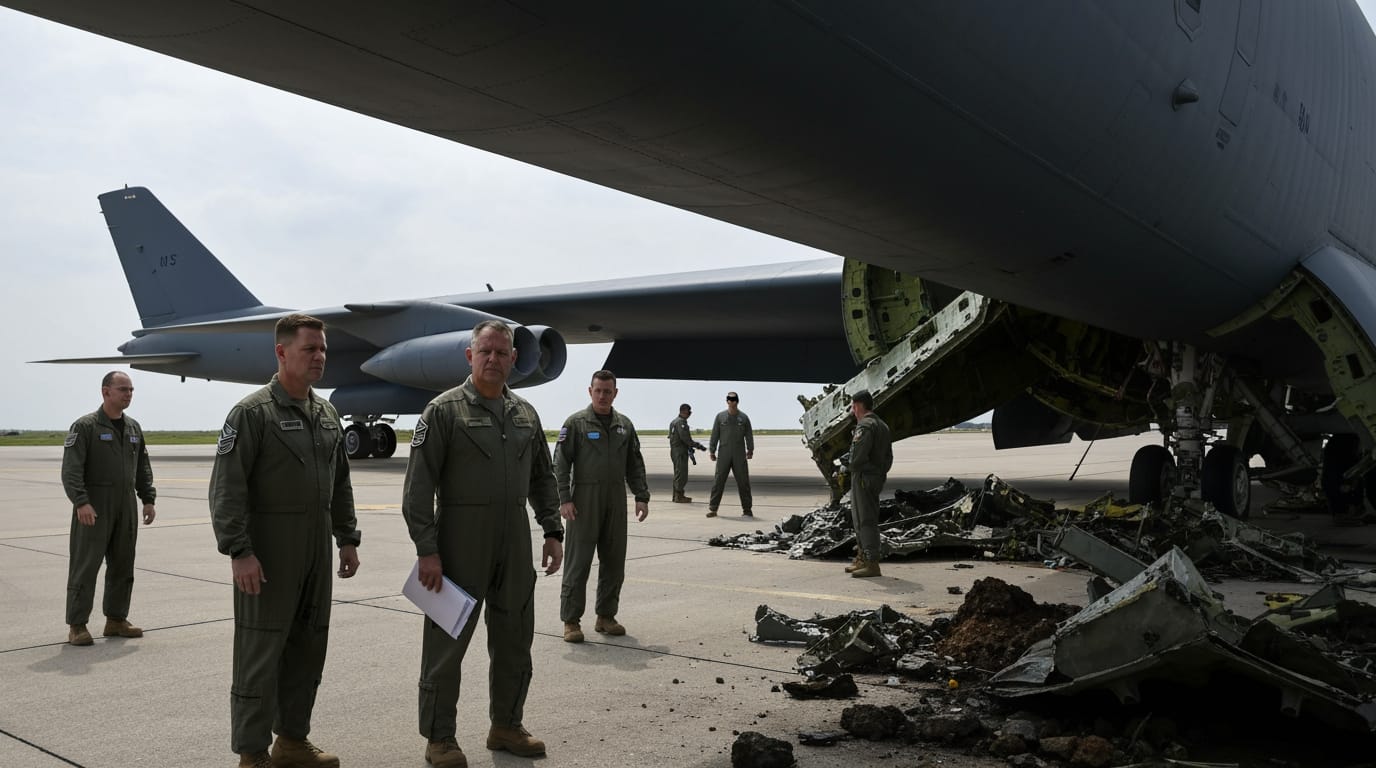
Edwards Air Force Base, California – An Air Force B-52 Stratofortress bomber, carrying eight individuals, crashed shortly after takeoff Monday at Edwards Air Force Base in Southern California, with initial indications suggesting no survivors. The incident occurred around 11:20 a.m. local time during a routine testing flight, prompting an immediate emergency response and casting a somber shadow over the critical military installation. The loss marks a significant tragedy for the United States Air Force and renews scrutiny on the service's aging aircraft fleet and the demands placed upon it.
The Catastrophic Incident
Emergency crews swiftly responded to the scene at the vast desert base, located approximately 100 miles north of Los Angeles. Video footage and eyewitness accounts depicted a plume of black smoke rising from a large, charred area on the airfield, near what appeared to be a runway, immediately following the crash. The Air Force quickly closed the airfield, diverting all inbound aircraft, and suspended non-commercial visitor passes to allow the installation to focus entirely on emergency operations. Officials at Edwards Air Force Base, a hub for aircraft testing and development, stated that efforts were underway to account for all personnel involved. While a typical B-52 crew consists of five members, this particular test flight had eight individuals on board.
A Critical Test Flight Cut Short
The B-52 Stratofortress involved in the crash was engaged in a testing flight, a common activity at Edwards Air Force Base, which serves as the Air Force's primary facility for developing and testing new aircraft and weapons. The specific nature of the test mission has not been publicly disclosed, and the cause of the crash remains under investigation. Radar tracking data from the aircraft's final moments reportedly showed a drastic descent after the bomber initially flew northeast, then turned abruptly northwest, plunging at a rate exceeding 5,000 feet per minute. Aviation safety experts have suggested that the rapid descent shortly after takeoff, without significant altitude or distance gained, could indicate a flight control malfunction, though such assessments are preliminary and require thorough investigation.
The B-52 Stratofortress is an iconic long-range bomber that first entered service in 1955. Designed to carry both conventional and nuclear weapons, it has been a cornerstone of U.S. military power, deployed in various conflicts from Vietnam to recent operations in the Middle East. The aircraft involved in Monday's crash was reportedly built in the early 1960s, highlighting the advanced age of a significant portion of the Air Force's fleet. The Air Force maintains approximately 70 B-52s in its inventory, with most based at Barksdale Air Force Base in Louisiana and Minot Air Force Base in North Dakota, and some designated for testing at Edwards.
Broader Implications and Ongoing Investigations
The crash immediately triggered a comprehensive investigation by Air Force authorities. The outcome of this inquiry will be crucial in determining the exact sequence of events that led to the catastrophe. The incident comes at a time when the Air Force faces immense operational pressure, having deployed fighter aircraft, bombers, and refueling tankers to the Middle East to support ongoing U.S. military operations. Retired three-star Air Force General Dave Deptula, dean of the Mitchell Institute for Aerospace Studies, noted that the Air Force's reliance on its aged fleet, like the B-52, underscores the challenges posed by its current status as the "oldest and smallest" in its history. He emphasized the need for additional resources to meet national security demands without overstretching an aging and shrinking force.
The incident at Edwards Air Force Base also draws attention to overall aviation safety, particularly concerning military aircraft. While B-52s have an impressive safety record given their age, operating such vintage airframes, even with numerous upgrades, can present inherent risks. This crash follows other recent military aviation mishaps, including a midair collision of two Air Force KC-135 refuelers over Iraq in March, which resulted in the deaths of six U.S. troops.
A Community in Mourning
The loss of eight lives is a profound blow to the Air Force community, particularly at Edwards Air Force Base, which prides itself on its pioneering spirit and rich aviation history. The base is renowned as the site where legendary test pilot Chuck Yeager broke the sound barrier in 1947. The Edwards community, comprising about 10,000 military personnel, contractors, and civilian staff, is now united in grief, extending thoughts and prayers to the families and unit members affected by the tragedy. The profound human cost of military aviation operations is once again brought into sharp focus by this devastating event.
The full impact of this crash, both on the affected families and on the future of B-52 operations, will unfold as the investigation progresses. The tragedy serves as a stark reminder of the inherent dangers faced by service members in their dedication to national defense and the enduring challenges of maintaining an effective, yet aging, military air fleet.


