Palestinian Leadership Announces Elections Amidst Deep-Seated Skepticism
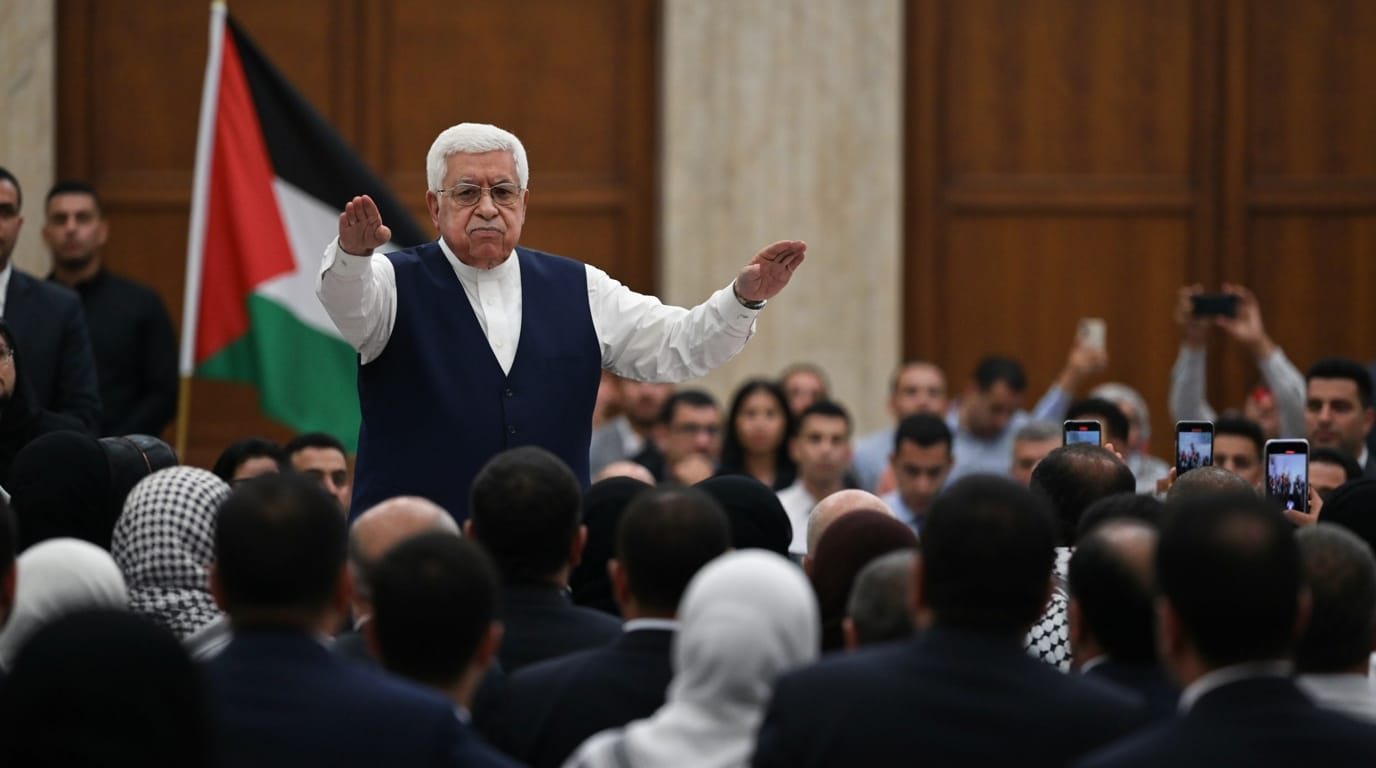
Ramallah, Occupied Palestinian Territories – Palestinian President Mahmoud Abbas has issued a decree calling for long-delayed legislative elections in November 2026 and presidential elections in early 2027, according to official Palestinian news agency WAFA. This announcement, made after years of political stagnation and repeated postponements, seeks to reignite a democratic process largely dormant for nearly two decades. The move comes as the Palestinian Authority faces mounting domestic and international pressure to reform and renew its institutions, particularly in the wake of the devastating conflict in Gaza and widespread accusations of political decay and corruption.
The decree outlines significant changes to the electoral framework, including an increase in the number of seats in the Palestinian Legislative Council (PLC) to 200, a lowered electoral threshold of one percent, and a mandate for the inclusion of at least one woman for every three candidates on any list. Additionally, elections for the Palestinian National Council (PNC), the parliament of the Palestine Liberation Organization (PLO), are also slated for November 2026. While welcomed by some as a potential step towards revitalizing Palestinian political life, the announcement is met with considerable skepticism, given a history marred by canceled polls and deep internal divisions.
A Renewed Push for Democratic Legitimacy
The directive from President Abbas, who has held power for 20 years—15 years beyond his original mandate—underscores a perceived urgency to inject legitimacy into Palestinian governance. The international community, including the United States and the European Union, has consistently pressed the Palestinian Authority (PA) to undertake reforms and hold elections. These calls have intensified, especially as international actors seek a credible and unified Palestinian leadership to potentially govern the Gaza Strip once the current conflict subsides. The absence of national elections since 2006 has left Palestinian institutions, including the PA, often described as stale and out of touch with the aspirations of a population yearning for accountability and representation.
The previous presidential election took place in 2005, which Abbas won, and the last legislative election was held in 2006, resulting in a victory for Hamas. That outcome triggered a severe political rift, leading to Hamas's takeover of the Gaza Strip in 2007 and the establishment of two separate de facto governments: Fatah-led PA in the West Bank and Hamas in Gaza. This schism has since fundamentally hampered any attempts at national unity and democratic renewal.
A History of Postponements and Unfulfilled Promises
The current announcement must be viewed through the lens of numerous past attempts to hold elections that ultimately failed. Most recently, in January 2021, Abbas issued a decree scheduling legislative elections for May 2021 and presidential elections for July 2021. However, these were indefinitely postponed in April 2021.
The official justification for the 2021 postponement centered on Israel's refusal to explicitly allow voting for Palestinians in East Jerusalem, a stance Abbas described as a non-negotiable prerequisite for any election. Palestinian officials emphasized that holding elections without East Jerusalem's participation would effectively abandon Palestinian claims to the city, which they envision as the capital of their future state. However, many observers and critics suggested that the issue of East Jerusalem served as a convenient pretext. Underlying concerns reportedly included deepening divisions within Abbas's Fatah movement, which was fragmented into rival lists, and the fear of a potential Hamas victory, mirroring the 2006 outcome. Polls at the time indicated Hamas had a strong advantage, raising the specter of another electoral defeat for Fatah. Hamas, which condemned the 2021 postponement as a "coup," was prepared to do well in those elections.
Prior to 2021, other election attempts also faltered. For instance, elections scheduled for 2009 were postponed due to the Fatah-Hamas conflict. Abbas then agreed to stay on as president until the next election, but his recognition became limited primarily to the West Bank. This pattern of announcing elections followed by cancellations has fostered widespread public disillusionment and fueled accusations of a leadership unwilling to relinquish power or risk an unfavorable outcome.
Enduring Challenges on the Path to the Ballot Box
Despite the new decree, the pathway to actual elections remains fraught with formidable challenges. The issue of East Jerusalem's participation continues to be a central obstacle. Israel considers the entire city its undivided capital and has historically been reluctant to permit official Palestinian Authority electoral activities within its annexed areas. In 2021, Israel reportedly responded to Palestinian requests for guarantees regarding East Jerusalem voting by stating it could not take a position, partly due to its own political instability at the time. Without explicit Israeli consent, the PA faces a dilemma: proceed without East Jerusalem, which undermines national claims, or postpone again, risking further erosion of credibility.
The deep-seated division between Fatah and Hamas represents another critical hurdle. For elections to be truly national and inclusive, agreement and cooperation between the West Bank and Gaza are essential. Hamas has historically rejected Abbas's unilateral decrees and has often demanded simultaneous elections for all Palestinian bodies. The current post-conflict situation in Gaza adds unprecedented complexity to the logistics and political feasibility of holding elections across both territories, especially given the extensive destruction and the ongoing humanitarian crisis. While some local elections have taken place in parts of the West Bank and even in Deir al-Balah in Gaza in 2021-2022, national elections require a far greater degree of coordination and political will.
Furthermore, internal dynamics within Fatah, including potential rivalries for leadership and the possibility of other strong candidates like Marwan Barghouti (currently imprisoned in Israel), could introduce additional complexities. The credibility of the Central Elections Commission, which has generally maintained a reputation for independence, will be crucial, but its ability to operate freely across all Palestinian territories will be tested.
Implications for Palestinian Unity and Future Governance
The successful realization of these elections could have profound implications for the future of Palestinian governance and unity. Fresh elections offer a rare opportunity to renew the legitimacy of Palestinian institutions and potentially bridge the long-standing divide between Fatah and Hamas. A democratically elected leadership could command greater popular support and present a more unified front in international negotiations and in addressing the monumental task of rebuilding Gaza. The international community views a legitimate Palestinian government as a crucial partner in any future peace arrangements and for effective governance and reconstruction efforts.
However, if these elections, like their predecessors, fail to materialize, or if their results are contested, the consequences could be severe. Further delays would deepen public cynicism, exacerbate internal Palestinian fragmentation, and potentially fuel instability in the West Bank. The absence of a clear democratic path forward leaves a leadership vacuum and perpetuates a system that many Palestinians feel has failed to deliver progress or accountability. The upcoming months will reveal whether President Abbas's latest decree marks a genuine commitment to democratic renewal or yet another chapter in the long history of unfulfilled electoral promises.


