UK Unveils Sweeping Social Media Ban for Under-16s, Redefining Digital Childhood
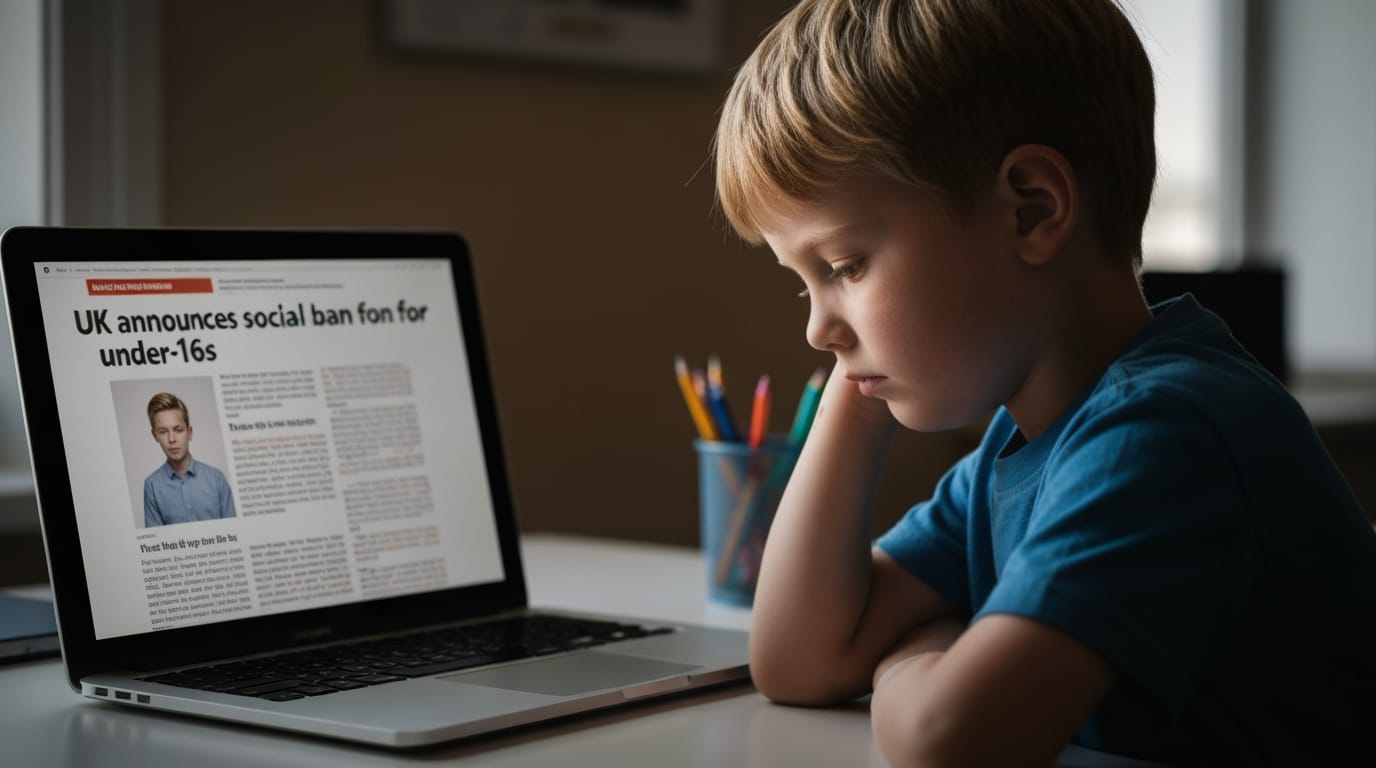
LONDON – In a landmark move designed to reclaim childhoods from the pervasive influence of digital platforms, the United Kingdom government today announced a comprehensive ban on social media access for all individuals under the age of 16. Prime Minister Keir Starmer unveiled the legislation, which aims to shield young people from content deemed dangerous and addictive, marking a significant escalation in global efforts to regulate the digital landscape for minors.
A Decisive Stand for Childhood Well-being
The government's decision stems from growing concerns over the profound impact of social media on the mental health and development of children. Prime Minister Starmer articulated a clear vision, stating that the online world had made it increasingly difficult for parents to ensure their children's safety and happiness. He emphasized the government's commitment to "give kids their childhood back," pushing back against platforms engineered to maximize user engagement at potentially detrimental costs to young users. This initiative follows extensive national consultations, revealing overwhelming public support, with nine out of ten parents backing a social media ban for under-16s. Intriguingly, two-thirds of young people surveyed also agreed that minors should not be permitted on some social media platforms, highlighting a broad consensus across generations for greater protective measures.
Scientific studies have increasingly linked heightened social media use in minors to a range of negative health outcomes, including elevated rates of depression, anxiety, and poor sleep quality. These findings have underscored the government's assertion that social media platforms often expose children to content that is not only dangerous but also "designed to be addictive". The ban is positioned as a decisive choice to prioritize families and children over the commercial interests of tech companies, aiming to reset cultural norms for future generations.
Beyond the Ban: A Multi-faceted Approach to Digital Protection
The UK's proposed legislation is poised to be one of the most far-reaching and restrictive social media bans globally, going beyond merely prohibiting access to core platforms. The ban will encompass a wide array of user-to-user platforms whose primary purpose is social interaction, allowing users to post material and utilize algorithmic feeds. This includes major platforms such as TikTok, Instagram, Facebook, X, YouTube, Snapchat, Threads, Twitch, Kick, and Reddit. Notably, the legislation explicitly excludes private messaging services like WhatsApp and Signal, recognizing their essential role in communication while seeking to curtail public-facing social networking for young users.
Crucially, the government plans to implement world-leading additional restrictions on harmful functionalities across a broader range of online services, including certain gaming sites. These measures will specifically target features such as livestreaming and the ability for children to communicate with strangers. For 16 and 17-year-olds, these restrictions will be set as the default, offering an added layer of protection without imposing a full ban, thereby preventing a "cliff-edge" effect at the age of 16. Furthermore, the legislation will extend to prohibit individuals under 18 from engaging with artificial intelligence "romantic companions," acknowledging a new and emerging area of digital risk. The government has also indicated it will consider further regulations, including potential overnight curfews and enforced breaks in "infinite scrolling" for under-18s, with more details anticipated in July.
Implementation, Enforcement, and Anticipated Hurdles
The ambitious timeline set by the government aims for the regulations to pass through Parliament before Christmas, with the full prohibition expected to come into force by Spring 2027. A central pillar of the legislation is placing the onus squarely on tech companies to implement robust age verification systems and ensure compliance. Failure to adhere to the new rules could result in substantial fines, underscoring the government's intent to hold platforms accountable.
However, the practicalities of implementation, particularly regarding age verification, remain a subject of ongoing discussion. While the government has not yet specified the exact mechanisms for verifying age, the success of such a ban hinges on the effectiveness of these forthcoming systems. Critics, including a spokesperson for YouTube, have voiced concerns that a blanket ban could inadvertently push younger users toward "less safe services" or alternative, less regulated online spaces. Prime Minister Starmer, addressing these potential challenges, likened the situation to existing age restrictions on alcohol, arguing that the possibility of circumvention does not negate the necessity of such protective measures. "We don't say: 'Oh, look, a teenager managed to get a drink somehow, so let's not bother banning drinks from children.' That would be utterly ridiculous!" he contended. This pragmatic stance suggests the government is prepared for enforcement challenges but views the principle of protection as paramount. The experience of Australia, which implemented a similar ban in December, revealed that approximately 70% of parents polled still found their children managing to bypass age-gating systems, illustrating the complexities inherent in digital age restrictions.
A Global Movement for Digital Child Protection
The UK's initiative is part of a growing international trend as governments worldwide grapple with the complexities of online safety for minors. Australia led the way by becoming the first country to ban social media for under-16s in December. Since then, several nations, including Brazil, Canada, Denmark, France, Indonesia, South Korea, and Spain, have either announced or are actively developing similar measures. Canada's culture minister, for instance, recently put forward a bill that would prohibit anyone under 16 from holding social media accounts.
The UK's approach is distinguished by its comprehensive scope, extending restrictions to gaming and live-streaming services, and its explicit targeting of harmful functionalities. This positions Britain at the forefront of digital regulation, aiming to set a new global standard for protecting children in the online realm.
Conclusion: Reclaiming the Digital Frontier
The UK's announced ban on social media for under-16s represents a pivotal moment in the ongoing debate about the role of technology in young people's lives. Driven by a desire to safeguard children's mental well-being and development, the government has drawn a definitive line, asserting that the benefits of unrestricted social media access for pre-teens and young teenagers do not outweigh the potential harms. While questions remain regarding the precise mechanisms of enforcement and the inevitable challenges of digital circumvention, the legislation signals a powerful shift in governmental responsibility. By prioritizing the "childhood back" narrative and placing a legal onus on tech giants, the UK aims to foster a healthier, safer online environment, fundamentally redefining the digital frontier for future generations and influencing similar policy debates around the world.


