El Niño's Prolonged Shadow: Southeast Asia Grapples with Widespread Livelihood and Economic Threats
Southeast Asia faces an escalating crisis as the El Niño climate phenomenon continues to cast a long, parching shadow over the region, threatening the livelihoods of millions, disrupting agricultural cycles, and posing significant economic challenges. Characterized by unusually warm waters in the eastern equatorial Pacific Ocean, El Niño alters global weather patterns, consistently ushering in increased temperatures, prolonged droughts, and reduced rainfall across much of Southeast Asia. The 2023-2024 El Niño event, notably powerful and among the strongest on record, has underscored the region's vulnerability, with its effects projected to exacerbate existing climate-related strains and potentially push global temperatures to new highs. The cumulative economic impact of such climate anomalies on Southeast Asian nations has already reached an estimated 295 billion SGD over the past three decades, signaling the substantial financial stakes involved in confronting this recurrent environmental threat.
The Climate Anomaly's Grip on a Vulnerable Region
El Niño is a natural climate pattern resulting from the warming of surface waters in the eastern equatorial Pacific, influencing trade winds and atmospheric conditions worldwide. For Southeast Asia, this typically translates into hotter and drier conditions, disrupting the monsoonal patterns vital for the region's climate equilibrium. The World Meteorological Organization officially declared the onset of El Niño conditions in July 2023, setting the stage for a surge in global temperatures and disruptive weather. Experts have highlighted that this El Niño is unfolding against the backdrop of human-driven climate change, meaning its impacts could be "supercharged," leading to more extreme and unpredictable weather events. The consequences extend beyond immediate weather shifts, encompassing a cascade of environmental, economic, and social ramifications that test the resilience of regional infrastructures and communities.
Agriculture on the Brink: A Looming Food Security Crisis
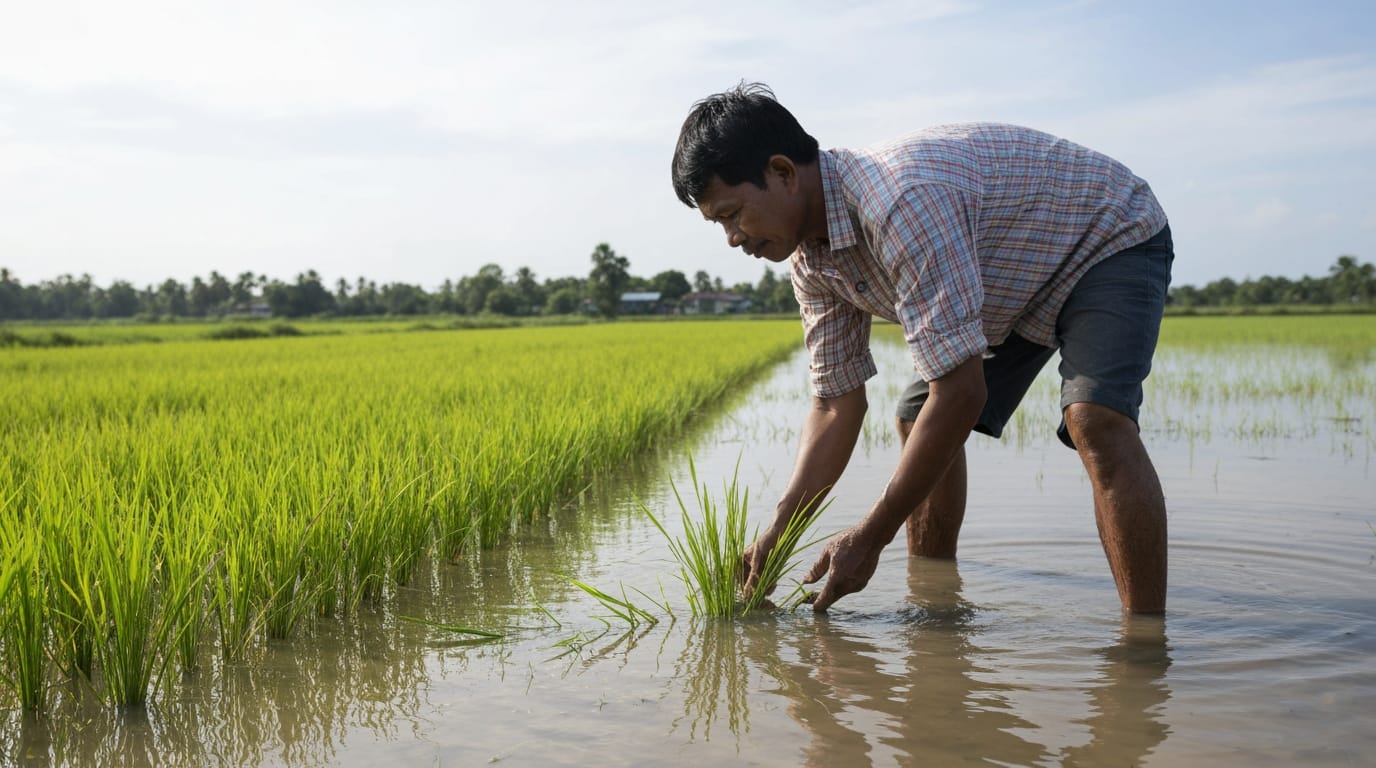
The agricultural sector, employing nearly 29% of Southeast Asia's workforce—a figure rising to 58% in Laos and 46% in Myanmar—is particularly susceptible to El Niño's effects. The hot and dry weather directly jeopardizes crop production, leading to adverse impacts on staple foods like rice, corn, palm oil, and sugar. Reduced rainfall during critical planting seasons can cause delays, decrease planting areas, or even result in outright crop failures, significantly diminishing yields and crop quality. The 2015-2016 El Niño event, for instance, led to a loss of approximately 15 million tonnes of rice across Southeast Asia, driving up prices and increasing the burden on import-dependent nations.
Countries like Indonesia and Malaysia, which together account for 85% of the world's palm oil supply, have experienced prolonged droughts, with Malaysia seeing a 40% reduction in rainfall impacting palm oil production. Similarly, Thailand, a major sugar exporter, anticipates decreased output. These agricultural shortfalls translate rapidly into higher food prices, creating market instability and exacerbating food insecurity for vulnerable populations. For farmers, the primary producers, this crisis is multi-layered: they face reduced harvests and potentially their entire livelihood, struggling with higher food costs for their own families even as their income dwindles. The ripple effect extends to a "snowball effect," where compromised harvests impact the availability of seeds and seedlings for subsequent planting seasons, perpetuating a cycle of hardship.
Beyond Crop Failures: Water Scarcity, Wildfires, and Health Crises
El Niño's influence stretches beyond agricultural fields, profoundly impacting water resources, public health, and environmental stability. The reduced rainfall precipitates severe water scarcity, posing significant challenges for both agricultural irrigation and urban water supplies. This strain on water resources also affects power grid stability, particularly in regions reliant on hydropower.
The dry conditions significantly elevate the risk of wildfires, especially in peatland areas, leading to hazardous transboundary haze. This haze, prevalent in countries like Indonesia and Malaysia, severely degrades air quality and poses substantial health risks, impacting regions as far as Singapore. Respiratory illnesses and other pollution-related health problems become more widespread during these periods. Furthermore, the warmer temperatures and altered rainfall patterns associated with El Niño can create favorable conditions for the proliferation of tropical diseases such as dengue and malaria, adding another layer of public health concern.
Remote and rural communities often bear the brunt of these impacts, largely due to inadequate water infrastructure. Many depend on shallow wells, natural rivers, and gravity-fed mountain streams, which are among the first to be depleted during prolonged dry spells. In Indonesia, for example, El Niño has led to reduced access to safe water and a heightened reliance on emergency water trucking services for numerous communities.
Economic Downturn and Mounting Social Strain
The economic ramifications of El Niño in Southeast Asia are profound and far-reaching. Research from Nanyang Technological University indicates that Indonesia, a major regional economy, experienced an approximate cumulative loss of 13% in its GDP per capita in 2023, directly attributable to El Niño events since 1990. Other nations such as Myanmar, the Philippines, Malaysia, and Singapore have also recorded economic setbacks, with losses exceeding 2% of their GDP. The Philippines, specifically, could see a 0.3% loss in its annual GDP growth.
Such economic downturns are not merely statistical; they translate into tangible social hardships. Market instability, driven by reduced agricultural output, results in inflationary pressures on food prices, making staple goods less accessible to low-income households. This exacerbates existing food insecurity and can push vulnerable populations further into poverty. Historically, strong El Niño events have been linked to significant human costs, with the 1997-1998 event causing 23,000 fatalities, increasing poverty rates by about 15% in many affected countries, and costing governments up to $45 billion. The current situation also raises concerns about potential internal displacement and re-displacement among already vulnerable communities, highlighting the humanitarian toll that extreme weather events can exact.
Regional Resilience and Proactive Responses
In recognition of the severe threats posed by El Niño, governments and international organizations across Southeast Asia are actively implementing preparedness and mitigation strategies. These efforts focus on enhancing regional readiness, bolstering early warning systems, and strengthening anticipatory action measures to safeguard public health, agricultural systems, and national economies.
Specific national initiatives demonstrate this proactive approach. Indonesia has deployed hundreds of water pumps to aid farmers, introduced health protocols for heat and haze, and utilized weather modification technologies, such as cloud seeding, for peatland rewetting to prevent fires. The country is also striving to maintain a substantial rice reserve to buffer against supply shocks. Malaysia has stepped up its preparedness with efforts including cloud seeding operations, strengthening infrastructure for fire prevention in peatlands, and enforcing strict penalties for open burning. The Philippines issues daily heat index forecasts and provides subsidies to sectors most affected by the changing climate. Singapore has activated a national heatwave response plan, establishing cooling centers and implementing initiatives like using heat-reflective paint on buildings.
On a broader scale, there is a growing demand for advanced agrotechnological solutions, including water desalination, the development of drought-resistant crops, and improved rainwater harvesting techniques. International collaborations, such as workshops organized by the Food and Agriculture Organization (FAO), the United Nations Economic and Social Commission for Asia and the Pacific (ESCAP), and the World Meteorological Organization (WMO), aim to synchronize regional efforts and integrate frameworks like the ASEAN Regional Plan of Action for Adaptation to Drought (ARPA-AD). These collective actions underscore a regional commitment to building long-term resilience against El Niño's recurring impacts.
The ongoing El Niño event serves as a critical stress test for Southeast Asia, highlighting the intricate vulnerabilities within its intertwined environmental, economic, and social systems. While the immediate challenges are significant, the concerted efforts towards early warning, mitigation, and adaptation offer a pathway to navigate these complex threats. The region's ability to minimize the humanitarian and economic toll will depend on sustained investment in resilient infrastructure, innovative agricultural practices, and robust international cooperation to address the intensified impacts of El Niño in an era of accelerating climate change.


