World Leaders Hail US-Iran Peace Accord, Cautious Optimism for Lasting Stability Emerges
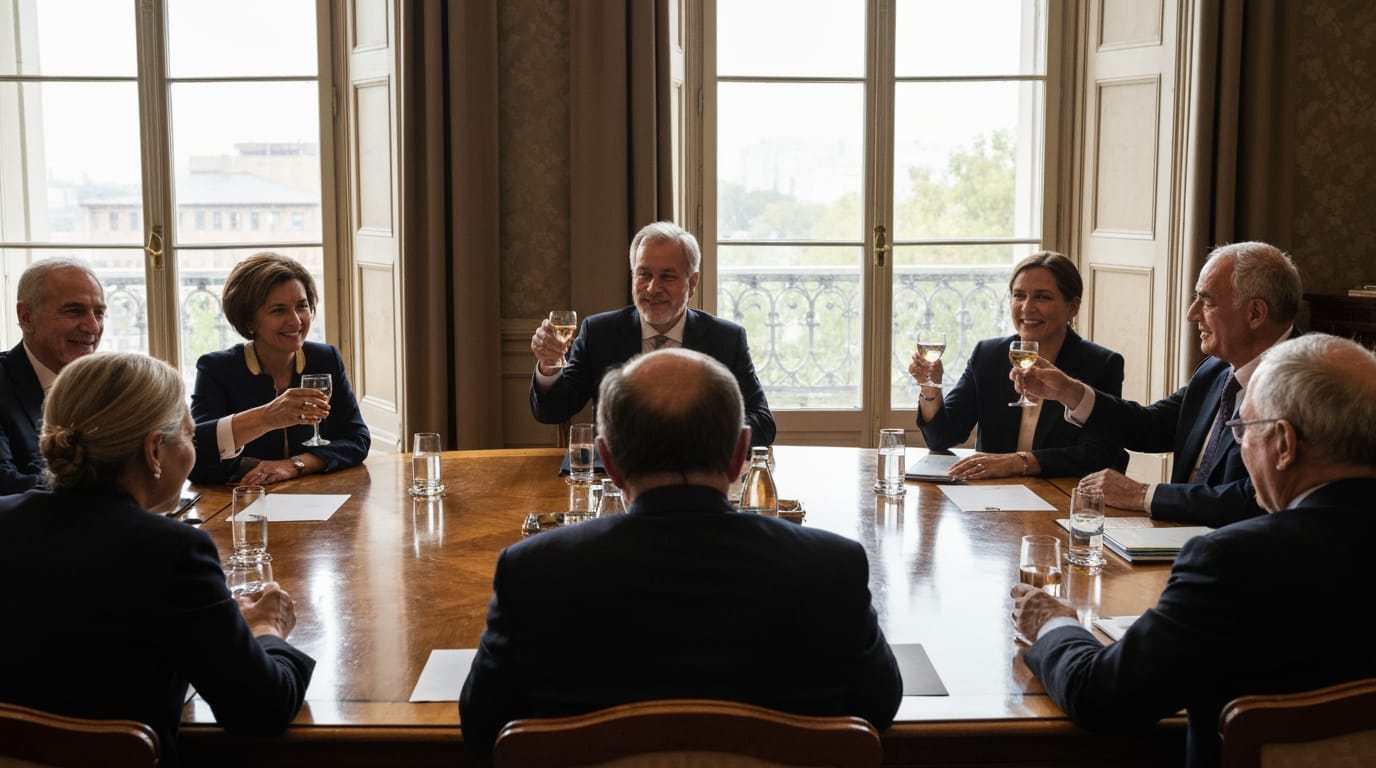
GENEVA – A groundbreaking peace agreement between the United States and Iran has ignited a wave of global relief and cautious optimism, effectively bringing an end to months of heightened military conflict that destabilized the Middle East and roiled international energy markets. The interim deal, formalized as a Memorandum of Understanding, signals an immediate cessation of hostilities, the lifting of a critical naval blockade, and the vital reopening of the Strait of Hormuz, a crucial artery for global trade. While leaders worldwide welcome the de-escalation, the more contentious issues surrounding Iran's nuclear program have been deferred to a 60-day negotiation period, highlighting the delicate path still ahead for a comprehensive and enduring resolution.
A Ceasefire in the Storm: Immediate Relief and Reopened Waterways
The agreement, announced by US President Donald Trump and confirmed by Iranian officials, heralds an immediate and permanent end to military operations across all fronts, including those impacting Lebanon. A key component of the understanding is the lifting of the US naval blockade against Iran and the urgent reopening of the Strait of Hormuz. This critical waterway, through which approximately one-fifth of the world's oil transits, had been severely disrupted by the recent conflict, causing significant tremors in global energy prices.
International reaction has been overwhelmingly positive. United Nations Secretary-General Antonio Guterres welcomed the announcement, emphasizing its role as a "critical step towards the peaceful settlement of the conflict." A joint statement from the E4 leaders – the United Kingdom, France, Germany, and Italy – lauded the diplomatic breakthrough, acknowledging Pakistan and Qatar for their mediation efforts. British Prime Minister Keir Starmer underscored the imperative of restoring "toll-free freedom of navigation" in the Strait, a sentiment echoed by European Commission President Ursula von der Leyen, who stressed the necessity for swift and full implementation of the accord to restore regional stability and safeguard the global economy. Australian Prime Minister Anthony Albanese and Japanese Prime Minister Sanae Takaichi also expressed their approval, hoping for ensured free and safe navigation and continued negotiations.
From Brinkmanship to Dialogue: The Path to De-escalation
The path to this interim agreement has been fraught with peril. A new phase of intense conflict erupted in late February 2026, following US and Israeli strikes against Iran, which were met with retaliatory actions by Tehran. This escalation was preceded by a series of failed negotiations throughout 2025 and early 2026, aimed at resolving long-standing nuclear and regional tensions. Diplomatic efforts, notably mediated by Oman and more recently by Pakistan, have been central to bringing the two sides back to the negotiating table. Pakistan's Prime Minister Shehbaz Sharif confirmed that a "final, agreed upon text of the peace deal" had been reached, despite earlier warnings from President Trump of potential fresh hostilities if an agreement wasn't secured.
The conflict's economic fallout was immediate and severe, particularly affecting global oil markets, which saw prices surge and then fluctuate wildly in response to developments. The blockage of the Strait of Hormuz, a direct consequence of the hostilities, exacerbated these concerns, emphasizing the urgent need for a resolution to ensure uninterrupted global trade. The period of intense fighting also witnessed significant US military buildup in the Middle East and large-scale protests within Iran. The current memorandum seeks to address these immediate crises, providing a much-needed respite and framework for further diplomatic engagement.
The Nuclear Shadow: An Unresolved Challenge
Despite the immediate relief, the most complex and contentious aspect of the US-Iran relationship – Iran's nuclear program – remains largely unresolved. The current agreement stipulates a 60-day period for renewed negotiations specifically focused on nuclear issues and sanctions relief. This deferral underscores the deep-seated disagreements that have plagued previous attempts at a comprehensive nuclear accord, such as the Joint Comprehensive Plan of Action (JCPOA) which effectively collapsed after the US withdrawal in 2018.
Concerns over Iran's nuclear activities are particularly acute. Recent reports from the International Atomic Energy Agency (IAEA) in June 2026 paint a troubling picture, indicating a "near-total, ongoing loss of monitoring of Iranian nuclear sites" due to Iran's suspension of access. The IAEA has also reported an unaccounted-for stockpile of enriched uranium, including an estimated 440 kilograms enriched to 60 percent, accumulated prior to the recent strikes. This lack of transparency and the advancement of Iran's enrichment program represent a significant hurdle for diplomats. The E4 leaders, in their joint statement, emphatically declared that "Iran must never acquire a nuclear weapon" and pledged to work with the US, Iran, and the IAEA toward this objective. While an Iranian official reportedly stated that Tehran agreed to maintain the nuclear status quo (no uranium enrichment or expansion) until a final deal is reached, the details and verification mechanisms for such a commitment during the 60-day negotiation phase are yet to be fully clarified.
Economic Repercussions and Future Prospects
Beyond the immediate cessation of conflict, the peace agreement carries significant economic implications. The draft memorandum reportedly includes provisions for the suspension of sanctions on Iranian oil sales, petrochemical products, and derivatives, granting Tehran full access to financial proceeds. Furthermore, it calls for the release of substantial frozen Iranian assets, with figures ranging from $12 billion to $24 billion cited in various reports, and proposes reconstruction plans for Iran worth at least $300 billion from the US and its allies. These measures are expected to provide a much-needed boost to Iran's economy and could lead to a stabilization of global energy prices as oil shipments resume unimpeded through the Strait of Hormuz.
However, a degree of cautious skepticism persists among analysts and some international observers. The political landscape in both Washington and Tehran, marked by domestic pressures and differing strategic objectives, suggests that sustaining the momentum of this initial agreement will be challenging. The fact that Iran's missile program and support for regional resistance groups were reportedly "definitively excluded" from the final negotiation agenda, according to Iranian media, indicates that not all sources of regional tension are being addressed immediately. Moreover, President Trump's reported threat to restart military attacks if a comprehensive nuclear accord is not reached underscores the conditional nature of the peace and the fragility of the current détente.
A Fragile Peace, A Long Road Ahead
The US-Iran peace agreement marks a pivotal moment, shifting the immediate trajectory from open conflict to renewed diplomacy. The global sigh of relief is palpable, driven by the prospect of de-escalation, economic stabilization, and the restoration of vital shipping lanes. While the memorandum of understanding represents a significant diplomatic achievement, the true test lies in the forthcoming 60-day negotiations on Iran's nuclear program.
The road to a lasting and comprehensive peace remains long and fraught with complex challenges. The international community, particularly the E4 nations and the IAEA, will be closely watching to ensure Iran adheres to non-proliferation commitments and engages transparently. The delicate balance between sanctions relief, economic reconstruction, and verifiable nuclear constraints will define the success or failure of these renewed diplomatic efforts. For now, the world observes with hope that this fragile peace can evolve into a stable and enduring resolution for one of the globe's most persistent geopolitical flashpoints.


