Empress Eugénie's Crown to Shine Anew: Louvre Initiates Full Restoration After Daring Heist
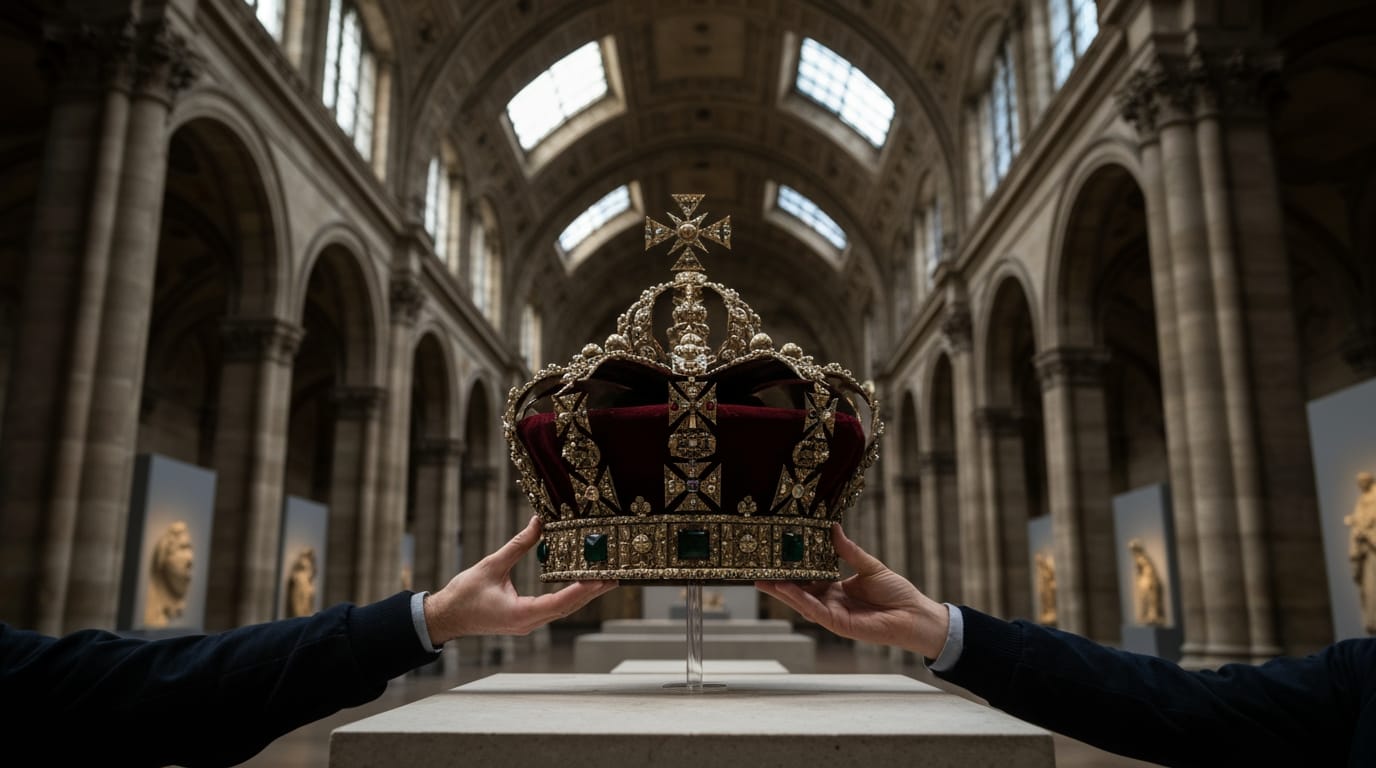
PARIS, France – A symbol of Second Empire opulence and a cherished piece of French heritage, Empress Eugénie's crown, severely damaged during a brazen heist at the Louvre Museum in October 2025, is now on a meticulous path to full restoration. The Louvre announced on February 4, 2026, that experts have deemed the historic artifact largely intact despite being crushed by thieves, paving the way for its return to its former splendor. This ambitious undertaking signifies the museum's unwavering commitment to preserving cultural treasures and marks a crucial step in healing the wounds inflicted by one of the most audacious museum robberies in recent history.
A Glimmer of Hope After the Storm
The announcement comes as a profound relief to art enthusiasts and historians worldwide, following the traumatic events of October 19, 2025, when a sophisticated group of thieves breached the Louvre's renowned Apollo Gallery. While the perpetrators made off with an estimated €88 million ($173 million) worth of jewels, including other invaluable pieces, Empress Eugénie's crown was recovered the same day, abandoned near the museum. Initial assessments revealed the diamond-and-emerald studded crown to be "badly deformed" and "crushed," a stark image that sent shockwaves through the cultural community. Despite the visible trauma, a detailed examination confirmed that the crown remained "nearly intact," with all 56 emeralds and all but 10 of its 1,354 diamonds still present. The damage largely consisted of structural deformation, broken palmettes, and a missing golden eagle, rather than widespread loss of its precious stones. This fortuitous recovery and the crown's inherent resilience have provided a vital opportunity for its complete rehabilitation.
The Crown's Illustrious Past
The Empress Eugénie's crown is more than just a collection of precious gems; it is a tangible link to a pivotal era in French history. Crafted by the esteemed goldsmith Alexandre-Gabriel Lemonnier in 1855, the crown was commissioned for Eugénie de Montijo, the empress consort of Napoleon III, specifically for the grand Universal Exposition in Paris that year. While Empress Eugénie was never formally crowned with it, the piece was designed to embody the magnificence and aspirations of the Second French Empire.
Adorned with 1,354 dazzling diamonds and 56 vibrant emeralds, the crown showcases intricate detailing, including eight chiseled gold arches shaped like eagles, alternating with diamond palmettes framed by emeralds. A diamond-encrusted "monde" surmounted by a cross of six brilliants caps the exquisite design. The Louvre describes it as a "masterpiece of French goldsmithing" and a powerful "symbol of the splendor of the Second Empire." Its journey to the Louvre was also remarkable. Following the fall of the Second Empire in 1870, and the subsequent sale of most French Crown Jewels by the Third Republic in 1885, Empress Eugénie's crown was among the rare items returned to her as personal property. It remained in private collections, passed down through her family, until it was eventually auctioned in 1988 and subsequently donated to the Louvre by Roberto Polo, securing its place within the national heritage and making it accessible to the public in the Apollo Gallery.
The Night of the Raid: A Breach of Security
The October 2025 heist marked a grave security failure for the world-renowned institution, highlighting vulnerabilities that are now under intense scrutiny. Investigators revealed that the thieves orchestrated a sophisticated operation, utilizing a cherry picker to reach an upper floor of the museum and forcing their entry through a window into the heavily guarded Apollo Gallery. Once inside, they employed disc cutters and a power saw to violently breach the reinforced glass display cases housing the invaluable collection.
The removal of Empress Eugénie's crown proved particularly destructive. The lightweight and flexible structure of the crown was significantly deformed as the thieves attempted to pull it through a narrow opening cut into its display case. Further impact likely occurred during the chaotic escape, as evidenced by four of its decorative palmettes breaking off and one of its golden eagles going missing. While the crown was fortunately recovered hours later, lying damaged outside the museum, the audacity of the crime and the significant loss of other artifacts underscored the urgent need for enhanced security measures and robust restoration efforts. Among the other items stolen were a sapphire diadem, necklace, and an earring from a set linked to 19th-century Queens Marie-Amélie and Hortense.
The Meticulous Road to Restoration
The Louvre has embarked on a painstaking mission to restore Empress Eugénie's crown to its pre-heist condition. This complex process will be overseen by an expert committee, specially formed to ensure adherence to the highest standards of conservation and French heritage laws. The committee includes esteemed figures such as Olivier Gabet, director of a relevant department, and Anne Dion, deputy director, alongside specialists like jewelry historian Michèle Heuzé, Second Empire decorative arts curator Anaïs Alchus, mineralogist François Farges, and Emmanuel Plé, head of the historical metals workshop at the Centre de Recherche et de Restauration des Musées de France.
The objective is a complete restoration, aiming to return the crown to its original state "without the need for reconstruction," a testament to the fact that its core structure and most of its gemstones remained intact. This will involve intricate work to reshape the deformed metal, reattach the broken palmettes, and replace any missing elements, such as the single golden eagle and the ten diamonds. The Louvre's commitment to such a detailed restoration reflects the deep historical and cultural value placed on the artifact. Financing for this demanding project has already been secured, with patrons offering their support to facilitate the endeavor. This collective effort underscores a shared dedication to preserving France's rich artistic legacy, even in the face of criminal acts.
A Symbol Reborn
The restoration of Empress Eugénie's crown transcends mere repair; it represents a powerful act of defiance against destruction and a reaffirmation of the enduring value of cultural heritage. Louvre President Laurence des Cars has articulated that the crown's restoration will serve as a "symbol of renaissance" for the museum, embodying its resilience and commitment to its mission.
Once painstakingly restored, the crown will not only reclaim its place in the Apollo Gallery but will also tell a new chapter of its storied history. It will stand as a testament to the meticulous skill of conservators, the dedication of the Louvre, and the collective will to safeguard objects that connect generations to their past. Its return to display will undoubtedly draw renewed attention to the historical period it represents, and to the continuous efforts required to protect the world's shared cultural patrimony for future generations. The full restoration of Empress Eugénie's crown ensures that this masterpiece of French goldsmithing will continue to inspire and educate, its recent ordeal merely a challenging interlude in a long and magnificent existence.


