Havana Extends Conditional Hand to Washington Amid Deepening Standoff
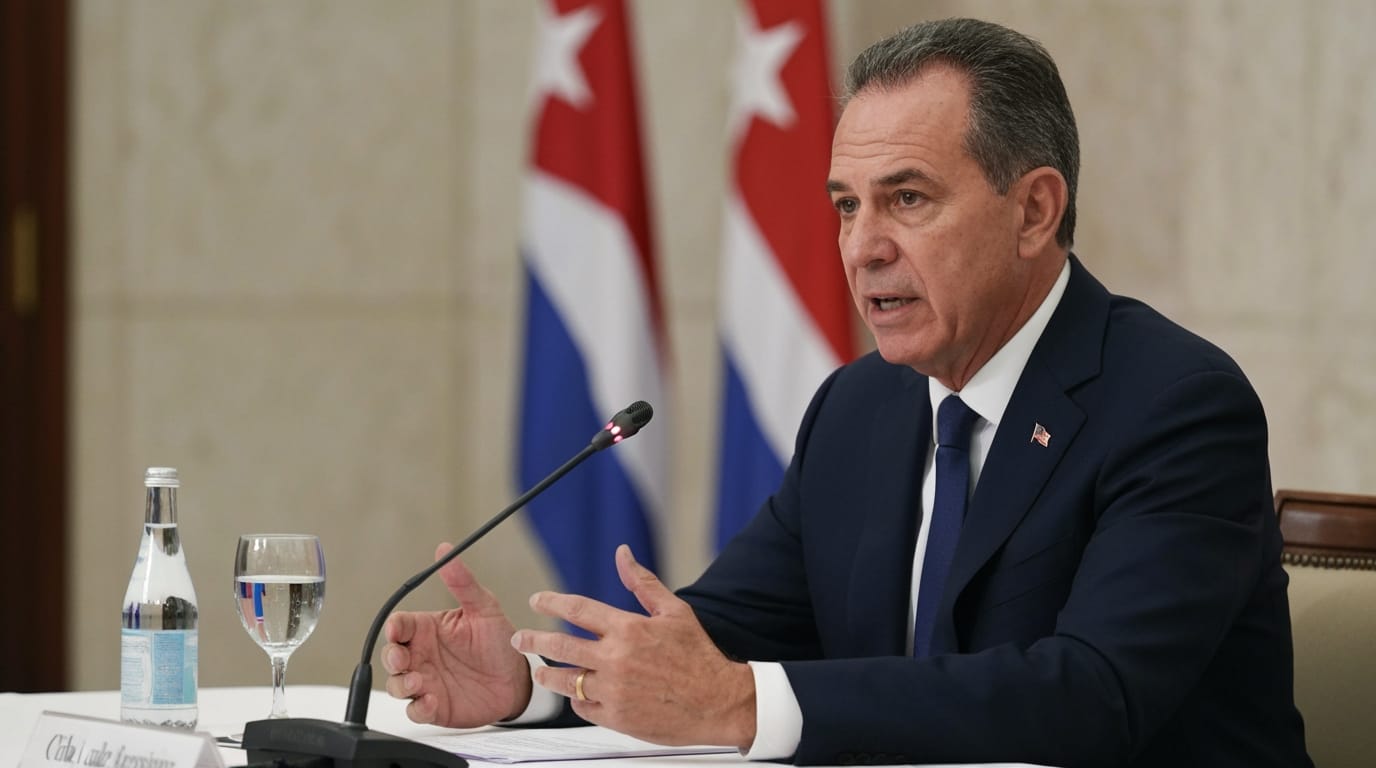
HAVANA, Cuba – Cuba’s leadership has reiterated its willingness to engage in dialogue with the United States, emphasizing an open door for talks on any subject, but firmly rejecting any form of pressure or preconditions. This overture from Havana comes as Washington intensifies its economic sanctions and issues new directives targeting the island's vital oil supply, further straining relations between the long-estranged nations. The complex diplomatic dance underscores a deep-seated ideological divide, yet hints at a persistent, if faint, desire for a path toward normalized relations, albeit under starkly contrasting terms.
Havana's Overture and Red Lines for Engagement
Cuban President Miguel Díaz-Canel has consistently stated Cuba’s readiness for dialogue, provided such engagement is conducted without pressure or preconditions. He insists that any discussions must occur "from a position of equals, with respect for our sovereignty" and adherence to international law. Deputy Foreign Minister Carlos Fernández de Cossío echoed this sentiment, making it unequivocally clear that while Havana is prepared to sit at the table, the island nation's sovereignty and socialist system are not negotiable. "We're not ready to discuss our constitutional system," Fernández de Cossío stated, adding, "as we suppose the US is not ready to discuss their constitutional system, their political system or their economic reality."
Cuba has identified several areas where it is open to cooperation, including managing migration flows, collaborating on law enforcement issues such as drug trafficking and maritime security, and seeking avenues for economic relief through an easing of sanctions. This conditional readiness for dialogue highlights a strategic attempt by Cuba to navigate its severe economic challenges while steadfastly defending its political model against external influence.
Escalating US Pressure and Rationales
In contrast to Cuba's conditional willingness to talk, the United States, under the current administration, has notably increased its "maximum pressure" campaign against Havana. On January 29, 2026, President Donald Trump signed an Executive Order declaring a national emergency with respect to Cuba. This order authorizes the imposition of tariffs on imports from countries that supply oil to the Cuban government, a move that Cuban officials have vehemently condemned as an attempt to "suffocate" the island's economy. President Díaz-Canel characterized these measures as a "genocidal blockade" and an "economic war."
The rationale provided by the White House for these escalating measures cites Cuba's alignment with and support for "hostile foreign governments and non-state actors," specifically naming Russia, China, Iran, Hamas, and Hezbollah. The Executive Order also points to the alleged presence of foreign military and intelligence capabilities, such as Russia's largest overseas signals intelligence facility in Cuba, and condemns Cuba for alleged human rights abuses, political repression, and regional destabilization. US officials contend that these policies are designed to advance US national interests, empower the Cuban people, and restrict economic practices that disproportionately benefit the Cuban government or its military and security agencies. The comprehensive US economic embargo, in place since 1962, remains the most enduring trade embargo in modern history, with Cuban authorities estimating its cost to the island at over $7.5 billion between March 2024 and February 2025 alone.
A History of Hostility and Brief Thaws
The relationship between the United States and Cuba has been defined by decades of animosity and ideological clashes since the 1959 Cuban Revolution. Diplomatic ties were severed in 1961, followed by the imposition of a comprehensive trade embargo that has largely shaped Cuba's economic and political trajectory. This long period of strained relations experienced a brief, significant thaw between 2015 and 2017, under former US President Barack Obama and then-First Secretary Raúl Castro. This period, known as the "Cuban thaw," saw the re-establishment of diplomatic relations, the opening of embassies, and increased travel and commercial exchanges.
However, relations have since materially deteriorated. The subsequent US administration reversed many of these normalization policies, re-implementing and extending sanctions. Cuba has been designated a state sponsor of terrorism multiple times, including from 2025 onward, further complicating any potential for engagement. This historical backdrop highlights the profound challenges inherent in bridging the chasm between the two nations, where periods of limited engagement have often been followed by renewed hostility.
The Humanitarian Dimension and International Appeals
The ongoing economic crisis in Cuba, exacerbated by the intensified US sanctions, has significant humanitarian implications. Experts express concern that a lack of petroleum, stemming from new US tariffs on supplier countries, could deepen the island’s multiple crises, which already include food and medicine shortages. The crisis has also triggered a large wave of migration, primarily to the United States.
The international community has taken note of the escalating tensions and their potential consequences. The United Nations Secretary-General has urged all parties to pursue dialogue and respect international law, pointing out that the UN General Assembly has for over three decades consistently called for an end to the US trade embargo on Cuba. Mexico, a significant supplier of oil to Cuba, has expressed alarm over the humanitarian crisis and is seeking an agreement with Washington to continue its aid and oil shipments to the island, with Mexican President Claudia Sheinbaum emphasizing the need to avoid further humanitarian suffering. Officials in Vatican City and Brussels also suggest that even limited engagement could help reset expectations and reduce the risk of diplomatic stagnation.
A Stalemate with Glimmers of Possibility
The current diplomatic landscape between Cuba and the United States remains characterized by a fundamental stalemate: Havana offers dialogue but rejects any infringement on its sovereignty, while Washington ratchets up pressure, aiming for a shift in Cuba's internal political system. President Díaz-Canel and Deputy Foreign Minister Fernández de Cossío's recent statements reaffirm Cuba's consistent position, which balances an openness to engagement with an unwavering defense of its national principles.
Despite the hardened rhetoric and punitive measures, the repeated calls for dialogue, even if conditional, signify that neither side has entirely closed the door on future diplomatic efforts. The humanitarian crisis unfolding on the island and the international community's concerns add another layer of urgency to the impasse. The path forward remains fraught with historical baggage and deep-seated mistrust, yet the continued discussion of dialogue, however limited in scope or conditioned by demands, suggests a faint hope that a more pragmatic and less confrontational chapter in US-Cuba relations might eventually be written. Any such progress, however, would likely require a significant recalibration of strategies and expectations from both Havana and Washington.


