Erosion of Landmine Ban Rings Alarm Bells in Southeast Asia as European States Reconsider Treaty
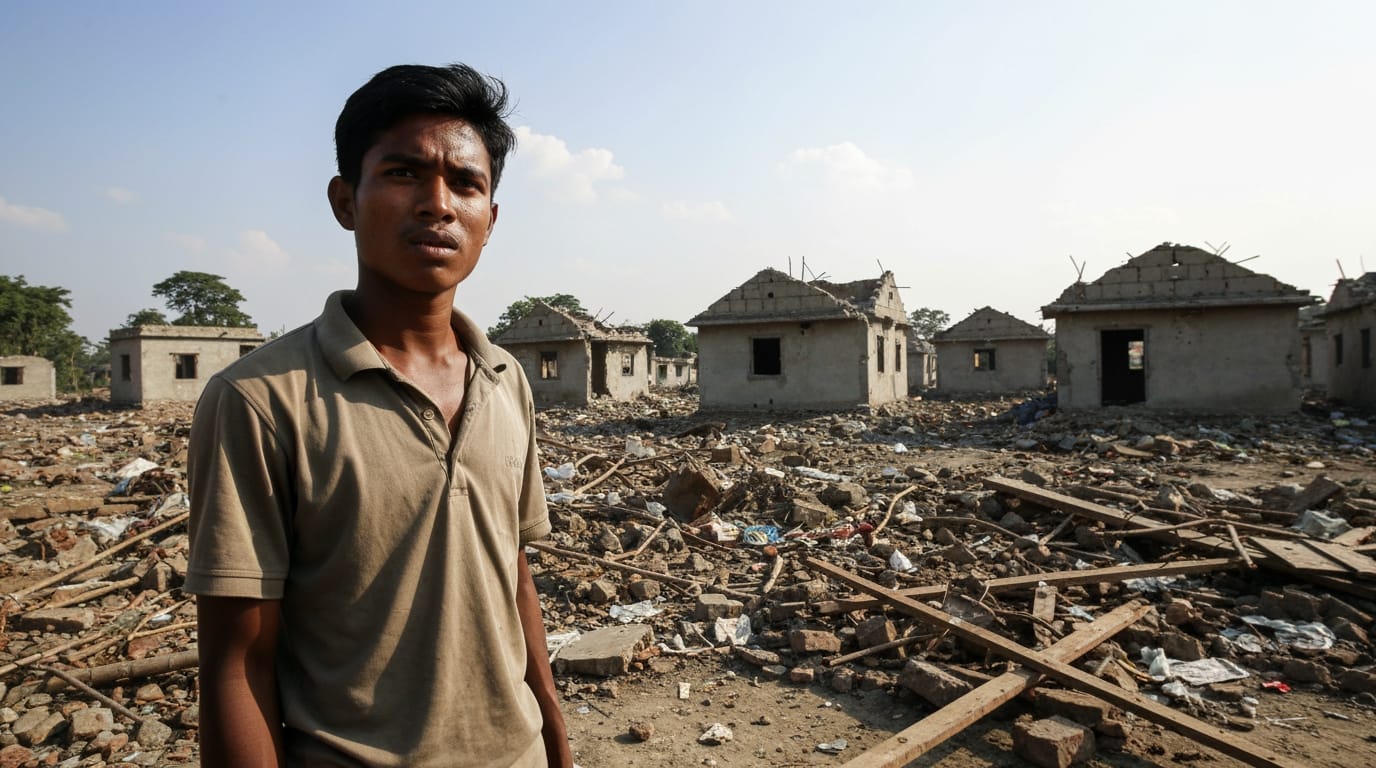
The international norm against anti-personnel landmines, a cornerstone of humanitarian disarmament for over two decades, faces an unprecedented challenge as several European nations announce intentions to withdraw from or reconsider their adherence to the 1997 Ottawa Treaty. This alarming development, driven by escalating security concerns in Europe, has sent ripples of unease across the globe, particularly in Southeast Asia, a region still grappling with the devastating, long-term legacy of these indiscriminate weapons. The potential rollback of the ban threatens to undermine decades of progress in civilian protection and reignite fears of renewed mine proliferation in areas where the scars of past conflicts remain painfully fresh.
Europe's Security Posture Shifts, Global Norms Waver
A significant number of European states, including Estonia, Latvia, Lithuania, Poland, and Finland, have either formalized their withdrawal from the Ottawa Treaty or signaled their intent to do so, with Ukraine also reportedly considering similar steps. This pivot reflects a fundamental reassessment of national security doctrines in the wake of Russia's full-scale invasion of Ukraine and the subsequent deterioration of the European security landscape. These nations assert that anti-personnel mines could serve as a crucial deterrent, providing a means to fortify borders and enhance defensive capabilities against a perceived Russian threat.
The Ottawa Treaty, officially known as the Convention on the Prohibition of the Use, Stockpiling, Production and Transfer of Anti-Personnel Mines and on their Destruction, was signed in 1997 and currently boasts 165 state parties. It represents a landmark achievement in international humanitarian law, banning not only the use but also the development, production, stockpiling, and transfer of these weapons. However, major military powers such as the United States, Russia, China, India, and Pakistan have notably remained outside the treaty's framework. The recent decisions by signatory states in Europe risk fracturing this carefully constructed global consensus, signaling that humanitarian disarmament treaties might be set aside when geopolitical pressures intensify.
Southeast Asia: A Region Still Healing from Mine Scars
For Southeast Asia, the European developments are a cause for profound concern, given the region's enduring struggle with landmine contamination. With over 200,000 recorded casualties, Southeast Asia stands as one of the most heavily impacted regions globally by mines and explosive remnants of war (ERW). Half of the member states of the Association of Southeast Asian Nations (ASEAN), including Cambodia, Laos, Myanmar, Thailand, and Vietnam, continue to grapple with the deadly aftermath of past conflicts. In Vietnam, for instance, an estimated 6.1 million hectares of land remain contaminated by unexploded munitions decades after the war concluded in 1975, with 600,000 to 800,000 tons of unexploded ordnance still hidden underground.
Cambodia, an early adopter of the Ottawa Convention, remains one of the most mine-affected countries in the world, with significant contamination, particularly along its border with Thailand. Despite clearing 3,300 square kilometers and destroying over four million landmines and ERWs, the country recently secured an extension until 2030 to fulfill its Article 5 obligations under the treaty, underscoring the immense scale and complexity of the task. The devastating impact extends beyond immediate casualties, hindering agricultural development, displacing communities, and imposing immense economic burdens on fragile states. Demining efforts are not only costly and painstaking but are also increasingly challenged by climate change, with floods and landslides exposing previously hidden ordnance.
Humanitarian Advocates Decry a "Devastating Step Backward"
The international community, led by humanitarian organizations and the United Nations, has voiced strong opposition to the European withdrawals. The International Campaign to Ban Landmines (ICBL) and Mines Action Canada have termed these actions a "devastating step backward" that reverses nearly three decades of global progress. UN Secretary-General Antonio Guterres has expressed "grave concern," urging states to adhere to humanitarian disarmament treaties and halt any withdrawal processes.
Critics argue that the military utility of anti-personnel mines is severely limited and grossly outweighed by their catastrophic humanitarian consequences. These weapons are inherently indiscriminate; once laid, they cannot differentiate between a soldier and a civilian, or even a child. Statistics repeatedly show that between 70% and 85% of landmine victims are civilians, with nearly 40% being children, who often suffer life-altering injuries such as loss of limbs. Advocates highlight that landmines remain lethal for decades after conflicts end, continuing to maim and kill civilians attempting to rebuild their lives, farm their land, or simply traverse their communities. The European Union itself has been a significant financial supporter of humanitarian mine action globally, including in Southeast Asia, investing over €800 million between 2017 and 2022. This internal contradiction places the EU under moral pressure to uphold the very values it champions internationally.
A Disturbing Precedent and Regional Instability
The European decision to step back from the landmine ban sets a dangerous precedent that could undermine the broader architecture of international humanitarian law and global disarmament efforts. The argument that these weapons will be used "responsibly" or in compliance with international humanitarian law is met with skepticism by experts who contend that the indiscriminate nature of landmines makes such compliance impossible.
The fragility of the global norm was underscored by a disturbing incident reported in July and August 2025, when 11 Thai military personnel were severely injured by recently planted anti-personnel mines along the Thai-Cambodian border. Thai authorities identified the mines as PMN-2 types, which are in Cambodia's possession, and notified other state parties of what it considered a violation of the Ottawa Treaty by Cambodian military personnel. This incident, occurring despite both Thailand and Cambodia being signatories to the Ottawa Treaty, serves as a stark reminder of how easily the principle of non-use can be breached, especially if the international commitment to the ban appears to be weakening. Thailand, notably, was the first country in Southeast Asia to become a state party to the Ottawa Convention in 1999. The erosion of the ban by European states, even if geographically distant, carries the risk of emboldening non-signatories and potentially encouraging a broader return to the use of these inhumane weapons globally, threatening regions already burdened by their legacy.
Reaffirming the Commitment to a Mine-Free World
As Europe grapples with its evolving security challenges, the implications for the global ban on anti-personnel mines are profound and far-reaching. While the immediate focus of European states is on their own defense, the humanitarian consequences of their decisions reverberate worldwide. The unease in Southeast Asia, a region that has made significant strides in mine clearance and victim assistance, highlights the interconnectedness of global security and humanitarian norms.
The path toward a truly mine-free world requires unwavering commitment from all nations. International organizations and civil society continue to call for renewed dedication to the Ottawa Treaty, urging countries to uphold their obligations and resist any moves that could legitimize the future use of anti-personnel mines. The long-term human cost, disproportionately borne by civilians, underscores the critical importance of safeguarding this vital humanitarian achievement.


