Escalating Attacks Near Strait of Hormuz Trigger Major Oil Slicks Across Persian Gulf
A barrage of military strikes and tanker attacks in and around the Strait of Hormuz has released substantial quantities of petroleum into the Persian Gulf, igniting an environmental crisis across one of the world's most sensitive and heavily trafficked waterways.
Commercial vessels and military forces navigating the chokepoint now face a dual threat: active munitions from regional combatants and expansive toxic slicks drifting toward ecologically fragile shorelines. In recent weeks, satellite tracking and maritime surveillance flights have confirmed multiple active fuel and crude slicks spreading along key transit lanes and washing onto inhabited islands. The developments mark a sharp transition where maritime warfare has evolved into immediate, cross-border environmental degradation.
Escalation on the Water
The Strait of Hormuz, a narrow marine gateway through which roughly one-fifth of global petroleum supplies typically passes, has seen repeated exchanges between regional forces and international shipping. Tensions escalated dramatically following military strikes on cargo carriers and crude oil vessels.
Vessels transiting the passageway have encountered naval mines, drone strikes, and ballistic missile salvos. In several incidents, hit tankers sustained severe hull breeches, disabling engine systems and dumping thousands of barrels of fuel and cargo directly into the sea.
Satellite monitoring groups and maritime surveillance networks have recorded more than 100 individual spill events across the corridor since hostilities flared. The total footprint of petroleum contamination in the Gulf expanded by an estimated fourfold compared to previous baseline years, according to marine satellite observations.
The damage has disrupted commercial traffic, forcing vessels to operate under emergency restrictions or reroute entirely. Even as traffic slowed, stranded vessels carrying tens of millions of barrels of crude remained anchored in high-risk zones, creating stationary targets for further strikes.
Geography of the Spills
Satellite images show large dark bands of heavy bunker fuel and petroleum ribbons spreading across hundreds of square miles. The most severe concentrations have gathered along coastal features near the entrance to the waterway.
One massive slick appeared off the southern tip of Iran's Qeshm Island, extending more than 100 miles through the main shipping channel. Analysts linked the release to the Liberian-flagged bulk carrier Minoan Pioneer, which suffered heavy damage from an offshore strike before drifting into regional waters. Videos verified by regional observers documented thick, dark emulsified oil washing ashore onto beaches at Suza, coating coastlines with black residue.
A second distinct slick formed farther west near Sirri Island, an area vital to offshore production operations. Outside the Strait in adjacent waters along Oman, the grounded vessel Caroline Bezengi leaked substantial amounts of crude, creating a separate slick estimated to span hundreds of square kilometers and threatening dozens of miles of pristine coastline.
The overlapping slicks have merged in several areas, carried eastward and westward by rotating Gulf currents and high summer water temperatures that hinder natural dissipation.
Ecological and Economic Peril
The Persian Gulf represents a fragile, shallow marine biome where high salinity and closed circulation multiply the hazards of chemical pollution. The spreading contamination poses a direct threat to vital habitats, including the Hara Mangrove Reserve, extensive seagrass beds, and rare coral reefs located along the strait.
Mangroves and intertidal flats are especially vulnerable to sticky crude, which binds to sediments and suffocates root systems. Marine scientists warn that oil settling into shallow seafloor layers can remain toxic for decades, mirroring the lasting consequences documented after the 1991 Gulf conflict.
The pollution carries severe human and economic consequences for coastal populations:
- Desalination facilities providing drinking water to millions across Gulf coastal cities face emergency shutdowns if petroleum slicks approach intake pipes.
- Local commercial and artisanal fisheries have been halted in contaminated areas due to fuel poisoning and gear destruction.
- Seabirds, sea turtles, and marine mammals face fatal oil exposure throughout migration corridors.
- International shipping insurance premiums have spiked, imposing heavy surcharges on remaining commercial transit.
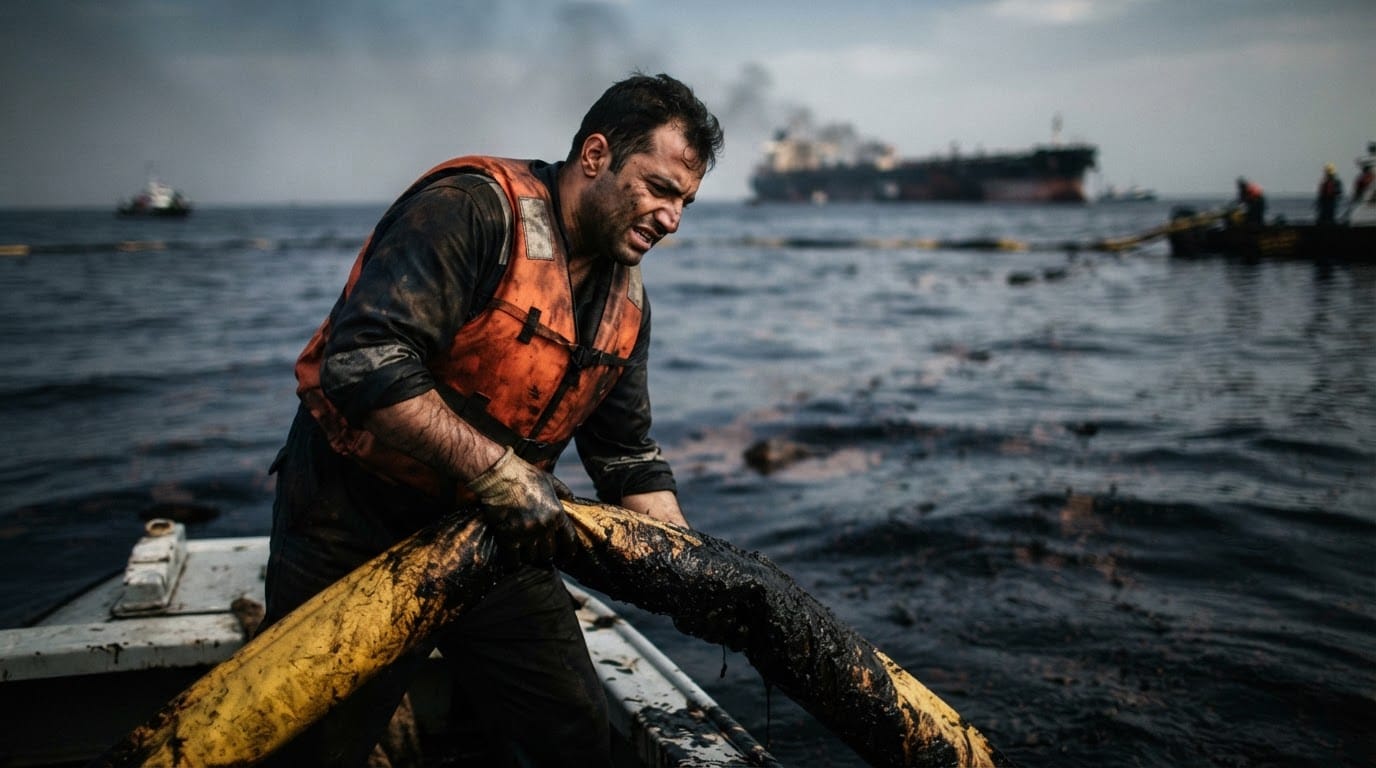
Cleanup efforts remain paralyzed. Ongoing missile alerts, naval skirmishes, and extensive electronic warfare—including pervasive GPS spoofing—prevent environmental vessels and cleanup contractors from deploying booms, skimmers, or dispersants safely.
International Deadlock
Diplomatic efforts to organize a maritime truce to address the spills have produced few breakthroughs. Regional governments have issued conflicting accounts of the attacks while trading blame for targeting non-combatant commercial traffic.
Coast guard and disaster response agencies along the Gulf have mobilized defensive booms near municipal harbors and water intake facilities, but their resources remain insufficient to counter open-water slicks drifting through combat corridors. Environmental protection groups continue to call for an immediate ceasefire around designated maritime channels to permit specialized international recovery ships to contain the slicks.
Global energy markets also feel the strain. As shipping operators weigh the risk of attacks and contamination, charter rates have climbed, and transit speeds through the strait have fallen sharply. The threat of prolonged disruption to regional refining hubs and transport routes has introduced persistent volatility into crude oil pricing.
Conclusion
The strikes across the Strait of Hormuz have transformed a geopolitical confrontation into an urgent environmental crisis that stretches far beyond the hulls of damaged ships. As thick oil washes onto Gulf shorelines and threatens vital infrastructure, the inability to launch coordinated cleanup operations guarantees that the ecological cost will outlast the immediate battles. Without swift diplomatic intervention to secure the transit corridor, the Persian Gulf faces long-term degradation that threatens its marine life, public water supplies, and regional economy for years to come.