Living in the Shadow of Los Angeles' Hidden Oil Wells
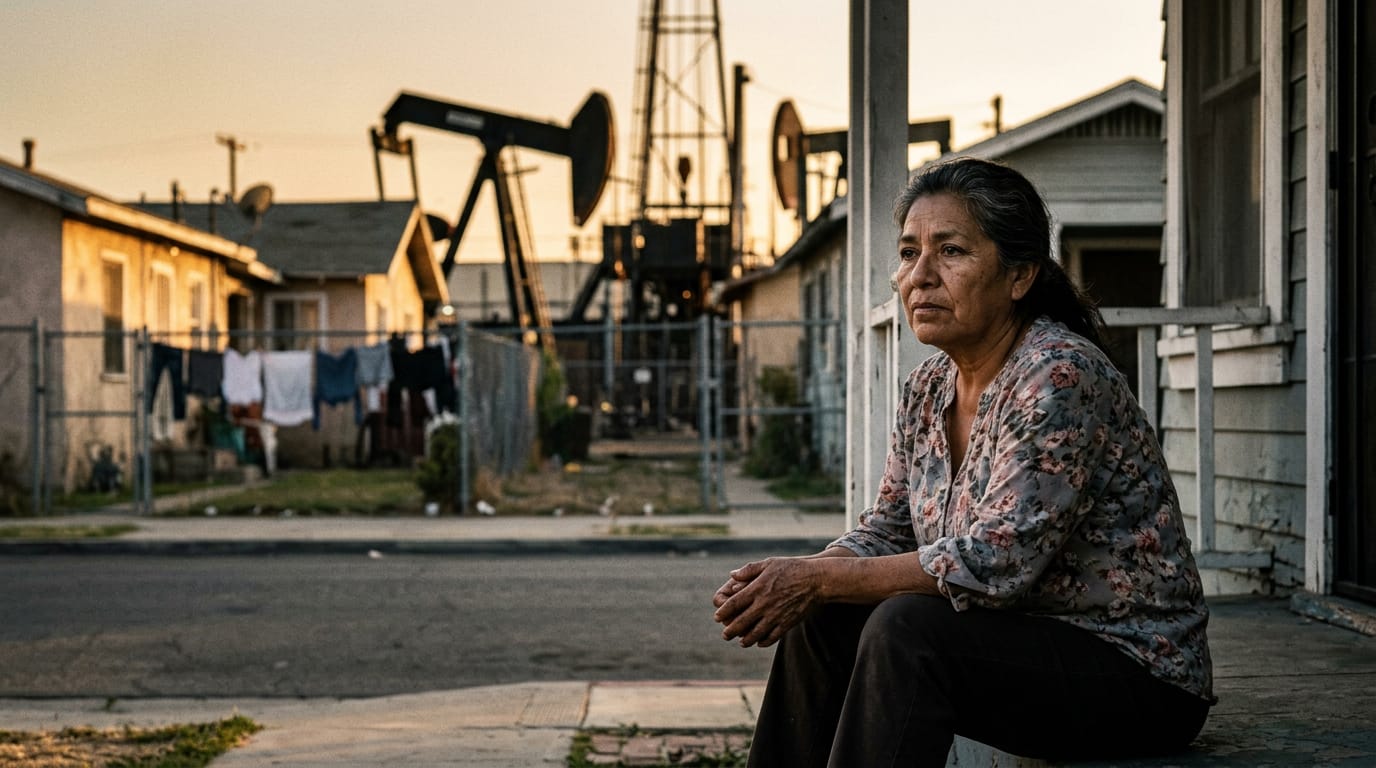
Behind high masonry walls, inside windowless stucco office buildings, and beneath decorative facades designed to blend into neighborhood architecture, thousands of pumpjacks quietly pull crude oil from deep under Los Angeles. For more than a century, petroleum production has functioned alongside urban growth across Southern California. Today, however, hundreds of thousands of residents living steps from these disguised sites are pushing back against the airborne toxins, physical ailments, and environmental burdens that have accompanied neighborhood drilling for generations.
Camouflaged Operations in Urban Neighborhoods
Los Angeles sits atop some of the nation's most prolific petroleum reserves. In the early 20th century, wooden derricks stood like dense forests across the basin, powering the rapid expansion of the metropolis. As neighborhoods expanded over former oilfields, energy companies turned to camouflage rather than relocation.
Throughout the city, drill sites operate behind facades disguised as commercial office space, church structures, or windowless utility blocks. Sound walls draped in ivy and tall fences painted muted colors conceal pumping mechanisms and chemical storage tanks.
Across Los Angeles County, thousands of active, idle, and abandoned wells remain. More than 580,000 residents live within a quarter-mile of an actively producing well. In many densely built residential corridors, operating equipment sits fewer than a hundred feet from bedroom windows, school playgrounds, senior centers, and public parks.
Chronic Health Symptoms and Toxic Air
For communities bordering these installations, the everyday reality involves pervasive odors and persistent health problems. Neighborhoods such as South Los Angeles and Wilmington report high rates of respiratory illness, recurrent migraines, frequent nosebleeds, and irritated eyes.
Air monitoring and academic research indicate that urban drilling sites release a spectrum of hazardous pollutants, including benzene, hydrogen sulfide, and fine particulate matter. Studies conducted by public health researchers show that residents living near active urban extraction experience lower lung capacity and higher rates of childhood asthma than those living elsewhere. In some neighborhoods, the pulmonary impact on local youth equals or exceeds the chronic effects of secondhand tobacco smoke exposure or living directly adjacent to major freeway corridors.
Cardiovascular complications and adverse reproductive outcomes, including premature births and low birth weights, have also been correlated with long-term proximity to drill sites. Despite the industrial barriers and sound-dampening structures erected around these locations, gaseous emissions readily escape into surrounding streets and backyards.
Environmental Equity and Historic Zoning
The distribution of active extraction infrastructure in Los Angeles reflects long-standing patterns of urban development and residential segregation. Data show that neighborhoods with the highest concentration of active wells are home predominantly to Black, Latino, and lower-income families.
While wealthier enclaves such as Beverly Hills and West Los Angeles saw drilling operations phased out or subject to stringent soundproofing and safety mandates over the decades, sites located in South Los Angeles and Wilmington continued round-the-clock operations under older municipal guidelines.
Nearly four-fifths of active wells inside city boundaries sit within 2,500 feet of sensitive urban areas. Community advocacy organizations have argued for decades that relying on aesthetic concealment ignores the systemic health risks borne by frontline communities.
Economic Realities and the Legal Landscape
The push to end urban drilling has sparked an extended policy and courtroom contest between public officials and the oil industry. Petroleum producers and industry trade associations argue that local extraction provides well-paying union jobs, generates city tax revenue, and produces domestic energy under some of the world's strictest environmental rules. Energy operators have warned that shutting down active urban reservoirs would force California to import a larger share of its fuel supplies via international tankers, shifting emissions overseas while hurting the regional economy.
Local governments have nevertheless moved to limit operations. The Los Angeles City Council and the Los Angeles County Board of Supervisors previously voted to ban new wells and establish timelines to decommission existing extraction sites.
Initial city bans faced swift court challenges, with judges ruling that municipal bans were preempted by state oversight laws. In response, the California Legislature enacted measures, such as Assembly Bill 3233, that explicitly affirmed the authority of local cities and counties to regulate, limit, or prohibit oil and gas extraction within municipal boundaries. Armed with clarified legal backing, city leaders have renewed ordinances establishing a 20-year timeline to phase out all active urban wells and eliminate drilling near residential zones.
Conclusion
Los Angeles' century-old identity as an oil-producing boomtown is colliding directly with modern public health demands and urban density. What was once celebrated as an economic engine concealed beneath false store facades has become a focal point of environmental justice advocacy. As regulatory phaseouts advance and legal battles continue, the city faces the intricate task of balancing economic transitions with the health and safety of hundreds of thousands of people living in the shadow of its hidden industrial core.