Escalation in Aleppo: Syrian Army Renews Strikes on Kurdish Fighters, Displacing Thousands Amid Broader Instability
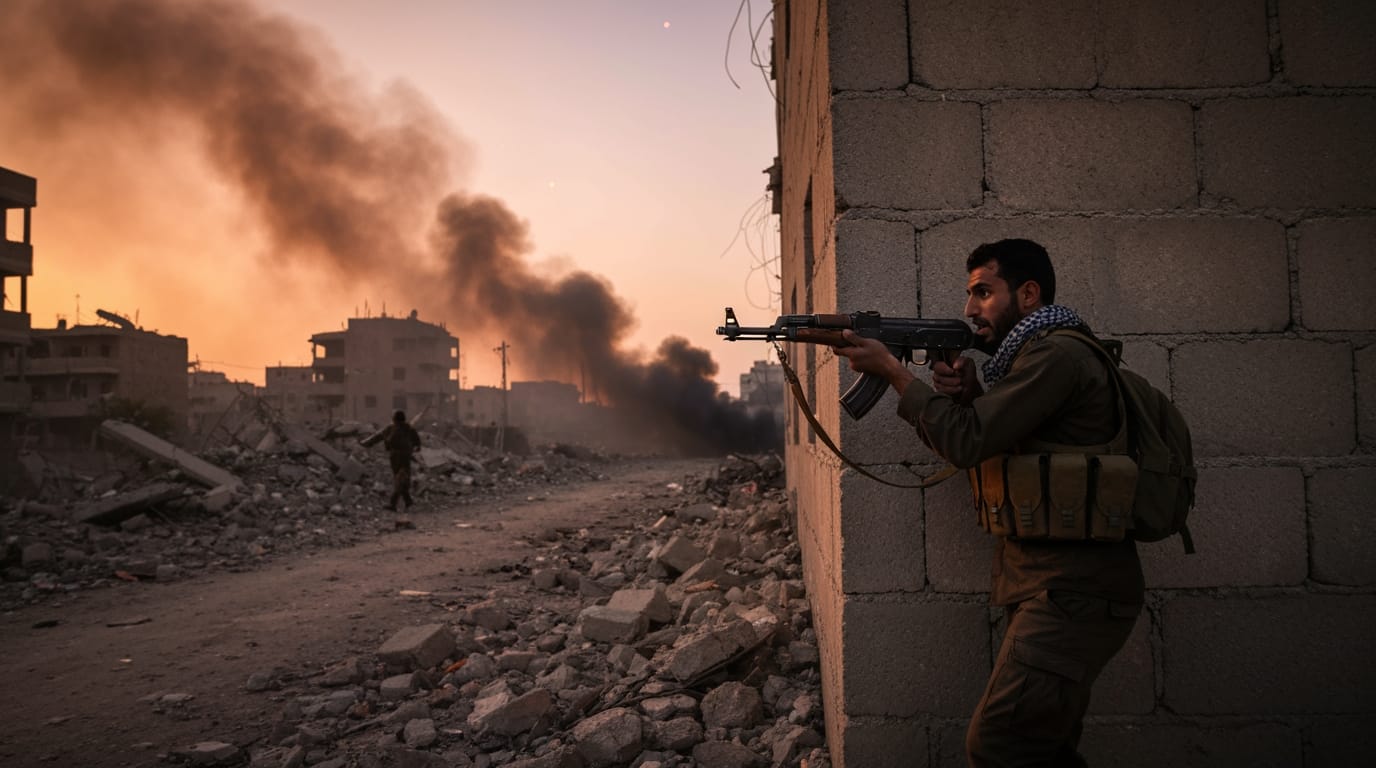
Aleppo, Syria – The fragile peace in Syria's second-largest city, Aleppo, shattered this week as the Syrian army renewed its offensive against Kurdish-led Syrian Democratic Forces (SDF) in the city's Kurdish-majority neighborhoods, leading to a significant humanitarian crisis and fueling fears of wider conflict. The intensified clashes, which began on Tuesday, January 6, 2026, have resulted in the displacement of over 140,000 civilians and a rising death toll, underscoring the deep-seated tensions that persist despite a prior agreement aimed at integrating Kurdish forces into the national army.
The recent military actions signal a critical juncture in the complex Syrian landscape, pitting Damascus against a U.S.-backed force that controls substantial swathes of northeastern Syria. As artillery fire and shelling reverberate through Sheikh Maqsoud and Ashrafieh, two historically Kurdish enclaves, both sides trade accusations of violating international law and endangering civilian lives. The renewed aggression not only threatens regional stability but also challenges the prospect of a unified Syria in the wake of the Assad regime's fall in late 2024.
Renewed Offensive and Civilian Exodus
The Syrian army dramatically escalated its operations on Thursday, January 8, 2026, issuing evacuation orders for residents in the contested neighborhoods of Sheikh Maqsoud, Ashrafieh, and Bani Zeid. Humanitarian corridors were opened, urging civilians to depart by early afternoon before the military operations commenced. Shortly after the deadline expired, Syrian government forces initiated shelling, with reports indicating retaliatory fire from the SDF. The Syrian army declared Sheikh Maqsoud and Ashrafieh "closed military zones" and "legitimate military targets" on Wednesday, intensifying the conflict.
This military push follows days of intermittent fighting. The Syrian state news agency SANA, citing military sources, reported heavy shelling targeting identified SDF positions within Sheikh Maqsoud and Ashrafieh. The army also released maps marking areas it intended to target, advising civilians to avoid these zones. By Friday, January 9, 2026, a ceasefire announced by Syria's Defense Ministry appeared to crumble as Kurdish groups rejected calls for withdrawal from the city, which they deemed a demand for surrender. Subsequently, the Syrian army announced it would renew attacks, opening another humanitarian corridor for a limited time for civilians to exit.
Conflicting Accusations and Political Deadlock
Both the Syrian government and the SDF present starkly different accounts of the renewed hostilities, each accusing the other of instigating the violence and committing abuses. Damascus claims the SDF is using civilian areas as launching pads for attacks on government-controlled territories and military positions, alleging that the Kurdish forces have violated previous agreements for withdrawal. The Syrian army also asserted that the SDF used civilians as human shields, preventing them from evacuating and even firing upon those attempting to leave.
Conversely, the Kurdish-led SDF vehemently denies having a military presence in Sheikh Maqsoud and Ashrafieh, describing the forces there as local self-defense units. The SDF accuses Syrian government forces of shelling hospitals and residential areas, citing this as a "blatant violation of international humanitarian law" and alleging that the attacks were "planned and deliberate, systematically targeting infrastructure and essential services." The group has characterized the offensive as a political and military maneuver to justify an assault on residential areas, warning of broader consequences and a potential return to open warfare across Syria. Some Kurdish officials have suggested that the objective of the attacks is "demographic change" in the region.
Humanitarian Catastrophe and International Appeals
The human cost of the escalating conflict is significant and rapidly growing. Aid organizations and local authorities report a mass exodus, with approximately 140,000 civilians displaced from their homes since Tuesday. Early reports indicated at least 21 civilians killed, with casualties recorded on both sides of the front lines. The UN Office for the Coordination of Humanitarian Affairs (OCHA) confirmed civilian casualties and thousands of displacements, highlighting damage to health facilities and other critical infrastructure.
The United Nations has voiced deep concern, calling for immediate de-escalation, maximum restraint, and robust measures to protect civilians. Masrour Barzani, Prime Minister of the Kurdistan Regional Government, expressed alarm over the attacks on Kurdish neighborhoods, warning that targeting civilians and attempting to alter the region's demography could constitute ethnic cleansing. Save the Children reported that tens of thousands have been forced to flee, with half estimated to be children, and emphasized the urgent need for a halt to hostilities and protection for all civilians.
Broader Geopolitical Implications and Stalled Integration
The renewed fighting in Aleppo is deeply intertwined with the shifting geopolitical landscape of post-Assad Syria. The current clashes represent the most intense confrontation between the Syrian government and the SDF since the fall of the Assad regime in December 2024. A crucial backdrop to the current crisis is the stalled implementation of an agreement signed in March 2025, which aimed to integrate the SDF into the Syrian army by early 2025. This agreement, meant to foster a unified national force, has been fraught with difficulties, including Kurdish demands for decentralized governance and Damascus's centralized approach.
Turkey has emerged as a significant external actor in the escalating tensions, openly welcoming the Syrian army's operations. Ankara views the SDF, particularly its dominant component, the People's Protection Units (YPG), as an extension of the Kurdistan Workers' Party (PKK), a designated terrorist organization. Turkish officials have expressed readiness to offer military support to Syria, emphasizing their commitment to combating what they term "terrorist organizations." This stance adds another layer of complexity, with some Kurdish analysts suggesting Turkish involvement in the current attacks. Meanwhile, the United States, a long-standing backer of the SDF in its fight against ISIS, has urged restraint from all parties and previously attempted to mediate the integration of the SDF into the new Syrian government.
A Precipice of Instability
The resumption of large-scale military operations in Aleppo serves as a stark reminder of Syria's precarious post-conflict transition. The intensifying confrontation between the Syrian army and Kurdish forces, fueled by conflicting territorial claims, political ambitions, and external pressures, risks plunging the nation back into widespread warfare. The humanitarian toll is already immense, with tens of thousands uprooted and civilian lives lost. The failure to uphold and implement agreements for national integration, coupled with the active involvement and divergent interests of regional and international powers, continues to undermine any prospects for lasting stability. The situation in Aleppo remains a critical flashpoint, demanding urgent de-escalation and a genuine commitment to political solutions to avert further devastation.


