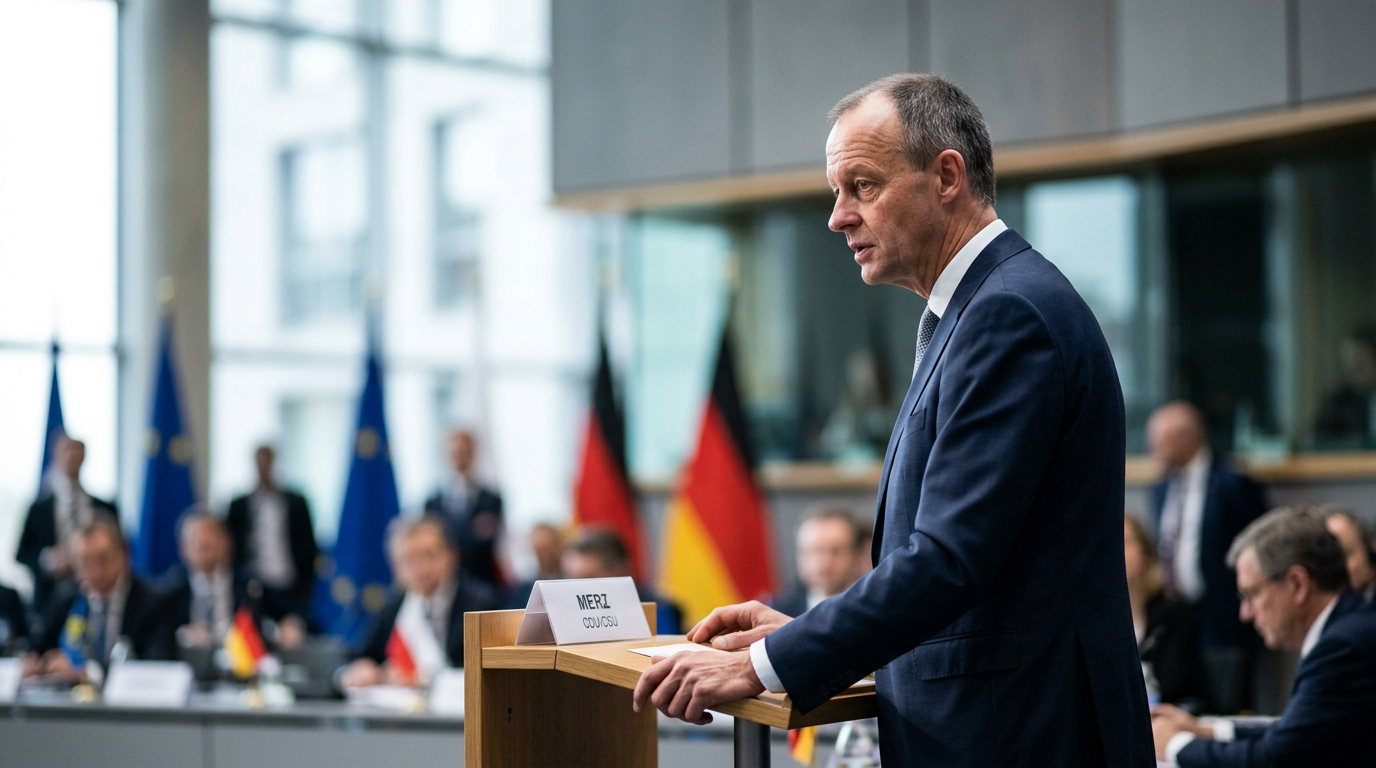
Iran's Supreme Leader Declares Regime "Will Not Back Down" Amid Escalating Nationwide Protests
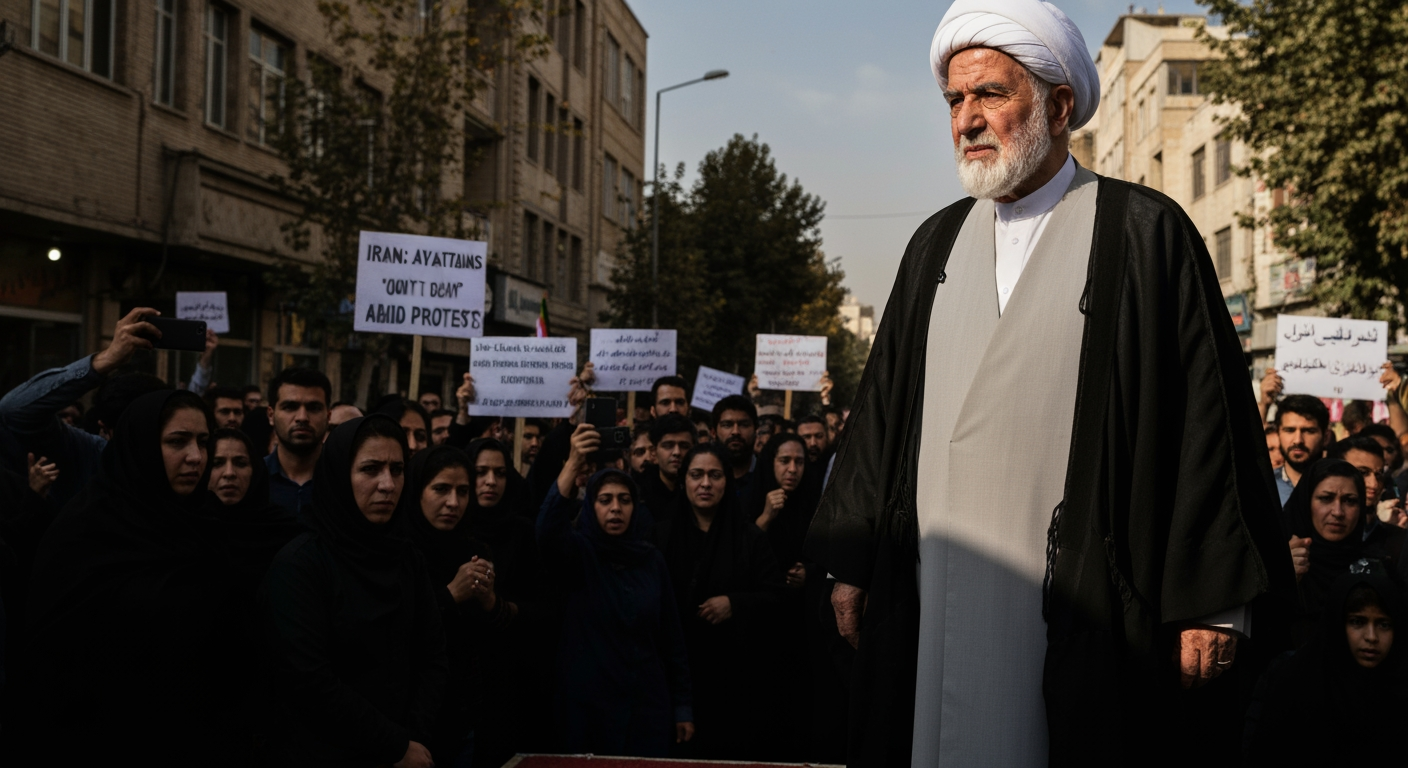
TEHRAN, Iran – Iran's Supreme Leader Ayatollah Ali Khamenei has issued a stark warning, declaring that the Islamic Republic "will not back down" in the face of widespread and escalating anti-government protests that have swept across the nation for weeks. His defiant stance, delivered amidst a severe state crackdown, signals an unyielding resolve from the clerical establishment as demonstrations, initially sparked by economic hardship, evolve into a profound challenge to the very foundation of the regime. The unrest has seen thousands take to the streets, clashing with security forces, leading to dozens of deaths, mass arrests, and an intensifying information blackout, drawing sharp international condemnation and raising concerns about Iran's volatile future.
A Line in the Sand: The Supreme Leader's Unwavering Stance
In a televised address, Ayatollah Ali Khamenei drew a sharp distinction between what he termed "legitimate" protests rooted in economic grievances and what he condemned as "rioting" and "sabotage." While acknowledging that public dissatisfaction with the economic situation is "completely fair," he asserted that "protest is different from rioting" and that "talking to the rioter is of no use; the rioter must be brought to justice". The Supreme Leader accused "enemy mercenaries" and "vandals" of exploiting the demonstrations, asserting they were acting on behalf of foreign powers, particularly the United States and its President, Donald Trump.
Khamenei alleged that protesters were "ruining their own streets to make the president of another country happy," a direct reference to Washington's vocal support for the demonstrations. He dismissed President Trump, claiming his "hands are stained with the blood of Iranians," and predicted his eventual "overthrow" akin to the 1979 imperial dynasty. The Ayatollah's address, punctuated by chants of "Death to America!" from his audience, reinforced the regime's narrative that external forces are orchestrating the unrest to destabilize the country. His declaration that the Islamic Republic, born from "the blood of hundreds of thousands of honorable people," "will not back down in the face of saboteurs" underscores the leadership's determination to suppress the movement.
The Spark and the Blaze: Roots of Nationwide Unrest
The current wave of protests, which erupted on December 28, 2025, began with shopkeepers and bazaar merchants in Tehran airing grievances over a rapidly deteriorating economic situation. Iran's economy has been crippled by persistent global isolation and international sanctions, leading to soaring inflation rates—reaching 42.2% in December 2025—and a dramatic depreciation of the Iranian rial against the U.S. dollar. These economic pressures, including spikes in food prices and the cost of essential goods, served as the initial catalyst for public outrage.
However, the demonstrations quickly transcended economic concerns, morphing into a broader movement demanding fundamental systemic change and an end to clerical rule. Protesters in cities across all 31 of Iran's provinces have been heard chanting slogans such as "death to the dictator" and expressing pro-monarchist sentiments, signaling a deep-seated rejection of the current establishment. This latest surge of unrest is considered the most significant challenge to the Islamic Republic since the 2022-2023 protests ignited by the death of Mahsa Amini, underscoring a growing loss of public faith in the system's ability to reform. The widespread nature of the protests, occurring in major urban centers and smaller towns alike, indicates a broad discontent spanning different social and geographic segments of the population.
Iron Fist: The Regime's Response to Dissent
In response to the escalating protests, the Iranian government has intensified its crackdown, employing what human rights organizations describe as unlawful use of force, firearms, and mass arbitrary arrests. Iranian authorities have largely cut off internet access and international telephone services across significant portions of the country, a tactic that has historically preceded harsher state crackdowns. This information blackout has severely limited the ability of citizens to communicate and for outside observers to gain a clear picture of the full extent of the unrest and the government's response.
Human rights groups, such as the U.S.-based Human Rights Activists News Agency (HRANA), have reported a significant toll, with at least 42 to 45 individuals killed, including 34 protesters and 8 security force members. Dozens more have been injured, and over 2,200 people have been detained across the country. Reports indicate that arrests have included a large number of young people and students. The regime has deployed Islamic Revolutionary Guard Corps (IRGC) Ground Forces in some areas and its judiciary chief, Gholamhossein Mohseni Ejei, has warned of "no leniency" for those accused of aiding Iran's enemies. These actions underscore the regime's determination to quell the protests through overwhelming force and suppress any perceived foreign interference.
Global Echoes: International Reactions and Mounting Tensions
The Iranian government's crackdown and Ayatollah Khamenei's defiant statements have triggered strong reactions from the international community, further escalating tensions. U.S. President Donald Trump issued explicit warnings to Tehran, stating that if Iran were to "violently kill peaceful protesters," the United States "will come to their rescue" and is "locked and loaded and ready to go". He reiterated threats of severe consequences if the killings continued. Iranian officials have responded by accusing the U.S. and Israel of using "hybrid methods" to destabilize the country, interpreting Trump's remarks as a direct threat.
European Union officials have criticized Iran's response, specifically condemning the use of force against protesters and the suppression of internet access. Human rights organizations, including Amnesty International and Human Rights Watch, have consistently documented the brutal tactics employed by security forces, raising urgent concerns about arbitrary arrests, torture, and the use of lethal force against demonstrators. Exiled Iranian Crown Prince Reza Pahlavi has also condemned the government's actions, calling on the international community to assist in restoring communications to allow the voices of Iranians to be heard, and urging continued protests. These international responses highlight the global scrutiny under which Iran's handling of the crisis is being placed, adding another layer of complexity to the volatile situation.
An Unpredictable Future
As Iran enters a new year marked by intense internal strife, the standoff between a resolute clerical establishment and a increasingly defiant populace appears set to continue. Ayatollah Khamenei's unwavering stance signals that the regime views the widespread protests not merely as expressions of discontent but as an existential threat orchestrated by external adversaries, justifying a harsh response. While the immediate trigger for the unrest was economic hardship, the calls for fundamental change reveal a deeper societal fracture. The ongoing information blackout makes assessing the full scope of the protests and the human cost of the crackdown challenging, but reports from rights groups paint a grim picture. With international warnings growing louder and the regime showing no signs of compromise, Iran faces an unpredictable future where the aspirations for change confront the entrenched power of the state.
Related Articles

Ratko Mladić, "Butcher of Bosnia" and Convicted War Criminal, Dies at 84
THE HAGUE, Netherlands – Ratko Mladić, the former Bosnian Serb military commander known as the "Butcher of Bosnia" and convicted of genocide, war crimes, and crimes against humanity, has died at the age of 84. Serbian...

Long-Awaited 9/11 Mastermind Trial Set for 2028, Decades After Attacks
GUANTANAMO BAY, Cuba – Nearly a quarter-century after the devastating terror attacks of September 11, 2001, a military judge has finally set a trial date for Khalid Sheikh Mohammed, the alleged mastermind behind the...